 Rent-Try-Buy
With SilverChef |
Apply Now


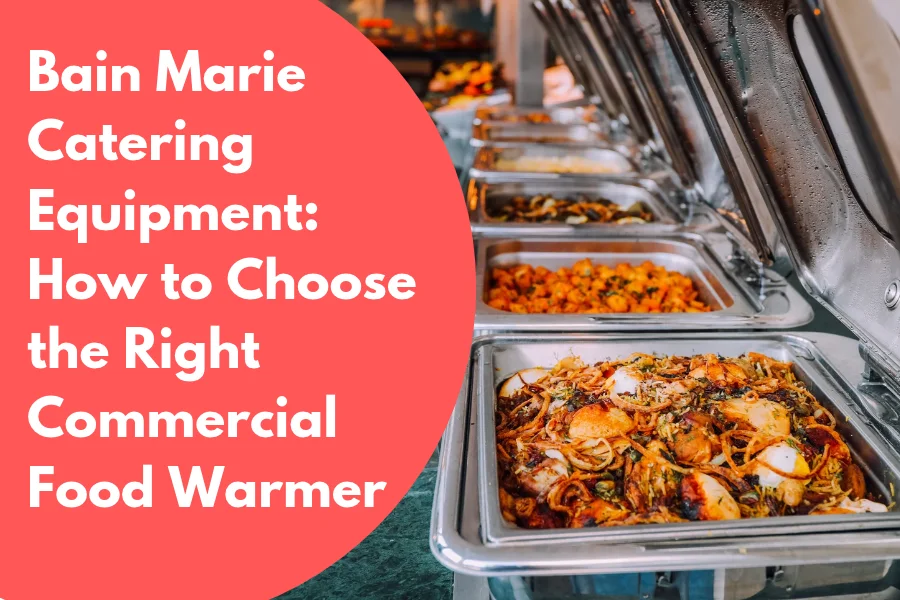
Bain Marie Catering Equipment: How to Choose the Right Commercial Food Warmer
25
Oct
Bain marie catering equipment helps commercial kitchens keep prepared food hot, organised and ready to serve. But choosing the right unit means looking beyond the purchase price.
A compact bain marie might suit a small café serving breakfast, while a busy takeaway shop may need a larger unit with several food pans. Choose the wrong size or heating method, and staff could face constant replenishment, awkward serving arrangements or unnecessary cleaning.
The most important considerations are the food you’re serving, how much you need to hold and where the equipment will fit in your kitchen.
At Caterware, we supply commercial catering equipment to restaurants, cafés, takeaway shops and hospitality businesses across Australia. We understand that reliable food service depends on equipment that suits your menu and daily workflow.
This buying guide explains how to compare wet and dry heat bain maries, choose the right GN pan capacity, assess benchtop and freestanding models, and identify the features that matter before ordering.
What Is a Commercial Bain Marie and How Does It Work?
A commercial bain marie is a food warming appliance designed to maintain the temperature of previously cooked or reheated food during service.
Depending on the model, it uses heated water or dry heating elements to transfer heat to food containers.
Most commercial bain maries hold removable stainless steel gastronorm (GN) pans. These allow kitchens to keep different dishes separate and ready to serve from one workstation.
For example, a takeaway shop might use a bain marie to hold curries, vegetables and sauces. A hotel breakfast buffet could use a larger configuration for scrambled eggs, baked beans and other hot dishes.
The main advantage is convenience. Suitable meals can be prepared ahead of service and held at the appropriate temperature while staff focus on customers and orders.
However, a bain marie designed for hot holding is not a substitute for cooking or rapidly reheating chilled food. Food must reach the required temperature before being transferred to the holding unit.
How Bain Marie Catering Equipment Supports Busy Kitchens
A suitable bain marie arrangement can help staff serve prepared dishes without repeatedly moving between cooking and serving areas.
GN pans sit within the heated holding area, giving staff access to different foods at the same workstation.
The equipment you need depends on your menu and service style.
A café serving a limited breakfast menu may only require a compact unit with a few food pans. A takeaway shop offering eight hot dishes simultaneously will need a different arrangement.
Before comparing commercial bain marie models, consider:
- Menu requirements: Which dishes need to remain available throughout service?
- Food quantities: How much of each dish must be held during busy periods?
- Replenishment: How often can staff prepare and replace food?
- Serving access: Will staff serve customers, or will customers access the display?
- Kitchen layout: Where can the unit operate without obstructing other workstations?
We recommend planning around your busiest realistic service period rather than average daily demand.
This helps establish the capacity and configuration your kitchen requires before you start comparing equipment.
Wet vs Dry Heat Bain Maries: Which Is Better for Your Menu?
One of the first decisions when buying bain marie catering equipment is whether to choose wet or dry heat.
Wet heat bain maries use a heated water bath, making them worth considering for moisture-rich dishes such as soups, sauces and curries.
Dry heat bain maries use heating elements without a water reservoir, which can simplify daily setup and cleaning.
Both systems maintain the temperature of prepared food, but neither suits every application.
The right choice depends on the food being held, the equipment’s intended use and your maintenance requirements.
Wet Heat Bain Maries for Soups, Sauces and Curries
A wet heat bain marie uses heated water beneath or around compatible food pans.
Water acts as the heat-transfer medium, providing indirect warmth to the containers.
This makes wet heat a practical option for many moisture-rich foods, including:
- Soups and broths
- Curries and stews
- Gravies and sauces
- Other prepared dishes suited to indirect warming
These foods can change in consistency during extended holding. Sauces may thicken, exposed surfaces can dry out and some dishes may lose their preferred texture.
A correctly operated wet heat system can provide a gentler holding environment, although temperature settings, lids and holding times still need attention.
The main trade-off is water management.
Staff must monitor water levels, drain the reservoir and clean it according to the manufacturer’s instructions. Mineral deposits may also require attention, depending on local water conditions.
For commercial kitchens regularly serving sauces, soups and similar dishes, these maintenance requirements may be a reasonable trade-off.
Dry Heat Bain Maries for Convenient Food Holding
Dry heat bain maries use heating elements rather than a heated water reservoir.
This removes the need to fill or drain water during daily operation, which may appeal to kitchens looking for a simpler setup.
However, food suitability remains the main consideration.
Certain dishes may lose moisture during extended dry heat holding. Temperature settings, pan depth, lids and holding duration all influence the result.
A dry heat model should therefore be selected according to the manufacturer’s stated applications rather than convenience alone.
Some commercial units support both wet and dry heat operation, providing additional flexibility where the manufacturer permits it.
If you’re comparing heating methods, explore our commercial bain marie range and check the specifications of individual products.
How to Choose the Right Commercial Bain Marie Size
The right commercial bain marie size depends on three factors: how many dishes you need to hold, the quantity of food required and how frequently staff can replenish the pans.
Buying a unit that’s too small can create problems during busy periods. Staff may need to refill containers constantly or rearrange dishes to make enough space.
An unnecessarily large model can occupy valuable bench or floor space and may cost more to purchase and operate.
Start by listing the foods you need available simultaneously.
For example, a café serving scrambled eggs, baked beans and mushrooms may be able to use a compact bain marie with a suitable three-pan arrangement.
A takeaway shop offering eight hot dishes will likely need more holding positions or a different configuration.
The aim is to choose enough capacity for efficient service without paying for space your kitchen doesn’t need.
Understanding GN Pan Sizes and Bain Marie Capacity
Commercial bain maries commonly use standardised gastronorm (GN) pans.
Understanding these dimensions helps you plan how many dishes can fit into the available holding area.
| GN Pan Size | Standard Dimensions | Typical Application |
| GN 1/1 | 530 × 325 mm | Full-size food holding |
| GN 1/2 | 325 × 265 mm | Medium portions and divided menus |
| GN 1/3 | 325 × 176 mm | Smaller dishes and side portions |
| GN 1/4 | 265 × 162 mm | Sauces and accompaniments |
| GN 1/6 | 176 × 162 mm | Small portions and condiments |
These are standard nominal dimensions. Check the manufacturer’s specifications for compatible pan sizes, depths and arrangements.
Pan depth affects how much food each container can hold.
Deeper pans offer greater capacity but may be less convenient to serve from. Shallower pans can make smaller portions easier to access, although they may require more frequent replenishment.
The pan depth must also be compatible with the heating arrangement.
Before choosing a bain marie:
- List every dish you need available during peak service.
- Assign an appropriate GN pan size to each dish.
- Estimate how frequently each pan will need replenishing.
- Check whether the complete arrangement fits the intended appliance.
- Confirm whether pans, lids and adaptor bars are included.
This gives you a practical basis for comparing equipment rather than relying on overall dimensions alone.
Match Food Holding Capacity to Peak Service
The number of menu items doesn’t always determine how many full-size pans you need.
A takeaway shop serving several curries and side dishes may be able to combine different GN pan sizes within one holding area.
Higher-demand dishes may require larger containers, while sauces or lower-volume items could use smaller pans.
This flexibility can help make better use of the equipment.
Consider the amount of food your team can prepare and replenish without interrupting service.
A kitchen that produces smaller batches throughout the day may require less holding capacity than a buffet where several dishes must remain available continuously.
We recommend confirming the complete pan arrangement before purchasing, including compatible depths and any required accessories.
Benchtop vs Freestanding Bain Maries for Commercial Kitchens
Commercial bain maries are available in different configurations, from compact benchtop units to larger freestanding and customer-facing food displays.
The right configuration depends on the available space, number of dishes and how customers receive their food.
For smaller kitchens, a benchtop bain marie may provide sufficient capacity without taking up additional floor space.
Larger operations may benefit from freestanding or display models that accommodate more food pans and support a dedicated serving area.
Benchtop Bain Maries for Cafés and Smaller Kitchens
A benchtop bain marie can be a practical choice when kitchen space is limited and the menu doesn’t require a large number of food pans.
These appliances are worth considering for cafés, smaller takeaway businesses, food stalls and certain catering operations.
They provide a dedicated food-holding area without requiring the floor space of a larger unit.
However, compact equipment still needs careful positioning.
The bench must safely support the appliance’s weight, including food and water where applicable.
You’ll also need suitable electrical access, adequate ventilation and the clearances specified by the manufacturer.
Think about how staff will remove lids, replace pans and serve food during busy periods.
A bain marie positioned too close to another workstation can interrupt movement, even when the appliance itself is relatively small.
For mobile catering, consider the unit’s weight, transport arrangements and the available electrical supply at the venue.
Freestanding and Display Bain Maries for High-Volume Service
Freestanding and display bain maries are worth considering for operations that need more holding space or a dedicated customer-facing serving area.
They may suit:
- Buffet restaurants
- Hotel breakfast services
- Cafeterias
- Takeaway shops with several hot dishes
- Larger commercial food service operations
Some models incorporate protective glass, heated display arrangements or customer-facing serving areas.
These features can help organise food presentation and access.
However, the equipment must also provide appropriate food protection and enough room for staff or customers to move safely.
Consider where people will stand, how often food pans need replacing and whether the arrangement could create bottlenecks.
A larger commercial food warmer should support efficient service rather than complicate it.
Commercial Bain Marie Food Safety: Temperature and Holding Requirements
A commercial bain marie must do more than keep food warm enough to serve.
When holding potentially hazardous food, it needs to support safe temperature control.
In Australia, potentially hazardous food should generally be held at 60°C or above when kept hot, unless an appropriate alternative food safety control applies.
This is particularly important for dishes containing meat, dairy, eggs, cooked rice and other ingredients requiring temperature control.
A bain marie can help maintain the appropriate temperature, but the thermostat setting doesn’t confirm the temperature of the food itself.
Staff should check food using a suitable probe thermometer.
Australian food safety requirements specify that businesses handling potentially hazardous food must have access to a thermometer accurate to within ±1°C.
Monitoring actual food temperatures is therefore an important part of daily food safety procedures.
Reheating Food Before Hot Holding
A bain marie designed for hot holding should not be used to slowly reheat chilled food.
Food Standards Australia New Zealand advises reheating potentially hazardous food rapidly to at least 60°C before transferring it to hot-holding equipment.
According to Food Standards Australia New Zealand’s cooling and reheating guidance, potentially hazardous food being reheated for hot holding should reach 60°C or hotter as quickly as possible, ideally within two hours or less. Commercial kitchens should use suitable reheating equipment and check the food temperature before transferring it to a bain marie, ensuring the unit is used for its intended hot-holding function.
Slow reheating may allow food to remain too long at temperatures that support bacterial growth.
Use suitable cooking or reheating equipment to bring food to the required temperature, then transfer it to a preheated bain marie.
Food held between 5°C and 60°C may be subject to specific time-based controls, depending on the circumstances.
These controls require appropriate monitoring and should not be confused with normal hot-holding requirements.
Managing Temperature, Food Quality and Everyday Maintenance
Correct operation helps a bain marie maintain food temperature and perform consistently.
Preheat the appliance according to the manufacturer’s instructions before transferring food that is already at the appropriate temperature.
Use suitable lids where practical to help reduce heat loss and moisture evaporation.
For wet heat equipment, monitor water levels and follow the recommended filling, draining and cleaning procedures.
Never operate a wet-only unit without the required water.
Dry heat models also need regular cleaning, particularly around surfaces exposed to spills.
Holding time affects food quality as well as temperature control.
Even when food remains safely hot, extended holding can change its texture, appearance and flavour.
Preparing manageable batches and replenishing food when necessary may produce better results than keeping excessive quantities on display.
Before purchasing, check how easily pans, heating areas and reservoirs can be accessed for cleaning.
What to Check Before Buying Commercial Bain Marie Equipment
Price is an important consideration, but the cheapest commercial bain marie isn’t necessarily the best choice for your kitchen.
A unit may operate for several hours each trading day, so small differences in capacity, construction and maintenance can affect how practical it is to use.
Before ordering bain marie catering equipment, check the following features.
- GN pan capacity and compatibility: Can the appliance accommodate the number, sizes and depths of pans your menu requires?
- Heating method: Is wet heat, dry heat or a compatible dual-operation model suitable for your food?
- Overall dimensions: Will the unit fit comfortably within the available space?
- Electrical requirements: Does your premises’ power supply meet the manufacturer’s specifications?
- Temperature controls: Is the appliance designed to maintain the required holding temperatures for your intended foods?
- Construction and cleaning: Are the pans, reservoirs and accessible surfaces practical to maintain?
- Included accessories: Are GN pans, lids and adaptor bars supplied separately or with the unit?
- Warranty and delivery: Have you checked the applicable conditions before purchasing?
We recommend comparing the full specifications of suitable models rather than relying on photographs.
Two commercial bain maries may look similar while offering different capacities, heating methods and electrical requirements.
The Real Cost of Choosing the Wrong Bain Marie
An unsuitable bain marie may appear to be good value initially, but the problems often become clear during busy service periods.
Insufficient capacity can increase replenishment work. Poorly arranged pans may slow serving, while oversized equipment can interfere with preparation or customer movement.
Equipment that’s difficult to clean can also add work at the end of each shift.
These operating considerations don’t necessarily appear in the purchase price.
Assess how the appliance will fit into daily service, how easy it is to maintain and whether its capacity matches your menu.
A lower purchase price may offer little benefit if the equipment makes the kitchen harder to operate.
Choosing Bain Marie Equipment That Can Grow With Your Business
Your menu and customer demand may change over time.
A café might expand its breakfast selection. A takeaway shop could introduce additional hot dishes, while a catering business may begin handling larger events.
If growth is part of your plans, consider whether the equipment offers flexibility.
Compatible GN pan configurations can allow different combinations of containers within the same holding area.
However, buying the largest model available isn’t automatically worthwhile.
Extra capacity occupies space and may introduce additional purchasing or operating costs.
Choose equipment that meets your current requirements while accommodating realistic future changes.
Explore Bain Marie Catering Equipment at Caterware
At Caterware, we supply commercial kitchen equipment to hospitality businesses across Australia.
Our commercial bain marie equipment range includes benchtop food warmers, wet and dry heat options, and larger heated food display configurations.
Depending on your requirements, you may wish to compare:
- Benchstar benchtop bain maries: Compact equipment options for kitchens requiring a smaller hot-holding area.
-
Bonvue countertop bain maries: Options for businesses considering countertop food holding and display arrangements.
- Thermaster food display models: Larger configurations for operations requiring additional holding capacity or customer-facing presentation.
Each model has its own specifications, so check the heating method, pan compatibility, dimensions, electrical requirements and included accessories before ordering.
If you’d like to learn more about how these appliances work, our Ultimate Guide to Bain Maries: How to Keep Food Warm explains their use in commercial food service.
Find a Commercial Food Warmer That Fits Your Kitchen
Choosing the right commercial food warmer becomes easier once you know what your business needs.
Start with your menu, preferred GN pan arrangement and available installation space.
Then compare equipment configurations, heating methods and operating requirements.
If you’re unsure which models are suitable, contact our team at Caterware.
Tell us about the dishes you serve, the number of pans required and where the equipment will be installed.
We can help you narrow down suitable options using your requirements and the available product specifications.
Commercial Bain Marie FAQs
1. Is a wet or dry bain marie better for a commercial kitchen?
Both can work well when matched to the right food and operating requirements.
Wet heat bain maries use a heated water bath and are worth considering for moisture-rich dishes such as curries, soups and sauces.
Dry heat models don’t require a water reservoir, which may simplify daily operation and cleaning.
Choose according to the foods you’ll hold, the appliance’s intended use and the maintenance required.
2. What size commercial bain marie do I need for my restaurant or café?
Count the dishes that must remain available simultaneously during your busiest service period.
Then determine suitable GN pan sizes, the quantity required in each pan and how often staff can replenish the food.
A small café may need only a compact unit, while a takeaway shop serving numerous hot dishes may benefit from a larger arrangement.
Check the actual pan capacity and dimensions before purchasing.
3. Can a bain marie heat cold food to serving temperature?
A standard bain marie designed for hot holding should not be used to slowly reheat chilled food.
Potentially hazardous food should be reheated rapidly using suitable equipment before being transferred to the holding unit.
Always follow the manufacturer’s instructions and applicable food safety requirements.
4. What temperature should food be kept at in a bain marie in Australia?
Potentially hazardous food should generally be kept at 60°C or above during hot holding, unless an appropriate alternative food safety control applies.
Measure the temperature of the food itself using a suitable probe thermometer rather than relying solely on the appliance setting.
5. Is a benchtop bain marie enough for a busy takeaway shop?
It can be, provided the unit has sufficient capacity for the menu and customer demand.
A takeaway business serving a limited number of dishes may operate comfortably with a compact unit and regular replenishment.
If numerous hot dishes must remain available simultaneously, a larger configuration may be more practical.
6. How much should I spend on bain marie catering equipment?
The appropriate budget depends on capacity, heating method, construction, display requirements and included accessories.
A compact benchtop model will generally involve a different investment from a larger freestanding food display.
Establish the specifications you need before comparing prices.
You can review available products and prices through our bain marie equipment category.
7. What should I check before ordering a commercial bain marie?
Confirm the overall dimensions, electrical requirements, heating method, supported GN pan sizes and included accessories.
Also review temperature controls, cleaning procedures, warranty conditions and delivery arrangements.
For further information, see our article Bain-Maries: Your Questions Answered.
Find the Right Bain Marie Catering Equipment at Caterware
The best bain marie catering equipment isn’t necessarily the biggest model or the one with the most features.
It’s the equipment that suits your menu, fits your kitchen and provides a practical way to hold prepared food at the required temperature.
For a small café, that might mean a compact benchtop bain marie. A takeaway shop may need several GN pan positions, while a buffet restaurant could require a larger customer-facing display.
Before ordering, confirm your food quantities, preferred pan configuration, available space and electrical requirements.
At Caterware, we supply commercial bain maries for hospitality businesses across Australia.
Explore our commercial bain marie range to compare available models, heating methods and configurations.
If you’d prefer guidance before buying, contact the Caterware team. We can help you identify suitable equipment options based on your menu, kitchen layout and service requirements.