 Rent-Try-Buy
With SilverChef |
Apply Now


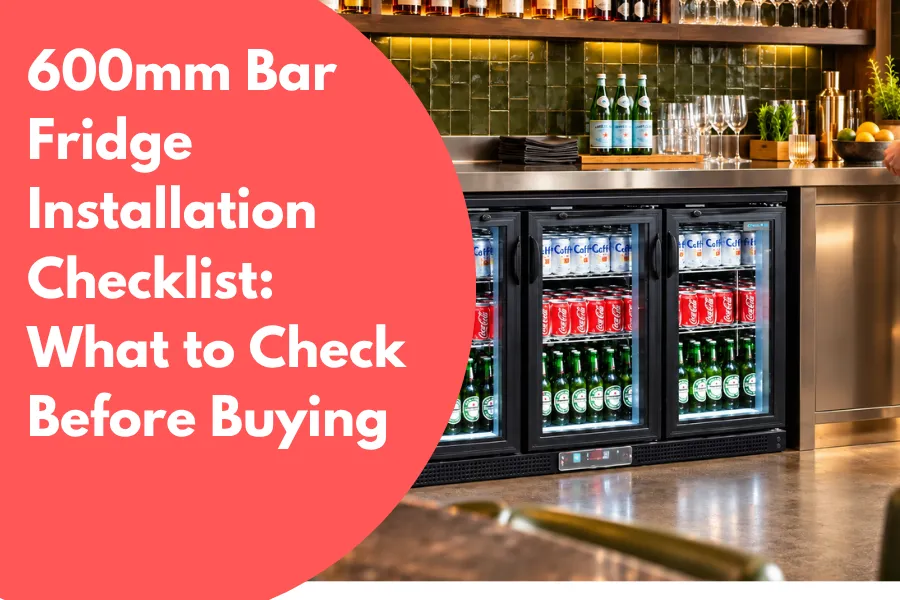
600mm Bar Fridge Installation Checklist: What to Check Before Buying
01
Nov
A 600mm bar fridge installation checklist starts with the space needed to install and use the appliance, not just its advertised width. A fridge measuring 600mm across may not suit a 600mm opening once the manufacturer’s required clearances are taken into account.
Before ordering for a café, bar or restaurant, check ventilation, door movement, electrical access and the delivery route. Our CaterWare 600mm Back Bar Fridge (BB600AT) provides a practical example throughout this guide, with separate checks for cabinet dimensions, daily use and installation requirements.
Seven Checks Before You Order
- Measure the opening: Record the usable width, depth and height, including obstructions, then compare them with the cabinet dimensions and required clearances.
- Check delivery access: Measure doorways and restricted passages, assess corners and steps, and confirm the packaged dimensions.
- Confirm ventilation: Identify the air intake and exhaust openings, required clearances and permitted ambient operating conditions.
- Allow for door movement: Check loading access, shelf removal and nearby cupboards, equipment and walkways.
- Check the electrical connection: Confirm the supply requirements, socket position, cable reach and space behind the plug.
- Assess storage and positioning: Match capacity and shelving to your stock, and check floor support, levelling and maintenance access.
- Plan start-up: Follow the model’s handling, settling and commissioning instructions before loading products.
Measure the Opening and Delivery Route
Compare Width, Depth and Height
Measure the installation opening at several points rather than relying on the nominal width of the cabinet bay. Pipework, skirting, wall finishes and uneven cabinetry can reduce the space available.
Check the width at the front and rear. Measure the height from the finished floor to the underside of the counter, then record the available depth and any fittings behind the proposed fridge position.
The BB600AT’s published specifications provide a starting point for this comparison:
| Specification | CaterWare BB600AT |
| External width | 600mm |
| External depth | 520mm |
| External height | 900mm |
| Storage capacity | 124 litres |
| Published power specification | 195 watts / 10 amp |
| Door type | Hinged glass door |
| Cooling system | Fan cooling |
| Published temperature range | 1°C to 10°C |
These figures describe the appliance, not the complete installation space. Compare them with the manufacturer’s installation requirements before deciding that the fridge will fit. caterware.com.au
An opening exactly as wide as the cabinet may leave insufficient room for positioning or required ventilation. Height needs the same attention: a 900mm-high cabinet is not automatically suitable beneath a counter with exactly 900mm of clearance.
Allow for the electrical connection when checking depth. A plug, cable or pipe behind the fridge can reduce the usable space even when the cabinet itself appears to fit.
Check the Delivery Route, Not Just the Final Position
Measure the narrowest doorway along the delivery route and check tight corners, steps and changes in floor level. In an established venue, access behind the counter may be more restrictive than the main entrance.
Packaging can increase the dimensions that need to pass through these spaces. Ask Caterware to confirm the packaged dimensions before arranging delivery, particularly where access is restricted.
Also agree how the appliance will reach its final position. Confirm the delivery arrangements rather than assuming that moving the fridge through the venue or placing it behind the counter is included.
600mm Bar Fridge Ventilation Requirements
A commercial bar fridge must release the heat removed from inside its cabinet. Restricting airflow around the refrigeration system can interfere with that process, so a cabinet that fits physically may still be unsuitable for the proposed enclosure. Australian Government guidance recommends keeping air grilles clear and locating heat-rejection equipment where heat can escape. Energy.gov.au
Confirm Airflow and Installation Clearances
Find out where the chosen model draws in air and releases heat. Then check the manufacturer’s minimum clearances and whether surrounding panels, walls or equipment would obstruct those openings.
Do not apply a standard clearance measurement to every 600mm fridge. The required space depends on the particular appliance, and a replacement fridge may have different airflow requirements from the unit it replaces.
For the BB600AT, request the airflow arrangement, installation clearances and confirmation of suitability before planning an enclosed under-counter installation. Its published fan-cooling feature does not, by itself, establish that it can operate inside enclosed cabinetry.
Keep cleaning and servicing access in mind when planning the opening. A position that makes routine maintenance difficult may need reconsideration even where the installation clearances can be met.
Keep Heat-Producing Equipment Away From the Fridge
Coffee machines, glasswashers and cooking equipment can make the proposed location warmer during service. Direct sunlight through a nearby window may also expose the cabinet to additional heat.
The Australian Government’s refrigeration guidance recommends reducing heat gain from surrounding equipment and sunlight. Assess the location during normal trading conditions, then compare those conditions with the fridge manufacturer’s permitted ambient operating range. Energy.gov.au
Where possible, choose a position away from unnecessary heat exposure. Do not assume that a space which feels cool before opening will remain suitable through a busy service period.
Check Door Swing and Access Space
Staff need room to open the fridge, retrieve products and restock it without obstructing the surrounding work area. Check these movements before committing to a cabinet position.
Allow for the Hinged Door Opening
The BB600AT has a hinged glass door. Confirm its opening direction and use the model’s dimensional information to assess how far the door projects into the service area.
A wall, cupboard or neighbouring appliance may prevent the door from opening sufficiently. Check access to products at the back of the cabinet and whether shelves can be removed for cleaning, rather than judging clearance only by whether a bottle can pass through the opening.
Mark out the proposed cabinet position and door movement. Include room for someone to stand in front of the fridge while loading or retrieving drinks, and check any projecting handles or nearby fittings.
Consider Staff Movement and Nearby Equipment
Assess the fridge alongside the equipment staff use at the same time. An open door should not prevent access to a sink, block an adjoining drawer or leave too little room at a drinks preparation station.
Check nearby doors and drawers together, not just individually. A layout that appears workable with everything closed may become awkward when one person is restocking and another is serving.
For broader comparisons of cabinet sizes and configurations, read our Commercial Bar Fridge Size Guide for Cafés, Bars and Compact Service Areas.
Confirm the Electrical Setup Before Installation Day
The socket position can affect both installation depth and access for servicing. Plan the connection before delivery so the fridge does not arrive before any necessary electrical work has been completed.
Check the Power Connection and Plug Access
The BB600AT’s published power specification is 195 watts / 10 amp. Check the rating plate and manufacturer documentation for the complete electrical requirements rather than treating those two figures as a full installation specification.
The supplied cable should reach a suitable socket without being stretched, trapped or compressed behind the cabinet. Allow room for the plug and leave a safe means of disconnecting the appliance for cleaning or servicing.
Check the socket’s position in relation to water and other hazards. A connection directly behind the fridge also needs consideration if it will become inaccessible after installation.
Do not plan the installation around an extension lead or power board. Follow the manufacturer’s connection requirements and arrange for a licensed electrician to assess and complete any new socket installation or changes to fixed wiring. electricalsafety.qld.gov.au
Ask separately whether the model requires a dedicated circuit. A published 10 amp specification does not answer that question, and having a socket available does not establish that the circuit is suitable.
Is the CaterWare 600mm Back Bar Fridge Suitable for Your Space?
The BB600AT may suit a compact beverage station where its dimensions and installation requirements match the available space. Its glass door allows staff to see the contents before opening it, but capacity, shelving and storage temperature also need to suit the products being served.
BB600AT Features and Storage Requirements
Use the specification table to assess the cabinet size, then compare the internal shelf arrangement with the bottles and cans you intend to stock. A capacity figure in litres does not establish how many containers of a particular size will fit.
Consider the stock needed between replenishments, not just the number of different drinks on the menu. Leave room for the intended arrangement without packing products so tightly that chilled air cannot circulate. Food Standards Australia New Zealand advises against overstocking refrigerators for this reason. foodstandards.gov.au
Temperature suitability needs a separate check. Food Standards Australia New Zealand’s safe food storage guidance recommends storing potentially hazardous food at 5°C or colder and checking its temperature with a thermometer. The BB600AT’s published cabinet temperature range is therefore not a suitable storage recommendation for every product. Confirm that the appliance can meet your stock’s requirements and follow the relevant storage instructions. foodstandards.gov.au
Where a Compact Commercial Bar Fridge Makes Sense
A narrow fridge may work as a café’s packaged-drinks station or as secondary beverage storage near a bar’s preparation area. The decision depends on the space available and how much stock staff need within reach during service.
Frequent replenishment may make a smaller cabinet less practical for a busy station. Compare the expected demand, packaging sizes and available configurations before choosing, using our commercial bar fridge range where a different capacity or door arrangement may suit the venue better.
Final Positioning and Start-Up Checks
Before delivery, confirm that the floor can support the appliance and its contents. Follow the manufacturer’s positioning and levelling instructions, with access left for routine cleaning and maintenance.
Inspect the packaging and appliance for visible transit damage when it arrives. Raise any concerns with the supplier before commissioning, and follow the model’s handling instructions when moving it into position.
Remove packaging and transport restraints as directed. Check that the ventilation openings remain unobstructed, the door operates properly and the electrical connection has not been trapped during positioning.
Observe any settling period specified by the manufacturer before switching on. Do not substitute a generic waiting time for the instructions supplied with the appliance.
Start the fridge according to those instructions and confirm that it reaches the required storage temperature before loading products. Keep the manual available for subsequent temperature settings, cleaning and maintenance.
600mm Bar Fridge Installation FAQs
Does a 600mm bar fridge fit into an opening exactly 600mm wide?
Not necessarily. The cabinet width does not include every clearance needed for installation, so compare the opening with both the external dimensions and the manufacturer’s requirements.
How much ventilation clearance does a 600mm commercial bar fridge need?
There is no single measurement for every model. Check the specified clearances and airflow arrangement for the exact fridge, including any restrictions on enclosed under-counter installation.
Can I install a 600mm bar fridge underneath an existing café counter?
Possibly, provided the model is suitable for that arrangement and the dimensions, ventilation, electrical access and door movement meet its requirements. Confirm suitability before altering cabinetry or ordering the appliance.
Does a 600mm bar fridge need a dedicated circuit?
Requirements vary by model and installation. The BB600AT’s published 10 amp specification does not confirm whether a dedicated circuit is required, so check the manufacturer’s documentation and seek advice from a licensed electrician where necessary.
How much space should I allow for a hinged bar fridge door?
Allow enough space for loading, shelf removal, cleaning and everyday access. Use the model’s dimensional information to check the opening against nearby walls, cupboards and workstations.
What should I check before switching on a new commercial bar fridge?
Inspect for visible damage and confirm that positioning, ventilation and electrical arrangements are correct. Follow the manufacturer’s settling and start-up instructions, then check the storage temperature before loading products.
Get the Right 600mm Bar Fridge for Your Space
The buying decision should account for installation space and daily use, not just whether the cabinet fits between two panels. Confirm the requirements that could affect your layout before ordering or modifying the counter.
Review the BB600AT specifications, then contact the Caterware team with the opening’s width, depth and height, the model you are considering and a photograph of the proposed position. Include any nearby heat-producing equipment or restricted delivery access, and ask for the installation information needed to assess the fit.