 Rent-Try-Buy
With SilverChef |
Apply Now
Rent-Try-Buy
With SilverChef |
Apply Now



Part 2: Beyond the Bottle: How a Strategic Wine Cellar Transforms Your Restaurant’s ROI
07
May
Imagine a restaurant struggling to balance the high costs of stocking premium wines with the desire to offer an impressive wine list that enhances customer satisfaction. For many hospitality businesses, this is a daily challenge: how to increase wine sales without tying up capital in excessive inventory, all while maintaining the quality and ambience that attract discerning guests. Investing in a dedicated, well-designed commercial wine cellar offers a solution that boosts wine sales, improves perception of quality, reduces spoilage, and ultimately strengthens your restaurant’s bottom line.
Unlocking Commercial Wine Cellar Investment Benefits for Restaurants
How Dedicated Wine Cellars Boost Restaurant Wine Sales
A dedicated commercial wine cellar is more than just storage, it’s a key driver for increasing wine sales in your restaurant. Here’s how investing in a specialised wine cellar impacts your wine programme:
- Expanded Selection and Availability
A well-configured wine cellar allows you to stock a broader range of wines, including premium and niche labels that appeal to various customer preferences. Imagine a restaurant that previously had limited space, restricting it to a handful of popular bottles. After investing in a temperature-controlled cellar with capacity for 200 bottles, they can now offer a curated selection of reds, whites, rosés, and sparkling wines from multiple regions. The wider choice encourages guests to explore different options and increases opportunities for upselling. - Consistent Inventory Readiness
Running out of popular wines is a lost sale opportunity. A reliable cellar ensures consistent availability by providing appropriate conditions for longer storage life. Maintaining optimal temperature and humidity prevents premature ageing and spoilage, so wines are always served at their best. This reliability builds guest trust and drives repeat business. - Enhanced Presentation and Accessibility
Beyond functionality, a commercial wine cellar improves the presentation of your wine selection. Glass-fronted cellars or integrated displays within dining areas draw attention and create an impression of quality and sophistication. Restaurant owners report increased wine sales simply by making wine more visible and accessible to customers through attractive display solutions.
Elevating Wine Program Profitability through Strategic Cellar Use
Investing in a dedicated wine cellar also improves your wine programme’s financial performance in several concrete ways:
- Inventory Optimisation
By storing wines under ideal conditions, you reduce forced markdowns or write-offs due to spoilage. For example, a restaurant without proper cellar storage might discard 5-10% of its wine stock annually because of heat damage or cork deterioration. Strategic cellar investment can cut these losses, preserving your investment in wine inventory. - Better Cost Management
Controlled ageing inside a cellar allows the restaurant to purchase wines smartly during off-peak seasons or bulk promotions and hold them until demand grows. This reduces the need for urgent, high-cost restocking and minimises stockouts. Wine cellars facilitate smoother cash flow management by enabling staggered purchasing without risking quality. - Margin Improvement
Higher sales volume combined with reduced waste directly improves wine programme margins. Plus, the presence of premium bottles in a dedicated cellar encourages customers to choose higher-priced wines, which have better profit margins. For instance, with a well-maintained commercial wine cellar, a restaurant may increase the average wine purchase by 15-20%, which translates into significant additional revenue.
Enhancing Customer Experience with Wine Display Solutions
First impressions count. A premium wine cellar or display influences how customers perceive your restaurant’s quality and professionalism:
- Ambience and Visual Appeal
An elegant wine cellar integrated into the dining space adds warmth and character. Glass-fronted, illuminated wine cabinets showcase wine labels, making the wine selection process easier and more engaging for guests. The visibility of a diverse wine collection signals expertise and care in your beverage offerings. - Educated Staff and Guest Interaction
With organised storage and clear wine visibility, staff can locate bottles quickly and advise guests confidently. Guests who receive knowledgeable guidance are more likely to experiment with new wines, enhancing their experience and satisfaction. - Supporting Upselling Opportunities
Wine display solutions that make premium options visible naturally encourage guests to order higher-end products. Imagine a scenario where a customer glances at a wine cabinet and is drawn to a specially featured bottle of vintage Bordeaux. This passive marketing increases spontaneous premium sales without additional marketing effort. - Quality Assurance Through Proper Storage
Since poorly stored wine adversely affects taste, serving consistently well-preserved wine improves customer satisfaction. Positive dining experiences result in repeat visits, favourable reviews, and word-of-mouth referrals, all of which contribute to growth and profitability.
By strategically investing in a commercial wine cellar, hospitality businesses can fuel growth in wine sales, optimise profits, and refine the guest experience. Flexible options like rent/try/buy schemes help manage initial costs, making this investment accessible and less risky. The next section will explore these acquisition models and how they support smart financial planning.

Flexible Acquisition Options: Rent, Try, or Buy Solutions for Hospitality Equipment Finance
Restaurants face a complex challenge when investing in commercial wine cellar infrastructure: balancing the need for quality storage against the constraints of upfront capital. A large upfront cost can strain cash flow, especially when uncertain about the return on investment or the suitability of a particular cellar design. This is where flexible acquisition options, rent, try, or buy, offer practical solutions that mitigate financial risk and provide greater adaptability.
What Does Flexible Acquisition Mean?
Instead of forcing a business to purchase a wine cellar outright, flexible models let hospitality operators rent or lease the equipment initially, try it out for an agreed period, and decide later whether to purchase permanently. These arrangements allow restaurants to:
- Conserve capital by spreading payments over time or converting them into operational expenses.
- Test the cellar’s performance and fit without committing to a full purchase.
- Upgrade or scale equipment easily as business needs grow or change.
Imagine a mid-sized restaurant wanting to add a temperature-controlled wine cellar to improve its wine program profitability. Opting for a “Rent/Try/Buy” model, it can install a cellar with no large upfront payment, monitor wine sales and customer response for six months, then choose either to end the agreement or transition into ownership. This flexibility reduces financial uncertainty while allowing the business to verify measurable commercial benefits.
Renting: Lower Initial Investment, Immediate Access
Rental agreements usually span fixed terms with predictable monthly payments. For restaurants, renting offers:
- Immediate access to high-spec commercial wine cellars without capital expenditure.
- Inclusion of maintenance and servicing by the provider, reducing operational hassle.
- The option to change cellar size or features during the rental period, adapting to seasonal needs or shifting menus.
Trying: Risk-Free Evaluation Period
Trial or “try-before-you-buy” periods often come within rental schemes, enabling businesses to experience cellar functionality on-site. This hands-on evaluation is crucial because:
- It validates temperature control consistency, a key factor in reducing waste.
- Staff can assess wine handling processes and storage capacity.
- Management gains confidence in projected ROI based on early sales patterns.
Buying: Long-Term Asset with Financial Incentives
Once convinced, a business can convert the rental into ownership through purchase options, often at a discounted residual value. Buying offers:
- Full control over the asset as a capital investment.
- Opportunities to claim depreciation for tax advantages.
- Guaranteed long-term cost savings compared to continuous rental.
Finance Providers and Solutions
Many hospitality equipment finance companies specialise in these flexible structures. They understand the commercial wine cellar investment landscape, tailoring terms to match cash flow cycles common in restaurants. Some also bundle additional services like installation, calibration, and ongoing technical support.
Key Takeaway: Flexible acquisition approaches let restaurants secure commercial wine cellar solutions while protecting cash flow and mitigating upfront risk. This flexibility supports strategic decisions driven by real operational data rather than speculation.
Key Features of Commercial Wine Cellars to Maximise ROI
A commercial wine cellar is not simply a refrigerated space, it’s an investment in operational efficiency, product integrity, and brand perception. To ensure the highest return on commercial wine cellar investment, it’s essential to select equipment with features that combine durability, functionality, and cost-effectiveness.
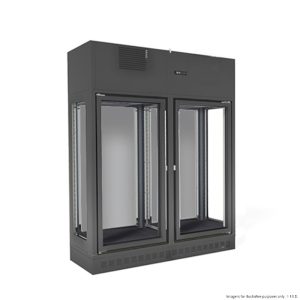
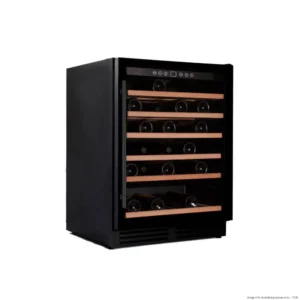
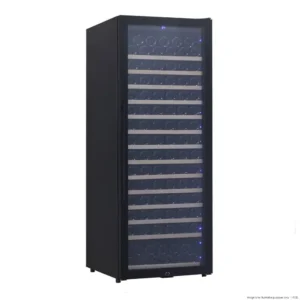
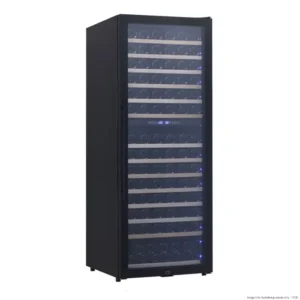
Fagor Single Zone 2 Door Black Central Wine Cellar FWC-2302-1CB
- Precise Temperature and Humidity Control
Temperature fluctuations or incorrect humidity accelerate wine spoilage and degrade quality, impacting customer satisfaction and wine program profitability. Modern commercial wine cellars should offer:
- Digital thermostats with accurate, stable temperature range controls between 10°C and 14°C (ideal for most wines).
- Humidity control systems maintaining 60–70% relative humidity to protect cork integrity and prevent label damage.
A cellar with inconsistent storage conditions increases the risk of costly waste and undermines the credibility of a premium wine offer.
- Adjustable, Durable Shelving Systems
Wine bottles come in a variety of shapes, and restaurants often stock different sizes, from standard 750ml bottles to magnums and Champagne formats. Shelving should:
- Be modular and adjustable, allowing configuration for diverse bottle sizes.
- Use materials like treated wood or powder-coated metal for longevity and aesthetics.
- Include pull-out racks or angled shelves for visibility and easy access, speeding up service and reducing breakage.
- Energy Efficiency and Environmental Controls
Given commercial kitchens already consume high energy levels, cellar units that focus on energy efficiency lower operational costs. Look for:
- LED lighting with low heat emission to reduce cooling loads.
- Insulated doors and panels that minimise cold air loss.
- Energy Star ratings or other certifications indicating efficient performance.
Lower power usage contributes directly to profitability by reducing utility bills.
- Visibility and Presentation Features
A restaurant’s wine display is integral to customer experience enhancement. Cellars should balance storage with presentation by incorporating:
- Glass doors with UV protection to showcase wines attractively while preventing sunlight damage.
- Integrated lighting that highlights bottle labels without risking temperature shifts.
- Display zones for highlighted or seasonal wines to encourage upselling.
- Size and Capacity Matched to Business Needs
Over-investing in a large wine cellar wastes space and capital; under-sizing inhibits selection variety and availability. Evaluate:
- Current and projected wine sales volume.
- Menu style and premium offerings requiring specific ageing/storage capabilities.
- Customer footfall and growth plans.
Flexible shelving, sectional storage, or modular cellar expansions provide adaptability which maintains relevance over time.
Summary: Selecting commercial wine cellars equipped with these features aligns the physical asset with the commercial objectives: better wine program profitability, reduced waste, and enhanced customer experience.
Addressing Common Questions on Wine Cellar Investment in Hospitality
For restaurants and hospitality businesses considering commercial wine cellar investment, a range of practical questions often arise. Clarifying these concerns helps inform confident decisions aligned with financial goals.
Q1: How quickly can I expect to see ROI from a commercial wine cellar investment?
Return on investment varies by establishment size and sales volume, but businesses typically observe improvements within 6–12 months. Benefits come through increased wine sales, reduced spoilage, and improved service efficiency. For instance, maintaining consistent cellar conditions can cut spoilage by up to 20%, directly protecting gross margins.
Q2: Is a wine cellar necessary for small or casual restaurants?
Not all hospitality venues require a full commercial wine cellar. However, even smaller restaurants offering a curated wine list benefit from temperature-controlled storage. Compact or under-counter units with precise climate controls can enhance quality perception and reduce waste without large-scale infrastructure.
Q3: How does a dedicated wine cellar reduce wine waste?
By ensuring stable temperature and humidity, commercial cellars prevent premature ageing, cork drying, oxidation, and label damage. This reduces the frequency of unsellable bottles and costly write-offs. Additionally, cellar organisation facilitates first-in, first-out rotation, improving stock control accuracy.
Q4: Can a wine cellar system integrate with inventory management software?
Many modern cellar systems can be paired with digital inventory and point-of-sale platforms, enabling real-time stock tracking and automated alerts for reordering. This integration supports efficient purchasing and avoids overstocking expensive wines.
Q5: What maintenance is required for commercial wine cellars?
Routine maintenance involves checking temperature and humidity calibrations, cleaning filters, and servicing refrigeration units. Flexible acquisition models often include these services within contracts, minimising operational disruption.
Q6: Are flexible finance options suitable for restaurants with variable cash flow?
Yes, flexible options like rent or lease-to-own accommodate fluctuating cash flow by spreading payments and allowing upgrades. This means businesses can maintain a premium wine program without straining short-term budgets.
When approached strategically, commercial wine cellar investment contributes measurable improvements in restaurant wine sales, profitability, and customer experience. Flexible finance models reduce upfront risk, while modern cellar features safeguard wine quality and optimise stock management. By addressing common concerns and matching cellar capacity to business needs, hospitality operators position themselves for sustainable growth and better returns. A well-planned wine cellar is more than storage; it’s a commercial asset that helps balance inventory cost with premium offerings, ultimately benefiting the bottom line.
Ready to optimise your wine program and reduce waste with a tailored commercial wine cellar? Contact 1801 22837 1 today to explore flexible “Rent/Try/Buy” options designed for the hospitality industry. Make an informed investment that supports your restaurant’s long-term profitability.