 Rent-Try-Buy
With SilverChef |
Apply Now
Rent-Try-Buy
With SilverChef |
Apply Now


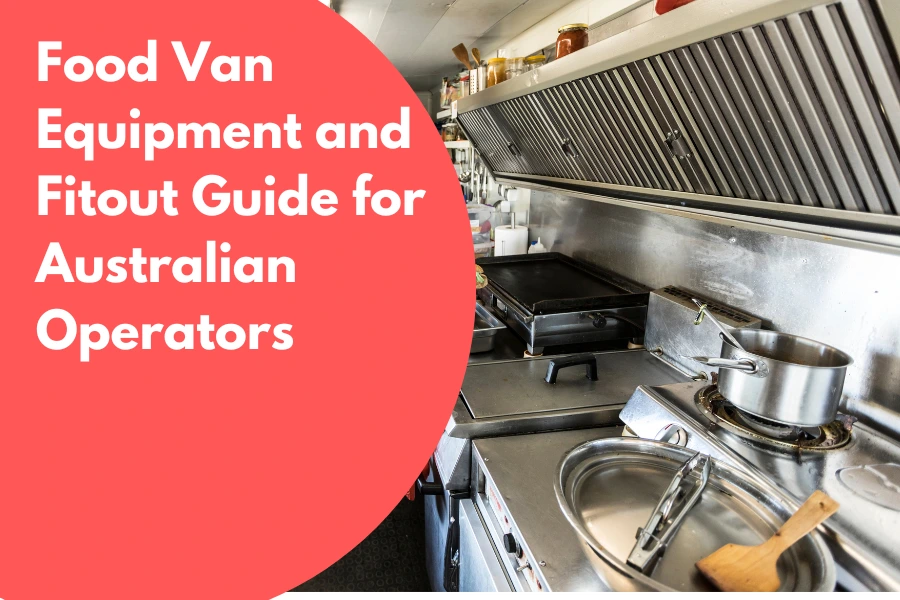
Food Van Equipment and Fitout Guide for Australian Operators
31
Jul
A successful food van needs more than compact equipment. Every appliance, bench and storage area must support your menu, available utilities and service workflow.
This is where many operators run into trouble. Equipment that looks suitable on a product list may draw too much power, block an important walkway or leave too little room for preparation and storage. Fixing those problems after installation can be expensive.
The best approach is to plan the menu, workflow and utility requirements before committing to equipment. This guide covers the main decisions Australian operators should make when planning a new food van fitout or upgrading an existing mobile kitchen.
Start With Your Menu and Service Model
Your menu should determine your equipment list, not the other way around.
Each menu item affects how much cooking capacity, refrigeration, preparation space and holding equipment you need. It also determines how staff move between storage, preparation, cooking and service areas.
A focused menu can reduce:
- Equipment costs
- Electrical and gas demand
- Ingredient storage
- Preparation time
- Food waste
- Staff movement
- Cleaning requirements
Map the production sequence for your main products before choosing appliances. In many food vans, the basic flow is:
Take the order, retrieve the ingredients, prepare, cook, assemble and serve.
Position ingredients, equipment and packaging so staff can complete that sequence with as little crossing and backtracking as possible.
Match the Equipment to Your Food Van Concept
Different concepts place different demands on a fitout.
A coffee van may need a commercial espresso machine, grinders, milk refrigeration, water treatment and well organised cup storage. Electrical load and water capacity may shape the layout more than cooking space.
A burger van may prioritise a commercial griddle, fryer, extraction system, undercounter refrigeration, refrigerated preparation space and hot holding. Heat, grease and ventilation become major considerations.
A kebab or wrap van may require vertical cooking equipment, effective extraction, refrigerated ingredient storage, assembly space and easy access to packaging.
An event catering van may need more flexible cooking equipment, greater hot and cold holding capacity and enough storage to manage intense service periods without constant restocking.
There is no universal food van equipment list. Choose equipment around the food you will sell, how quickly you need to serve it and how many people will work inside the van.
Essential Food Van Equipment
Once your menu and workflow are clear, build an equipment schedule around the functions the van must perform.
Commercial Cooking Equipment
Cooking equipment must provide enough capacity for busy periods without taking over the available workspace.
Depending on your menu, you may need:
- Commercial griddles
- Deep fryers
- Chargrills
- Induction cooktops
- Convection or combination ovens
- Panini presses
- Bain maries
- Rice cookers
- Vertical rotisseries
- Commercial microwaves
Check more than the external dimensions. Consider:
- Electrical or gas demand
- Heat output
- Ventilation requirements
- Required clearances
- Cleaning access
- Recovery time between batches
- Nearby preparation and landing space
Oversized cooking equipment may increase theoretical output but reduce overall service speed if it removes too much bench or assembly space.
Internal link opportunity: Link “commercial cooking equipment” to the most relevant Caterware category page.
Food Van Refrigeration
Food vans often need more accessible refrigeration than operators initially expect.
Total capacity matters, but position matters just as much. Ingredients used throughout service should be close to the station where staff prepare or cook them.
Possible options include:
- Undercounter refrigerators
- Refrigerated preparation counters
- Compact upright refrigerators
- Drawer refrigeration
- Milk or bar refrigerators
- Commercial freezers
- Refrigerated display units
Allow room for both service stock and backup stock. Overfilling refrigerators makes ingredients harder to organise and can slow down replenishment during busy periods.
Check that doors and drawers can open fully without obstructing walkways or nearby workstations.
Internal link opportunity: Link “food van refrigeration” or “commercial refrigeration” to the appropriate category.
Preparation Benches and Work Areas
Preparation space is often sacrificed to fit more equipment into the van. This can create congestion, increase food safety risks and slow service.
Allow enough bench space for frequent tasks such as:
- Portioning ingredients
- Assembling orders
- Garnishing
- Packing takeaway food
- Preparing drinks
- Operating the point of sale system
Stainless steel benches provide durable, easy to clean surfaces for commercial food preparation. Undershelves, wall shelves and overhead storage can help recover space, provided they do not obstruct staff or equipment.
Place preparation areas close to the refrigeration and cooking equipment used for that stage of production.
Internal link opportunity: Add links to Caterware’s stainless steel benches, shelving and preparation equipment.
Sinks, Handwashing and Water Systems
Sinks, Handwashing and Water Systems
A mobile food business needs facilities that support safe food handling, handwashing and cleaning.
Food Standards Australia New Zealand estimates that Australia experiences approximately 4.7 million cases of foodborne illness each year, including around 47,900 hospitalisations and 38 deaths. These figures highlight why appropriate handwashing, cleaning, temperature control and food-storage facilities must be included in the fitout from the beginning.
Depending on the operation and requirements of the relevant authority, the fitout may need to account for:
- A dedicated handwashing basin
- Utensil and equipment washing
- Potable water storage
- Hot water
- Wastewater storage
- Pumps and plumbing
- Soap and single use towel dispensers
Hot Holding and Service Equipment
Food that is cooked before it is ordered may need suitable holding equipment to maintain safe temperatures and acceptable quality.
Options may include:
- Bain maries
- Heated display units
- Heat lamps
- Holding cabinets
- Soup kettles
- Refrigerated displays
Match the equipment to your production schedule. Too little holding capacity can slow service. Too much can occupy valuable space and encourage unnecessary overproduction.
Storage and Shelving
Storage problems often become apparent only after the van starts trading.
You need room for more than ingredients. Packaging, utensils, cleaning supplies, spare containers, personal belongings and backup stock all compete for space.
Plan separate storage areas for:
- Dry ingredients
- Food packaging
- Cleaning chemicals
- Cooking utensils
- Service tools
- Personal items
- Backup stock
- Waste and recycling
Use overhead and underbench space carefully. Frequently used items should remain easy to reach, while heavy or loose equipment must be secured appropriately for travel.
Check Power, Gas and Ventilation Before Buying Equipment
Utility limits can rule out an appliance even when its size and output look ideal.
Prepare a complete equipment schedule showing the power or gas demand of every item. Include equipment that may run at the same time, such as:
- Refrigeration
- Extraction
- Cooking equipment
- Water heating
- Lighting
- Air conditioning
- Coffee equipment
- Point of sale systems
Do not assume a generator can support the equipment because its headline output looks sufficient. Starting loads, continuous demand and the number of appliances operating together all need to be considered.
Gas equipment also requires careful planning. Appliance approval, cylinder positioning, pipework, ventilation and installation must be assessed by appropriately qualified professionals.
Ventilation should be considered at the same stage. High heat or grease producing appliances may require mechanical extraction, suitable clearances and adequate replacement air.
Confirm these requirements before purchasing equipment or approving the final layout.
Plan the Layout Around Staff Movement
A unit can fit physically and still be wrong for the van.
The layout must allow staff to open doors, clean around equipment, retrieve stock and complete orders without obstructing each other.
When reviewing a proposed layout, ask:
- Can refrigerator and cupboard doors open fully?
- Can staff pass behind one another safely?
- Are ingredients close to where staff use them?
- Is there enough landing space beside hot equipment?
- Can appliances be cleaned and serviced?
- Are packaging and service items close to the handover point?
- Does waste move away from food preparation areas?
- Can loose equipment be secured for travel?
- Are shut off points and safety controls accessible?
A preparation refrigerator that opens into the main walkway may appear compact on a floor plan but cause delays during every service. A fryer without nearby landing space may force staff to carry hot baskets or trays across the van.
Test the layout against your busiest expected service period, not a quiet shift.
Choose Equipment That Earns Its Footprint
Every item in a mobile kitchen should justify the space, energy and cleaning time it requires.
Before adding an appliance, ask:
- Does it support a high selling menu item?
- How often will staff use it?
- Can another appliance perform the same function?
- Does its capacity match expected demand?
- What power, gas or ventilation does it require?
- How much surrounding workspace does it need?
- Can staff clean and maintain it properly?
Compact benchtop appliances, undercounter refrigeration and multi purpose workstations can make good use of limited space. However, capacity and performance must still suit the operation.
The aim is not to recreate a complete restaurant kitchen inside the van. It is to build the smallest practical system that can deliver the menu safely, consistently and at the required speed.
Allow Enough Storage for a Full Service
Operators often select cooking equipment and refrigeration first, then assign whatever space remains to storage.
That approach usually creates clutter.
Packaging alone can consume substantial space, particularly when the menu uses different containers, lids, cups, napkins and delivery bags. Cleaning equipment and backup stock also need dedicated locations.
Estimate your requirements using a realistic trading period. Consider:
- How much stock the van must carry
- How often it can be replenished
- Where packaging will be stored
- How staff will access cleaning supplies
- Where personal items will go
- How waste will be managed
Frequently used ingredients and service items should be accessible without moving through another workstation.
Confirm Australian Approval Requirements Early
Mobile food businesses must comply with applicable food safety requirements. Registrations, permits, inspections and operating conditions can vary between states, territories and local councils.
Requirements may cover:
- Food business registration or notification
- Mobile vending permits
- Food safety supervision
- Vehicle plans and inspections
- Handwashing and cleaning facilities
- Potable water and wastewater
- Temperature control
- Gas and electrical work
- Ventilation and fire safety
- Approved trading locations
- Public liability insurance
Local requirements can differ significantly. For example, some jurisdictions use registration or notification systems for mobile food premises, while councils may also require approval to trade in particular public locations.
Contact your local council, food authority and appropriately licensed trades before completing the fitout. Do not assume that approval to operate in one area automatically permits trading elsewhere.
Caterware can assist with equipment planning and selection. Regulatory approval, vehicle certification and licensed installation work remain the responsibility of the relevant authorities and qualified professionals.
Common Food Van Fitout Mistakes
Buying Equipment Before Finalising the Menu
This can result in unnecessary appliances, insufficient preparation space and a layout that does not support the production sequence.
Underestimating the Total Power Load
Operators may calculate the demand from major cooking appliances but overlook refrigeration, extraction, hot water, lighting and other equipment operating at the same time.
Choosing Capacity Without Considering Workflow
A larger appliance is not automatically more productive. It may remove bench space, block access or produce more heat than the van can manage.
Leaving Storage Until Last
Inadequate storage leads to cluttered benches, poor stock organisation and slower service.
Ignoring Cleaning and Maintenance Access
Equipment must be positioned so staff can clean it properly. Technicians may also need access for servicing and repairs.
Planning Only for Quiet Service
Consider where each staff member will stand during peak periods, which doors will be opened and how food, packaging and waste will move through the van.
Treating Compliance as a Final Check
Approval requirements can affect sink arrangements, water capacity, ventilation, surfaces and equipment placement. Confirm them before building the fitout.
Food Van Equipment Planning Checklist
Prepare the following information before requesting an equipment quote:
- Final or proposed menu
- Expected orders per hour
- Number of staff working inside the van
- Internal van dimensions
- Door, window and wheel arch positions
- Available electrical supply
- Generator specifications, where applicable
- Proposed gas appliances
- Ventilation requirements
- Potable water capacity
- Wastewater capacity
- Refrigeration and freezer requirements
- Preparation and assembly process
- Hot and cold holding needs
- Packaging requirements
- Proposed trading locations
- Relevant council or authority requirements
- Equipment delivery and installation access
Complete information makes it easier to compare suitable equipment and identify possible layout problems before money is committed.
Discuss Your Food Van Equipment With Caterware
Choosing equipment too early can leave you with insufficient power, restricted bench space or a service area that slows staff down.
Caterware can help you compare suitable cooking, refrigeration, preparation, washing and storage equipment around your menu, available space and expected service volume.
Early equipment advice can help you:
- Identify the equipment categories your menu requires
- Compare capacities, dimensions and utility demands
- Plan practical refrigeration and storage
- Avoid duplicate or unsuitable appliances
- Make better use of the available workspace
- Prepare a clearer equipment schedule
When contacting Caterware, provide your proposed menu, internal van dimensions, expected order volume and available electrical or gas supply. These details will help the team recommend more suitable options.
The best food van fitout is not the one with the most equipment. It is the one that allows staff to prepare and serve the menu safely, efficiently and consistently.
Planning a new food van or upgrading an existing setup? Contact Caterware with your menu, van dimensions and available utilities to discuss suitable commercial kitchen equipment for your mobile operation.