 Rent-Try-Buy
With SilverChef |
Apply Now
Rent-Try-Buy
With SilverChef |
Apply Now


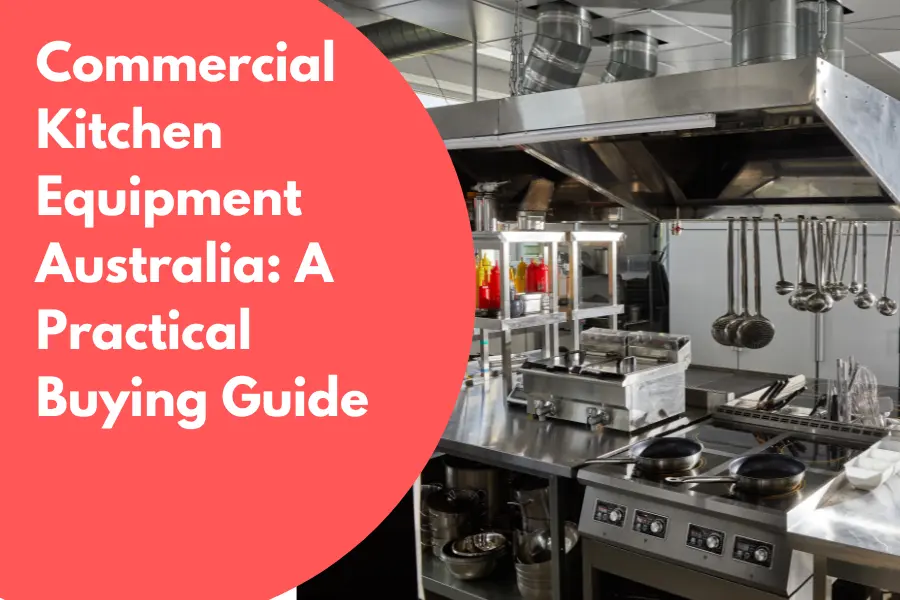
Commercial Kitchen Equipment Australia: A Practical Buying Guide
08
Aug
Buying commercial kitchen equipment can become expensive before the first service begins. A cooktop that is too small can slow production. A fridge that does not suit the prep line can waste space and increase staff movement. A dishwasher without enough capacity can leave the wash area struggling during peak service.
The best place to start is with the job the kitchen needs to perform.
Your menu, expected output, service style, available space, utilities and workflow should shape the equipment list before you compare individual models.
Commercial kitchens may require equipment across cooking, refrigeration, food preparation, dishwashing, pizza production, food display, stainless-steel benches and smallwares. The right combination depends on how the venue operates.
This guide explains how to approach commercial kitchen equipment in Australia, whether you are opening a restaurant, replacing café equipment, expanding a takeaway or reviewing an existing hospitality kitchen.
Plan the Kitchen First and Spend Once
Start with your menu, output and service model
Your menu determines what the equipment needs to do. Service volume determines how hard it needs to work.
A café serving coffee, toasted sandwiches and cabinet food has a different production profile from a restaurant operating a full hot line. A takeaway focused on fried food, kebabs, pizza or wok cooking may rely heavily on a smaller number of high-output machines.
Start by mapping the kitchen’s main production tasks.
How many portions need to leave the kitchen during the busiest service period? Which dishes are cooked to order? Which ingredients need chilled preparation space? Which processes require dedicated capacity?
Answering these questions helps prevent equipment decisions based on a broad idea of the business rather than the work the kitchen performs every day.
Allow for peak demand without overbuying
Extra capacity can help protect service speed, but unused capacity also takes up floor space, consumes energy and ties up budget.
Aim for enough capacity to handle realistic peak workloads while considering whether the venue is likely to grow after opening.
Build Your Equipment List Around What the Kitchen Actually Does
Commercial kitchen equipment works as a connected system. Cooking, cold storage, preparation, washing, holding and storage all affect one another.
Commercial cooking equipment
A commercial cooking line may include cooktops, ovens, fryers, griddles, char grills, steamers, induction units and specialist machines.
Caterware’s commercial cooking equipment range covers equipment for different commercial production methods.
Selection should begin with menu output and recovery demand. Equipment that performs well during occasional use may not suit continuous, high-volume service.
Commercial refrigeration
Refrigeration needs to provide enough storage while keeping ingredients accessible.
Upright fridges can suit bulk storage. Underbench units can bring chilled ingredients closer to a workstation. Prep fridges can combine cold storage with a working surface.
Caterware’s commercial fridges and freezers range includes upright, underbench, prep, display and specialised formats.
Capacity matters, but door configuration, ventilation space and placement also affect how useful a unit is during service.
Food preparation equipment
Food preparation equipment earns its place when it reduces repetitive labour or supports consistency.
Mixers, slicers, food processors, meat preparation equipment and vegetable preparation machines can reduce manual work when matched to the right task.
Caterware’s food preparation equipment category covers equipment for a range of preparation requirements.
Compare machine capacity with normal batch size and frequency of use. An undersized unit may force repeated cycles, while an oversized machine can consume budget and space without providing a practical benefit.
Commercial dishwashing
Warewashing capacity is easy to underestimate.
A glass washer, underbench dishwasher, pass-through machine or conveyor system should be considered against the number and type of items returning from service, available wash-area space and required turnover speed.
Caterware’s commercial dishwashing range includes several formats for different venue sizes and operational demands.
Choose Equipment That Can Keep Up When the Kitchen Gets Busy
Commercial cooking equipment should match production volume
Specification sheets provide useful numbers, but those figures need to be considered against the way the kitchen actually operates.
Capacity, heat-up time, recovery and usable cooking area can all affect output.
A compact benchtop appliance may suit a focused menu with modest volume. A heavy-duty freestanding unit may be more appropriate where equipment operates continuously across longer service periods.
Gas, electric and induction equipment should also be assessed against the site, cooking method and available services. No single energy source is automatically the right choice for every kitchen.
Refrigeration needs to work with your workflow
Cold storage should reduce unnecessary movement rather than create it.
Bulk ingredients may be stored in upright refrigeration away from the line, while frequently used ingredients can sit closer to preparation and cooking positions.
Prep fridges and underbench units can be useful when chilled ingredients need to remain inside the immediate work zone.
The practical benefit is simple: fewer unnecessary steps and faster access during busy service.
Compare the Real Cost, Not Just the Price Tag
Purchase price is only one part of the equipment decision.
Compare each option against workload, construction, available space, energy requirements, maintenance access, warranty terms, parts support and the possible effect of downtime.
A lower-priced model can be a sensible choice when it suits the job. It becomes a poor investment if it cannot keep pace with demand or requires early replacement.
Buying considerably more equipment than the venue needs creates a different problem by tying up budget and floor space without improving service.
Key factors to compare before buying
| Buying factor | Why it matters | What to check |
| Capacity | Equipment needs to cope with busy periods | Usable output, batch size and expected workload |
| Space | Equipment can affect access and workflow | Dimensions, clearances, aisles and working areas |
| Utilities | Equipment must suit the site | Power, gas, water, drainage and ventilation |
| Serviceability | Maintenance can affect operations | Access, warranty and parts support |
| Workflow | Placement affects staff movement | Position relative to prep, cooking, storage and washing |
| Budget | Price alone does not determine suitability | Purchase cost, expected use and replacement risk |
The aim is not to buy the largest or most expensive machine. It is to choose equipment that fits the workload and the kitchen around it.
New, used and financed equipment solve different problems
Different purchasing approaches suit different circumstances.
A new venue may prefer predictable condition and warranty coverage across core equipment. Another business may use selected used equipment to control fitout costs. Finance can provide another way to manage expenditure across the operation.
The original Caterware information supplied for this article states that Caterware supplies new and used equipment and can assist customers exploring finance through third-party providers.
Before publication, those commercial details should be checked against Caterware’s current public information.
Whatever purchasing route you choose, apply the same basic checks: suitability, capacity, condition where relevant, warranty or service support, installation requirements and expected workload.
Check the Building Before the Equipment Arrives
Measure space, access and clearances before ordering
Product dimensions are only one part of a proper site check.
Measure doorways, corridors, stairs, loading access, bench heights, surrounding equipment and the space needed for cleaning and servicing.
A large piece of equipment may fit its final position but still create a problem if there is no practical way to move it there.
Confirm power, gas, water, drainage and ventilation requirements
Commercial equipment needs to suit the services available at the site.
Electrical supply, gas, water, drainage and extraction requirements should be checked before purchase, with licensed trades involved where required.
The supplied draft identifies Food Standards Australia New Zealand Standard 3.2.3 as relevant to the design and construction of food premises, fixtures, fittings and equipment.
That reference should be checked against the current FSANZ source and linked directly before publication.
Requirements may differ according to the site and business type, so the rules applying to the individual premises should be confirmed before equipment and fitout decisions are finalised.
Make Workflow Part of the Equipment Decision
Equipment that is regularly used together should sit within a sensible working distance. Frequently used ingredients and tools should be easy to reach. Dirty plates, cookware and utensils need a clear route back to the washing area.
The importance of reducing unnecessary handling is also reflected in Australian workplace data. Safe Work Australia reports that body stressing accounts for 40.8% of serious claims among sales and service workers, including workers across hospitality and food trades. More than half (51%) of these body-stressing claims involve muscular stress while lifting, carrying or putting down objects. This reinforces the value of considering equipment location, access and movement when planning a commercial kitchen.
Picture the kitchen during its busiest half-hour.
Staff may be opening fridges, carrying pans, loading the dishwasher, plating orders and moving between benches at the same time. A layout that feels comfortable in an empty room can become awkward once service is underway.
Equipment choice and equipment placement should therefore be considered together.
Choose a Supplier Who Can Help Beyond the Checkout
Choosing between commercial kitchen equipment suppliers involves more than comparing model numbers and prices.
Check whether the supplier can provide clear specifications, help compare equipment formats, explain freight arrangements, clarify warranty processes and discuss installation requirements.
A broad product range can also make it easier to compare several parts of the kitchen together rather than treating every purchase in isolation.
The supplied Caterware information lists cooking, refrigeration, food preparation, dishwashing, display equipment, pizza equipment, stainless steel and other hospitality equipment among its current categories.
It also states that Caterware operates a showroom and warehouse in Molendinar on the Gold Coast and supports customers through its online store.
These location and service claims should be confirmed against the current public website immediately before publication.
If you are unsure which specification suits your kitchen, discussing the menu, site and expected workload before ordering can help narrow the options.
Match the Equipment to the Venue, Not the Other Way Around
Different hospitality businesses place different demands on their equipment.
Restaurants
Restaurants often need a balanced system across cooking, refrigeration, preparation, storage and warewashing.
The exact mix should follow the menu and service model rather than a generic restaurant equipment list.
Cafés
Cafés often place high value on compact footprints and easy access.
Beverage equipment, refrigeration, food display, light cooking equipment and preparation machinery may compete for limited bench and floor space.
Space planning can therefore matter as much as equipment capacity.
Takeaway and fast-service venues
Throughput tends to drive equipment decisions in fast-service environments.
Depending on the menu, fryers, griddles, kebab machines, pizza ovens, wok burners, holding equipment or prep refrigeration may become central to the operation.
The priority is matching equipment to the food being produced and the demands of busy service.
New hospitality businesses
A new venue does not necessarily need every desirable piece of equipment on opening day.
One way to prioritise the list is to separate it into:
- Equipment required to begin trading
- Equipment needed to protect throughput
- Equipment that can be added once demand has been established
This helps keep the initial equipment list focused on what the business actually needs to operate.
Use This Buying Checklist Before You Place an Order
A final check before ordering can catch expensive oversights:
- Menu and production requirements
- Peak service volume
- Equipment dimensions and delivery access
- Power, gas, water, drainage and ventilation
- Refrigeration and freezer capacity
- Cleaning and maintenance access
- Warranty, service and parts support
- Freight and installation requirements
- Budget, finance and cash-flow considerations
- Space for future changes
These decisions affect one another.
A larger appliance may require more power. A different fridge depth may reduce an aisle. A dishwasher with greater output may affect water, drainage or loading requirements.
It is easier to identify those conflicts before purchase than after delivery.
Equip the Kitchen for the Business You Need to Run
Commercial kitchen equipment should support the way your business produces food, serves customers and uses labour.
Start with the menu and expected workload. Then consider capacity, layout, utilities, workflow, cleaning access, servicing requirements and budget.
That approach produces a clearer shortlist than comparing appliances on price alone.
If you are planning a new venue, replacing equipment or reviewing your current setup, you can browse Caterware’s commercial kitchen equipment range or contact the Caterware team to discuss your requirements.
The supplied article information also states that Caterware supports Australia-wide online supply and provides in-person access through its Gold Coast showroom. Confirm those details on the current website before publication.
Before You Buy: Questions That Can Save You From the Wrong Equipment
What commercial kitchen equipment does a restaurant actually need?
There is no universal list.
Your requirements depend on the menu, service volume, preparation methods and available space.
Most restaurant kitchens draw from cooking equipment, refrigeration, food preparation, storage and dishwashing, with specialist equipment added according to the food being produced.
How do I know what size commercial equipment to buy?
Compare usable capacity with peak demand rather than relying only on average daily trade.
A short, busy service period can place greater pressure on equipment than quieter periods throughout the day.
Choose enough capacity to handle that workload without paying for substantially more equipment than the kitchen is likely to use.
Is commercial kitchen equipment different from domestic equipment?
Commercial equipment is selected for business use, repeated operation, service capacity and hospitality working conditions.
However, a commercial label alone does not establish whether a particular unit suits your workload. The individual application still matters.
Should I buy the cheapest commercial kitchen equipment available?
Compare price with workload, capacity, construction, warranty, serviceability and the potential effect of disruption if the equipment cannot do the job.
A lower-priced model can be a sound purchase for the right application.
Price becomes a false saving when the equipment is unsuitable for the work expected of it.
What should I check before ordering gas or electrical equipment?
Confirm the equipment specification against the services available at the site.
Power supply, gas connection, ventilation and installation requirements can affect which models are practical.
Licensed trades should be involved where required.
Should I buy equipment separately or plan the whole commercial kitchen first?
Plan the overall kitchen first where possible.
Cooking, refrigeration, preparation, storage and warewashing affect one another through space, utilities and workflow.
Looking at the kitchen as a complete system makes it easier to avoid one purchase creating a problem elsewhere.
What should I compare when choosing a commercial kitchen equipment supplier?
Compare product suitability, technical information, range depth, freight arrangements, warranty processes, installation requirements, support and access to parts or servicing information.
A supplier should help make the decision clearer rather than leaving you to compare model numbers without enough context.