Rent-Try-Buy
With SilverChef |
Apply Now
Rent-Try-Buy
With SilverChef |
Apply Now


Brick vs Conveyor: Which Pizza Oven is Right for Your Business?
01
Oct
The Slice That Sells: Why Your Oven Choice Defines Your Pizza Business
In commercial pizza operations, your oven is more than just a piece of equipment. It is the heart of your kitchen, the backbone of your workflow, and a defining element of your brand. Whether you run a fast-paced delivery chain or a boutique dine-in restaurant, the type of pizza oven you choose directly impacts your product quality, service speed, and operational costs.
This is why the debate between brick and conveyor ovens remains one of the most crucial decisions a pizzeria can face. Brick ovens are often associated with artisanal flair, creating pizzas with a blistered crust and smoky undertone that is difficult to replicate. Conveyor ovens, by contrast, are engineered for output, consistency, and speed.
The right oven aligns not just with your flavour profile, but with your customer volume, staffing model, and growth strategy. At Caterware, we have helped hundreds of Australian hospitality venues choose ovens that work as hard as they do. This pizza oven comparison is designed to help you make an informed, profitable decision.
Comparing Brick and Conveyor Ovens: A Chef’s Guide to Performance, Output and ROI
Let us explore the key differences in design, output, cost, and functionality. These are the real-world metrics that affect your daily service and long-term profitability.

Cooking Method and Pizza Quality
Brick ovens cook pizzas using radiant heat from the oven walls and floor. Wood-fired or gas-fired, they typically run at temperatures of 400 to 500 degrees Celsius and deliver pizzas with a charred crust, chewy centre, and distinctive flavour profile. They are ideal for Neapolitan-style pizzas or venues where visual authenticity matters.
Conveyor ovens cook pizzas using consistent forced air and infrared heat while moving the pizza through the chamber on a conveyor belt. This results in a highly repeatable finish across every slice. Conveyor ovens do not achieve the same charred texture, but they deliver predictable results and fast turnaround times, which are crucial in high-volume operations.
Brick ovens excel in flavour and theatre. Conveyor ovens lead in consistency and efficiency.
Speed and Output
Brick ovens are typically batch-operated. A single cook can manage a few pizzas at a time, manually rotating them for even cooking. This requires both attention and experience, especially during service peaks.
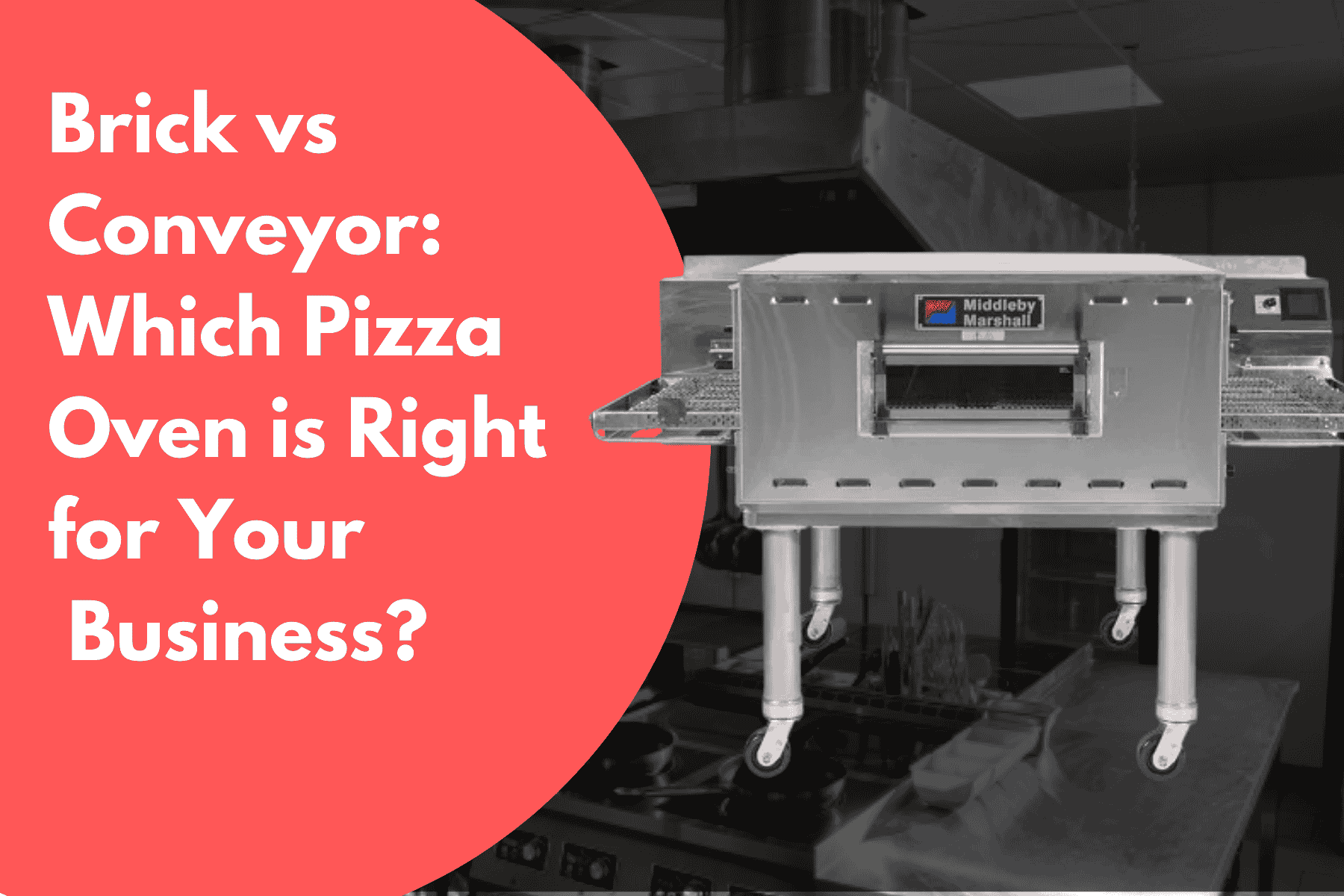
Conveyor ovens automate this process. Units from manufacturers like XLT or Middleby Marshall can produce up to 100 pizzas per hour, depending on size and belt width. Operators can load, forget, and focus on the next task, making it ideal for delivery-focused or quick-service pizzerias.
If your business relies on volume, a conveyor oven is built for scale. For slower-paced, dine-in restaurants prioritising flavour and experience, brick ovens provide the visual and culinary impact that customers love.
Staffing and Skill Requirements
Brick ovens demand trained staff. Timing, rotation, and heat control are critical skills that take time to develop. For smaller teams or high staff turnover environments, this can be a challenge.
Conveyor ovens dramatically reduce this dependency. Their set-and-forget operation makes it easier to train junior staff while maintaining product consistency. That means fewer errors and a more predictable labour structure.
Energy Efficiency and Running Costs
Conveyor ovens often come equipped with smart controls and programmable settings that help reduce energy consumption during slow periods. Gas and electric options are available, each with their own operating costs, but the ability to optimise energy use gives conveyors a clear edge in efficiency.
Brick ovens, while excellent at retaining heat, have longer preheat times and often require more manual fuel management. Wood-fired ovens, in particular, demand attention and consistent re-fuelling.
For leaner operations and long service hours, conveyor ovens tend to offer better energy cost control.
Investment and ROI
Initial costs for both types of ovens can be similar. Brick ovens start around $8,000 and can climb past $20,000 depending on customisation and installation complexity. Conveyor ovens range between $10,000 and $25,000, with some premium models exceeding that.
However, the real consideration is return on investment. Conveyor ovens tend to recover their costs faster in high-turnover settings thanks to their lower labour demands and higher output. Brick ovens may take longer to pay off but provide marketing appeal and customer loyalty for venues that lean on artisan branding.
According to the Australian Bureau of Statistics, Australians purchased about 15.3 million tonnes of food and non-alcoholic beverages through retail food outlets in 2023-24, a 3.5 % increase over the previous year. On average, each person consumed around 1.55 kg of food and drinks per day.
This strong and rising national appetite highlights why investing in the right oven is crucial. Whether you prioritise output or artisan quality, your equipment decision directly positions your business to capture a share of Australia’s growing food service demand.
Hidden Costs and Daily Realities: What Most Buyers Overlook About Oven Types
Many pizzeria owners focus on cooking speed or price when evaluating ovens, but the long-term ownership experience deserves just as much attention.
Cleaning and Maintenance
Brick ovens accumulate soot and ash, especially if wood-fired, and require daily cleaning, occasional resealing, and periodic inspections to maintain safety. If installed outdoors, weatherproofing becomes a factor.
Conveyor ovens are modular and easier to clean. Conveyor belts must be scraped and wiped down regularly, and fans or burners occasionally serviced, but the process is far less specialised than brick oven upkeep.
Kitchen Workflow Integration
Brick ovens are often centrepieces in open kitchens, enhancing ambience and brand perception. However, they take up significant space and require proper ventilation and heat shielding.
Conveyor ovens integrate easily into compact, linear prep kitchens. Their footprint is manageable, and they can be stacked or paired with dough rollers and prep benches for a streamlined pizza line.
Compliance and Installation
Brick ovens often involve more complex building and fire compliance. Proper clearances, fuel sources, and extraction systems must be approved. Conveyor ovens are typically simpler to install, especially electric models, and pose fewer regulatory hurdles.
If you are fitting out a new site or renovating, installation costs and timeframes are key factors.
Why Caterware Is the Go-To Partner for Pizza Ovens and Fit-Outs
No two kitchens are the same. That is why Caterware does not just sell ovens. We design solutions.
We work with leading pizza oven brands including XLT, Giorik, Amalfi, and our own Caterware-branded range. Whether you are opening a boutique pizzeria or scaling a delivery chain, we can supply and configure the right equipment for your menu, service model, and space.
Our Gold Coast showroom allows you to see ovens up close and discuss requirements with hospitality professionals, not just order takers. We understand ventilation, layout, power availability, and compliance because we have fitted out hundreds of kitchens just like yours.
We also stock the accessories and prep equipment to complete your line. From dough trays to pizza peels, saladette benches to refrigerated prep counters, we supply it all from one trusted source.
We offer:
- Pizza ovens with same-day despatch options
- Expert advice on throughput and ROI
- Equipment finance for cashflow-conscious operators
- Full layout and fit-out consultation
- On-site visits in the Gold Coast region
Frequently Asked Questions: What Chefs Ask Before Investing
Is a conveyor oven suitable for smaller pizza shops?
Yes, especially if your business relies on speed and consistent output. Even compact models can be cost-effective and space-efficient.
Can brick ovens be gas-powered instead of wood-fired?
Absolutely. Gas-fired brick ovens offer easier temperature control and cleaner operation while still providing the charred texture that diners love.
Are Caterware’s ovens certified to Australian standards?
Yes. All ovens we supply are built to meet or exceed Australian gas, electrical, and food service standards. Installation compliance support is also available.
How long do brick ovens take to preheat?
Depending on the size and fuel type, most brick ovens take between 60 to 90 minutes to reach optimal cooking temperature.
Does Caterware handle kitchen fit-outs?
Yes. We specialise in commercial kitchen design and can assist with complete pizza line layouts, equipment integration, and installation.
The Final Word: Choose with Confidence
Your pizza oven is one of the most important investments you will make. Choose right, and it will power your business for years. Choose wrong, and it could limit your output, strain your staff, and affect customer satisfaction.
This pizza oven comparison has shown the clear trade-offs between brick and conveyor models. Now it is your move. Whether you prioritise artisan crusts or non-stop service, Caterware has the ovens, accessories, and support to get your kitchen firing.
Stock availability shifts quickly, especially during seasonal rollouts and fit-out periods. Do not wait until lead times cost you revenue.
Call (07) 5597 5599
Email info@caterware.com.au
Visit our showroom at 2/6 Resources Court, Molendinar QLD 4214
Explore our full pizza oven range at caterware.com.au
Caterware. Built for pizza professionals. Ready when you are.