 Rent-Try-Buy
With SilverChef |
Apply Now



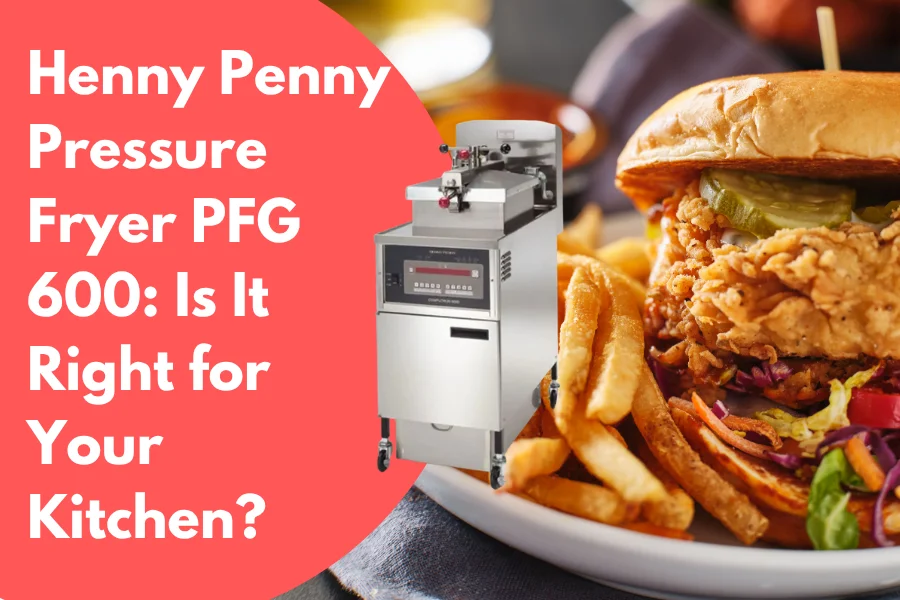
Henny Penny Pressure Fryer PFG 600: Is It Right for Your Kitchen?
21
Oct
A Henny Penny pressure fryer can be a practical investment for commercial kitchens producing regular batches of pressure-fried chicken and similar foods. However, its value depends on production demand, menu requirements and whether the kitchen can support the equipment’s operating and installation needs.
During busy service, frying can become a bottleneck. Orders build up, batches compete for cooking space and staff must maintain consistent results while working under pressure.
The Henny Penny PFG 600 is a four-head gas pressure fryer with built-in oil filtration. When equipped with the Computron 8000 controller, it provides programmable cooking and additional process-management functions, depending on the configuration.
For kitchens producing frequent batches of breaded chicken, these features may support more consistent production and a structured frying process.
However, a conventional open fryer may provide greater flexibility for businesses preparing a wider range of fried foods.
This guide examines the PFG 600’s capacity, controls, filtration, installation requirements and operating considerations to help you decide whether it suits your kitchen.
Can the Henny Penny PFG 600 Meet Your Peak Demand?
Production capacity matters most when frying is holding back service.
Pressure frying uses a sealed cooking chamber. Henny Penny describes its pressure-frying process as a method that can reduce cooking time and allow lower cooking temperatures while helping retain the food’s natural juices.
These characteristics make pressure frying particularly relevant to kitchens producing breaded chicken in repeated batches.
However, faster cooking alone does not determine whether the PFG 600 is the right fryer.
Start by assessing how much food your kitchen needs during its busiest service period.
Henny Penny Pressure Fryer Throughput in a Busy Kitchen
The PFG 600 is a four-head pressure fryer designed for commercial foodservice production.
Henny Penny also manufactures larger pressure-fryer configurations, so the PFG 600 should not be selected simply because it is described as suitable for high-volume kitchens.
A four-head fryer may suit a chicken shop, fast-food operation or restaurant producing regular controlled batches.
Businesses with greater production requirements may need a larger fryer, multiple units or a different production arrangement.
Peak demand provides a more useful measure than daily sales.
For example, if most fried-food orders arrive during a concentrated dinner period, assess the quantity of food that must be produced during that period rather than the total number of portions sold throughout the day.
The important consideration is whether the fryer can complete the required batches within your service window.
Match Batch Capacity to Your Production Schedule
Larger batches are not always the most practical option.
Batch size affects freshness, holding time, labour requirements and potential waste.
Kitchens that cook frequently to demand may benefit from a controlled batch schedule rather than preparing the maximum possible quantity each time.
Before comparing fryers, establish:
- Peak production volume
- Normal batch size
- Number of batches required during busy service
- Expected holding time
- Demand during quieter periods
- How frequently fresh batches are needed
These figures help determine whether the PFG 600’s four-head configuration matches your operation.
Pressure Assist for Smaller Loads
Henny Penny offers Pressure Assist for certain four-head pressure-fryer configurations equipped with Computron 8000 controls.
The feature uses an external means of developing pressure when smaller product loads may not generate sufficient pressure themselves.
Pressure Assist is an optional feature, not something that should be assumed to be included with every PFG 600.
Confirm whether the exact model and configuration being supplied include Pressure Assist before treating it as part of the purchase.
Computron 8000 Controls and Cooking Consistency
Consistent cooking is an important consideration in kitchens where different staff members operate the fryer across multiple shifts.
Without clearly defined procedures, cooking results may vary according to operator judgement, product loading and working conditions.
According to Food Standards Australia New Zealand’s processing guidance, chicken should be cooked to an internal temperature of at least 75°C as an example of safe cooking practice. For commercial kitchens using a pressure fryer, this highlights the importance of establishing suitable cooking programmes, checking food temperatures and following consistent procedures across shifts. Programmable controls can support repeatability, but staff must still verify that the cooking process achieves safe results.
Programmable controls can support a more repeatable process.
How the Computron 8000 Controls Commercial Frying
The Computron 8000 controller supports programmable cooking functions and operating features associated with commercial pressure frying.
Depending on the controller configuration, these can include:
- Programmable cooking cycles
- Load compensation
- Melt mode
- Idle mode
- Filtration tracking or prompting
- Operating-history functions
These features serve different purposes.
Programmable cooking provides defined settings for repeatable batches. Load compensation can help the controller respond to different product loads, while filtration functions can support an established oil-maintenance routine.
However, some functions may depend on the specific controller version or configuration.
Confirm the included capabilities on the Caterware PFG 600 before purchasing.
Programmable controls do not replace staff training, correct loading procedures or manufacturer operating instructions.
They provide a more structured process for trained operators to follow.
Pressure Frying vs Conventional Deep Frying
Pressure frying and conventional open frying serve related but different commercial cooking requirements.
The Henny Penny PFG 600 is designed for pressure frying products such as breaded chicken and other suitable foods.
Its sealed cooking environment differs from the open-vat design of a conventional commercial deep fryer.
The appropriate format depends on the menu and how frequently the kitchen produces each type of fried food.
Which Foods Suit a Commercial Pressure Fryer?
Breaded chicken is one of the main applications for commercial pressure frying.
For a chicken-focused operation preparing repeated batches throughout service, dedicated pressure-frying equipment may be worth considering.
A restaurant that only occasionally serves pressure-fried chicken alongside chips, seafood, snacks and other fried foods has different needs.
The more important pressure-fried products are to regular sales, the stronger the case for specialised equipment.
If your menu includes a broad mix of foods requiring different cooking processes or frequent short-order batches, a conventional open fryer may provide greater flexibility.
Pressure Fryer vs Commercial Deep Fryer
The following comparison highlights the main differences between the two formats.
| Decision factor | Henny Penny PFG 600 pressure fryer | Conventional open fryer |
| Cooking environment | Sealed pressure-frying chamber | Open frying vat |
| Typical application | Repeated batches of foods suited to pressure frying, particularly breaded chicken | Broader fried-food menus and varied short-order production |
| Cooking process | Structured pressure-frying cycles | Conventional open-frying workflow |
| Batch planning | Suits operations where repeated, controlled batches are important | Often suits changing products and basket loads |
| Main buying consideration | Whether specialised pressure frying will be used regularly | Whether broader frying flexibility is required |
Neither format is automatically better.
A pressure fryer may suit a business where breaded chicken is a core product. An open fryer may be more appropriate when several different fried foods compete for cooking space throughout service.
Before deciding, compare the foods you fry most often, required batch sizes, production frequency and staff operating procedures.
If you’re considering both formats, browse Caterware’s commercial deep fryer range to compare available options.
PFG 600 Built-In Filtration and Oil Management
Frying oil is an ongoing operating cost, so oil-management requirements should form part of the equipment decision.
The Henny Penny PFG 600 includes a built-in oil-filtration system.
This allows filtration to be incorporated into the fryer’s operating routine without relying on a separate standalone filtration unit.
The Computron 8000 may also provide filtration-related functions, depending on the configuration supplied.
Built-In Filtration and Computron 8000 Oil Controls
An integrated filtration system can make oil maintenance easier to include in regular kitchen procedures.
However, filtration is not automatic simply because the equipment has a built-in system.
Staff must still follow the manufacturer’s procedures for filtering, cleaning and maintaining the fryer.
Filtration tracking or prompting, where included, can help staff manage these tasks consistently.
Oil life can also vary between operations.
Factors include:
- Products being fried
- Crumbs and food residue
- Daily cooking volume
- Cooking temperatures
- Filtration frequency
- Oil-handling practices
For this reason, specific oil-saving percentages or guaranteed reductions in operating costs should not be assumed.
A more useful approach is to compare your existing oil-management routine with the procedures required for the PFG 600.
PFG 600 Dimensions and Installation Requirements
The cost of installing a commercial pressure fryer extends beyond its purchase price.
The equipment must fit the cookline, have access to suitable services and provide enough working space for safe operation, cleaning and filtration.
Installation requirements should be checked before ordering, particularly when replacing an existing fryer or planning a new kitchen.
Confirm the PFG 600 Equipment Dimensions
Henny Penny’s published PFG 600 dimensional information includes:
- Nominal width: 483 mm
- Depth: 990 mm
- Height to the top of the stack: 1,219 mm
- Approximate overall height with the lid raised: 1,575 mm
These figures relate to manufacturer dimensional information reviewed for the PFG 600.
Other published drawings and catalogue listings may present different measurements, including rounded dimensions or measurements associated with packaging.
Do not rely on one set of figures without confirming the exact configuration being supplied.
For installation planning, use the current manufacturer dimensional drawing and confirm all relevant measurements with the supplier.
Check Gas, Electrical and Ventilation Requirements
The PFG 600 is a gas pressure fryer, but the installation also needs to account for its specified electrical requirements and other services.
Before ordering, confirm:
- The gas type and connection requirements
- The required electrical supply
- Ventilation requirements
- Manufacturer-specified operating clearances
- Lid movement and overhead clearance
- Cleaning and servicing access
- Compatibility with the existing cookline
These requirements can affect installation planning and costs.
Have the proposed installation assessed by appropriately qualified professionals and follow the manufacturer’s documentation for the exact fryer configuration.
Leave Room for Filtration Access
Filtration access is another important part of the space calculation.
Henny Penny’s dimensional information specifies approximately 762 mm of front clearance for filter-pan removal.
A fryer may fit physically between other appliances but still be difficult to clean or service if sufficient access has not been allowed.
Plan around the equipment’s complete working area, not only its cabinet footprint.
Cleaning and Maintenance Affect Long-Term Productivity
A commercial pressure fryer requires consistent operating and maintenance procedures.
The PFG 600 includes a fry pot, pressure lid, sealing components, filtration equipment and electronic controls.
These components form part of the cleaning and maintenance routine.
Because pressure frying takes place within a sealed system, staff must follow the manufacturer’s operating and safety instructions.
Training should cover:
- Correct cooking and loading procedures
- Safe operation of the pressure lid
- Filtration procedures
- Cleaning requirements
- Routine inspections
- Manufacturer-recommended maintenance
The Computron 8000 and built-in filtration system can support a structured workflow, but they do not remove the need for correct staff procedures.
Before purchasing, consider whether your team can carry out the required cleaning, filtration and maintenance consistently.
Which Kitchens Suit the Henny Penny PFG 600?
The PFG 600 is most relevant to commercial kitchens producing substantial quantities of foods suited to pressure frying.
Its specialised design makes the strongest commercial case when pressure-fried products are a regular part of the menu.
Where the PFG 600 Makes Commercial Sense
The Henny Penny PFG 600 is worth considering where a kitchen has:
- Regular production of breaded chicken or similar pressure-fried foods
- Defined batch-based cooking procedures
- A need for repeatable cooking across shifts
- Ongoing oil-filtration requirements
- Enough production demand to use a dedicated pressure fryer regularly
- Suitable gas, electrical and ventilation infrastructure
- Adequate operating, cleaning and filtration space
Chicken shops, fast-food operators and high-volume restaurants may meet these conditions.
However, the type of business alone does not determine suitability.
The equipment should be assessed against actual production demand and how frequently its specialised functions will be used.
When an Open Commercial Fryer May Be More Suitable
A conventional open fryer may suit kitchens that prepare a broad mix of fried foods in smaller or frequently changing quantities.
For example, a restaurant regularly cooking chips, seafood, snacks and other short-order products may value the flexibility of open frying.
If pressure-fried chicken accounts for only a small portion of the menu, a dedicated pressure fryer may not be the most practical investment.
The decision should reflect the cooking processes required, not simply the brand or available capacity.
Henny Penny PFG 600 Pre-Purchase Checklist
The Henny Penny PFG 600 is specialised commercial cooking equipment.
Before purchasing, assess whether its pressure-frying capacity, controls and filtration system match the work your kitchen performs.
Five considerations should guide the decision.
1. Confirm Peak Production Demand
How many pressure-fried portions must be produced during your busiest service period?
Calculate normal batch sizes, expected batch frequency and whether the four-head configuration provides sufficient capacity.
2. Assess Menu Suitability
Is breaded chicken or another suitable pressure-fried product a substantial part of your sales?
A fryer used regularly for a core menu category may be easier to justify than one used occasionally.
3. Check Installation Requirements
Confirm the available gas and electrical services, ventilation, equipment dimensions and operating clearances.
Allow enough room for lid movement, filtration access, cleaning and maintenance.
4. Review Operating and Maintenance Procedures
Can staff consistently follow the required cooking, filtration, cleaning and servicing routines?
Consider training requirements and how the equipment will fit into daily kitchen operations.
5. Assess the Commercial Investment
Compare the full cost of the equipment with the production requirements it is intended to address.
Relevant considerations include:
- Equipment purchase cost
- Any required installation work
- Expected utilisation
- Current frying bottlenecks
- Labour and production processes
- Oil-management practices
- Cleaning and maintenance requirements
These factors provide a more useful basis for evaluating the investment than purchase price alone.
No specific financial return should be assumed without figures from the business and the exact equipment configuration.
You can view the Henny Penny PFG 600 Pressure Fryer with Computron 8000 Controller to compare the current product information with your kitchen’s requirements.
Henny Penny PFG 600 FAQs
Is the Henny Penny PFG 600 genuinely a high-volume fryer?
The PFG 600 is a four-head commercial pressure fryer designed for foodservice production.
However, Henny Penny also manufactures larger pressure-fryer configurations.
Whether the PFG 600 has sufficient capacity depends on your required batch sizes, cooking schedule and peak service demand.
How much can a Henny Penny PFG 600 cook at once?
Henny Penny describes the PFG 600 as a four-head pressure fryer.
Actual production output depends on the product being cooked, loading procedures, cooking programme and operating conditions.
Use your peak production requirements and the manufacturer’s approved loading guidance when assessing capacity.
What does the Computron 8000 controller do?
The Computron 8000 supports programmable cooking and functions such as load compensation, melt mode and idle mode.
Filtration tracking, prompting and other management features may depend on the controller configuration.
Confirm the included functions on the specific fryer before purchasing.
Does the PFG 600 include oil filtration?
Yes. The PFG 600 includes a built-in oil-filtration system.
Depending on the Computron 8000 configuration, filtration-related control functions may also be available.
Correct filtration procedures and routine maintenance remain necessary.
Is pressure frying suitable for every commercial kitchen?
No.
Pressure frying is particularly relevant to kitchens producing regular batches of breaded chicken and other suitable foods.
Businesses preparing a broad range of fried products in frequently changing quantities may find a conventional open fryer more flexible.
How much space does the Henny Penny PFG 600 need?
Henny Penny’s published dimensional information includes a nominal width of 483 mm and depth of 990 mm for the PFG 600.
Additional space is needed for lid movement, filtration access, airflow, connections and servicing.
Manufacturer information specifies approximately 762 mm of front clearance for filter-pan removal.
Confirm the latest dimensional drawing and installation requirements for the exact unit being supplied before finalising the kitchen layout.
Is Pressure Assist included with every PFG 600?
No. Pressure Assist is described as an optional feature available for certain four-head pressure-fryer configurations with Computron 8000 controls.
Confirm whether the exact fryer offered includes this feature before purchasing.
How can I judge whether the investment is justified?
Start with expected utilisation.
Compare your peak production needs, current frying bottlenecks, product mix, oil-management requirements and available installation space.
Then consider the purchase, installation, operating and maintenance costs.
Specialised equipment generally makes a stronger commercial case when its capabilities support a frequently sold menu category and solve a recurring production requirement.
Is the Henny Penny PFG 600 Right for Your Kitchen?
A Henny Penny pressure fryer can be a valuable production tool when pressure-fried foods form a substantial part of the menu.
The PFG 600 combines four-head pressure-frying capacity, built-in filtration and, when specified, Computron 8000 controls.
Its suitability depends on whether those features match your production volume, available infrastructure and operating procedures.
Before committing, confirm that:
- Pressure frying suits the products you sell.
- The four-head capacity can meet peak service demand.
- The required gas, electrical, ventilation and working space are available.
- Staff can follow the required operating and maintenance procedures.
- The expected utilisation justifies the investment.
Ready to assess the PFG 600 for your kitchen?
View the Henny Penny PFG 600 Pressure Fryer with Computron 8000 Controller to review the product information and current purchasing details.
If you’re still comparing pressure and open frying, explore Caterware’s commercial deep fryer range.
Need help checking whether the PFG 600 suits your production requirements?
Contact Caterware with your menu, peak batch demand, available space and known installation requirements.
We can help you assess the available equipment before you commit to a purchase.