 Rent-Try-Buy
With SilverChef |
Apply Now
Rent-Try-Buy
With SilverChef |
Apply Now


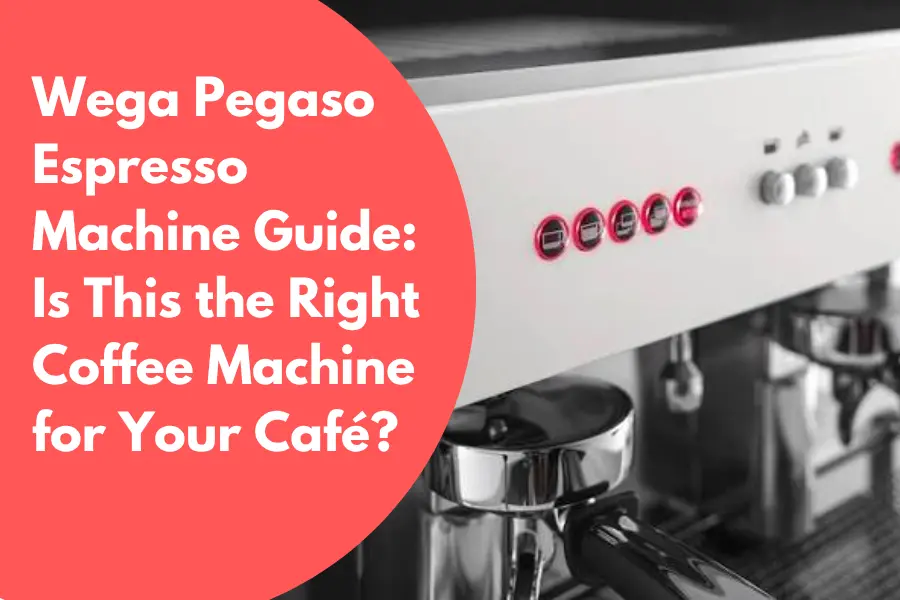
Wega Pegaso Espresso Machine Guide: Is This the Right Coffee Machine for Your Café?
25
Aug
Choosing a commercial coffee machine is a capacity decision as much as a specification decision.
Too little capacity can slow service when orders stack up. Too much can mean paying for equipment, bench space and capability your venue rarely uses.
That is where the Wega Pegaso espresso machine EVD1PG becomes worth comparing.
At Caterware, we see it as an option for smaller cafés, restaurants, bistros and hospitality venues that need a commercial espresso setup without immediately moving into a larger two-group or three-group configuration.
The key question is simple: can one group handle your busiest coffee service?
That answer should guide the rest of the buying decision.
Is the Wega Pegaso EVD1PG Right for a Small Café?
The EVD1PG is the single-group model in Wega’s Pegaso range. It combines commercial brewing and steaming functions with a footprint intended for venues where space and output need to stay in balance.
The listed specification includes one group, four programmable coffee doses, manual continuous brewing, automatic water refill and level control, a built-in rotary pump, two chromed steam wands and a manual hot-water tap. It also has a 5-litre boiler with a listed power rating of 15A and 2.7 kW.
The specifications matter, but what they mean for service matters more.
A single group limits simultaneous extraction compared with a two-group machine, but it also uses less bench space. Programmable dosing can support a more repeatable workflow, while two steam wands give the operator more flexibility when preparing milk drinks.
That combination can make sense where coffee is an established part of the menu without being the sole focus of the business.
Wega Pegaso EVD1PG at a Glance
| Feature | Listed specification | What it means for the venue |
| Group heads | 1 | Better suited to controlled coffee demand than sustained multi-barista extraction |
| Programmable doses | 4 | Supports a more repeatable coffee workflow |
| Steam wands | 2 chromed wands | Provides more flexibility for milk preparation |
| Boiler | 5 litres | Supports commercial espresso and milk service, subject to actual peak demand |
| Power | 15A, 2.7 kW | Electrical provision should be confirmed before installation |
| Dimensions | 530 × 555 × 515 mm | Compact compared with larger group configurations, but still needs a properly planned coffee station |
| Weight | 48 kg | Requires a suitable commercial bench or installation surface |
Is One Group Enough for Your Peak Coffee Demand?
This is the most important question to answer before buying the Wega Pegaso EVD1PG.
A café may trade comfortably for most of the day and then experience a concentrated breakfast or lunch rush. That peak period usually tells you more about the machine you need than quieter trading hours.
Coffee demand is substantial across Australia. Australian Bureau of Statistics data for 2023 shows that 61.5% of adults reported consuming coffee or coffee substitutes on the survey recall day. That national figure does not determine the capacity an individual café needs, but it reinforces why operators should measure their own peak coffee volume before choosing between one, two or three groups.
If one barista normally handles coffee and orders arrive at a manageable rate, a single-group commercial espresso machine may be appropriate.
It can also suit a restaurant, bistro or bar where espresso sits alongside food and other beverages rather than dominating every transaction.
The calculation changes when several coffee orders regularly arrive together.
When One Group Is Enough Machine
The EVD1PG deserves consideration when you:
- have controlled coffee demand
- use one primary barista station
- want commercial functionality without buying excess capacity
- have limited bench space
- do not expect sustained multi-barista extraction
Caterware lists the machine at 530 mm wide, 555 mm deep and 515 mm high, with a weight of 48 kg.
That is still a substantial piece of commercial equipment, so the surrounding workstation needs to be planned carefully.
When One Group Could Become the Bottleneck
If coffee is a major revenue line, capacity deserves closer attention.
A second group gives another barista more opportunity to work concurrently and provides greater extraction capacity during busy periods. Caterware currently lists the Pegaso in two-group and three-group models as well as the EVD1PG.
If several coffee orders regularly arrive at once, compare the larger configurations before ordering.
The aim is to avoid choosing a machine that becomes the limiting point in service.
Programmable Dosing Helps Build a More Repeatable Coffee Workflow
The Pegaso EVD1PG uses an electronic control system with volumetric coffee dosing and provides four programmable doses, together with a manual brewing button.
That does not remove the barista from the process.
Grind setting, dose preparation, tamping, coffee freshness, cleaning and the recipe being used still affect what reaches the cup. A commercial coffee machine cannot compensate for a poorly controlled coffee programme.
What programmable dosing can do is remove one variable from a repeated process.
Instead of relying on an operator to stop every extraction manually, programmed volumes can support a more standardised routine.
That can be useful in hospitality venues where several staff members rotate through the coffee station or where coffee is one responsibility among many.
For a restaurant, it may be particularly useful where the person making coffee is also handling desserts, drinks or other front-of-house duties.
How the Two Steam Wands Affect Milk Service
The Wega Pegaso EVD1PG is fitted with two chromed steam wands despite being a one-group machine. It also includes a manual hot-water tap and a 5-litre boiler.
That matters if your menu includes a high proportion of flat whites, cappuccinos and other milk-based drinks.
Espresso extraction is only one part of café workflow. During a rush, milk preparation can demand just as much operator attention.
Two steam wands can provide more flexibility in how the barista organises that work.
However, the 5-litre boiler figure should not be turned into a theoretical cups-per-hour claim without evidence. Real demand varies according to drink size, milk volume, workflow and service pattern.
The more useful buying question is:
How many milk-based coffees do you expect to prepare during your busiest service period, and how continuously will the machine need to work?
If the answer is “constantly”, compare the Pegaso with larger commercial espresso machine options before deciding.
Check Your Bench and Power Supply Before the Machine Arrives
A professional coffee machine cannot simply be placed into whichever space happens to be free.
The EVD1PG is listed with a 15A, 2.7 kW electrical requirement. Its listed dimensions are 530 × 555 × 515 mm, and Caterware lists the unit at 48 kg.
Confirm the electrical provision before ordering.
Then measure the complete coffee station, not only the espresso machine.
Your grinder needs space. So do the knock box, tamping area, milk, cups and cleaning equipment. Staff also need enough room to work without each movement interfering with the next.
If you are planning a new café or restaurant, treat the machine as part of the complete coffee workflow rather than as an appliance in isolation.
A machine can physically fit on the bench and still be wrong for the way the station needs to work.
Compare the Purchase Price With the Capacity You Actually Need
At the time of writing, Caterware lists the Wega Pegaso EVD1PG at $4,950 ex GST, reduced from a displayed price of $5,500 ex GST. The product page also shows equipment finance options.
Pricing and offers can change, so the live listing should be checked before purchase.
The more important comparison is whether the machine provides enough capacity for the way your venue serves coffee.
If a larger machine prevents production bottlenecks during your busiest service, the extra investment may be worthwhile.
Conversely, a restaurant with steady but moderate coffee demand may gain little from paying for additional groups it rarely uses.
Match the machine to peak workload, available bench space and likely future demand rather than assuming that a larger specification automatically offers better value.
Caterware’s broader commercial coffee machine range includes machines aimed at different venue sizes and service volumes, including single, double and triple-group configurations. Caterware currently stocks commercial espresso machines from brands including Wega and Bezzera.
So, Who Should Actually Buy the Wega Pegaso EVD1PG?
The Pegaso EVD1PG is most relevant to a smaller café, restaurant, bistro or hospitality venue that needs commercial espresso capability without sustained multi-barista coffee production.
It becomes particularly worth considering when:
- bench space is limited
- one primary operator handles coffee
- demand is controlled rather than continuous
- programmable dosing would support consistency
- two steam wands would be useful for milk preparation
- a larger group configuration is not justified by current demand
Operators expecting heavier coffee throughput should compare the one-group Pegaso with the two-group and three-group versions before committing.
Before buying, ask:
- How many coffees do you expect during your busiest hour?
- Will one or more baristas use the machine at the same time?
- What proportion of orders will be milk based?
- Is coffee a supporting menu item or a major revenue stream?
- Do you have the required electrical provision?
- Does the full coffee station fit comfortably within the available space?
- Is today’s machine capacity likely to suit the business as it grows?
If those answers point towards moderate demand and a controlled workflow, the EVD1PG makes a stronger case.
Buy the Machine That Matches Tomorrow’s Service, Not Just Today’s Bench Space
The right commercial coffee machine should fit the way your venue actually works.
Staff should not spend busy periods fighting its capacity. At the same time, there is little value in paying for capability that sits unused.
That is the standard to use when assessing the Wega Pegaso espresso machine.
The EVD1PG combines a single group, programmable volumetric dosing, two steam wands, a 5-litre boiler and a compact commercial format.
For a smaller café, restaurant, bistro or hospitality venue with controlled coffee demand, that combination may suit the job well.
For a higher-volume coffee operation, compare it with the larger Pegaso configurations before buying.
You can view the Wega Pegaso Single Group Espresso Coffee Machine EVD1PG for the current price and full product specifications.
If you are unsure whether one, two or three groups suit your expected service volume, contact Caterware and discuss the intended setup before ordering.
Questions Worth Answering Before You Put a Pegaso Behind the Bar
Is a single-group espresso machine enough for a café?
Yes, if it matches the café’s actual peak demand.
A smaller venue with one primary barista and controlled order volume may operate comfortably with one group. A high-volume café handling several coffee orders at once may need greater extraction capacity.
Size the machine around your busiest service period rather than your average trading hour.
What type of venue is the Wega Pegaso EVD1PG suited to?
Caterware’s current listing positions the machine for smaller cafés, bistros and restaurants.
Its single-group design is most relevant where professional espresso capability is needed but the venue does not require several baristas extracting coffee at the same time.
Does the Wega Pegaso have programmable coffee doses?
Yes.
The EVD1PG provides four programmable doses for the group as well as manual continuous brewing.
This allows the operator to use programmed volumes while retaining manual control when required.
Can the Wega Pegaso handle milk-based coffee?
The machine includes two chromed steam wands and a 5-litre boiler, so it is designed to support milk preparation as part of commercial coffee service.
Whether that capacity suits your venue depends on the number of milk drinks you need to produce during peak periods.
What electrical connection does the EVD1PG need?
The current specification lists a 15A, 2.7 kW power rating.
Confirm the electrical requirements and installation position before ordering, particularly when fitting the machine into an existing café or restaurant.
Should I choose a one-group, two-group or three-group Pegaso?
Start with peak demand and simultaneous barista use.
One group may suit controlled coffee service. Two or three groups become easier to justify when several drinks need to be produced at once or more than one operator needs extraction access.
The Pegaso range is listed in larger group configurations, so capacity can be compared before committing.
What warranty is listed for the Wega Pegaso EVD1PG?
Caterware currently lists a 12-month parts-only warranty for the EVD1PG.
Because warranty conditions affect the ownership proposition of commercial equipment, check the current terms before purchasing.