 Rent-Try-Buy
With SilverChef |
Apply Now
Rent-Try-Buy
With SilverChef |
Apply Now



The Ultimate Kitchen Upgrade: How to Pick the Best Commercial Toasters and Sandwich Presses for Your Business
14
Apr
Imagine it’s a busy Saturday morning rush, your café packed with eager customers, and the line for hot sandwiches and toasts is growing by the second. In moments like these, your commercial toaster or sandwich press isn’t just another kitchen tool; it’s an essential tool that keeps the engine of your business running smoothly.
Investing in high-quality equipment is non-negotiable if you want your kitchen to deliver consistent, fast, and delicious results. A reliable toaster or press ensures every slice of bread is perfectly golden, every panini is evenly grilled, and every customer leaves satisfied, and likely to return. Conversely, using subpar appliances often leads to bottlenecks, burnt food, and frustrated diners, tarnishing your reputation faster than you can say “breakfast special.”
Speed is everything in a commercial kitchen. Top-tier toasters and sandwich presses are designed to handle high-volume demand without compromising quality. They toast or grill evenly, work faster than domestic models, and can adapt to the varied menu items your customers crave. Whether it’s a bustling hotel breakfast buffet or a trendy café dishing out gourmet melts, the right equipment keeps service flowing seamlessly.
Moreover, customer satisfaction hinges on consistency. When patrons know they can count on the same level of quality each visit, they’re far more likely to become loyal regulars—and recommend your business to others. Equipment that delivers uniform results, time after time, is essential in building that trust.
Ultimately, investing in the right commercial toaster or sandwich press isn’t just about improving kitchen operations—it’s about future-proofing your business. With the right tools in your arsenal, you can increase efficiency, boost sales, and create memorable dining experiences that set your brand apart.
Commercial vs. Domestic Toasters: Why It’s Not Even Close
When outfitting a professional kitchen, the choice between commercial and domestic toasters should be a no-brainer. Yet, many new business owners fall into the trap of thinking a cheaper, domestic model will “do the job” for a while. Spoiler alert: it won’t. Understanding why a commercial toaster is leagues ahead is crucial if you want to serve consistently high-quality food and avoid costly breakdowns.
First, commercial toasters are built for performance and endurance. Domestic toasters are designed for low-frequency use—maybe a few slices a day. In contrast, commercial models are engineered to churn out dozens, even hundreds, of slices daily without missing a beat. This level of robustness isn’t just about heavy-duty materials; it’s about industrial-grade heating elements, better insulation, and smart design features that reduce wear and tear under constant use.
Second, service speed in a professional kitchen is everything. Commercial toasters are designed for rapid, consistent toasting that matches the pace of a busy breakfast or lunch rush. Conveyor models, for example, can toast hundreds of slices per hour, maintaining consistent browning without manual monitoring. Pop-up models made for commercial use also operate significantly faster than anything you’d pick up from a domestic appliance store.
Third, food quality is directly linked to equipment consistency. Domestic toasters often produce uneven results—one slice burnt, the next barely toasted. That inconsistency simply isn’t acceptable when customers are paying good money and expecting perfection. A commercial toaster ensures even toasting across all products, helping you deliver a polished plate every time.
Finally, consider overall kitchen operations. Equipment downtime due to faulty gear disrupts service, frustrates staff, and loses revenue. Commercial toasters and sandwich presses come with longer warranties and are easier to repair, ensuring minimal interruption to business.
Bottom line? If you’re serious about running a successful commercial kitchen, investing in purpose-built equipment isn’t optional—it’s essential.
Must-Have Features When Buying a Commercial Toaster or Press
Choosing the right commercial toaster or sandwich press is more than just picking a brand you’ve heard of. To make an investment that pays off over time, you need to know exactly which features matter—and why. Here’s a breakdown of the must-haves you should be looking for when shopping for your next kitchen workhorse.
1. Build Quality That Handles the Heat
Commercial kitchens are brutal environments. Your equipment must endure constant use, high heat, and occasional rough handling. Look for machines constructed from stainless steel or other durable materials. These not only resist rust and corrosion but also hold up against daily wear and tear. High-end hinges, reinforced handles, and heavy-duty heating elements are signals of true commercial-grade quality.
2. Speed, Consistency, and Capacity: The Performance Trifecta
Speed is critical, but it’s worthless without consistency. A great commercial toaster can handle dozens of slices per hour without sacrificing the golden-brown quality your customers expect. Look for capacity ratings that match your service demands. Conveyor toasters, for instance, are ideal for high-volume operations, while heavy-duty pop-up models work for smaller, fast-paced kitchens. Check user reviews and manufacturer specs to ensure the machine performs reliably under pressure.
3. Adjustable Settings for Total Menu Control
Flexibility matters, especially if your menu includes everything from thick artisan breads to thin sandwich slices. Look for equipment that offers adjustable temperature settings, timer controls, and customizable toasting modes. Sandwich presses should allow you to tweak pressure levels and temperature separately, ensuring delicate items don’t get squashed while hearty melts cook all the way through.
4. Bonus: Versatility for Menu Expansion
Some of the best toasters and sandwich presses double as multi-purpose units. For example, a good sandwich press can also grill vegetables, sear proteins, or even make breakfast wraps. Choosing versatile equipment means you can expand your offerings without needing to buy extra appliances—saving you money and kitchen space in the long run.
Pro Tip: Always check if your toaster or sandwich press is compatible with different bread types and fillings you plan to use. Some models even offer swappable plates or inserts for different menu items, a huge bonus for growing businesses.
By focusing on these key features, you ensure that your commercial toaster or sandwich press isn’t just another appliance—it becomes a dependable, profitable asset for your kitchen.
Conveyor vs. Pop-Up Toasters vs. Sandwich Presses: Which One Wins?
Choosing the right type of commercial toaster or sandwich press depends heavily on your kitchen’s needs, space, and service style. Let’s break down the options and see which one truly deserves a spot on your counter.
Conveyor Toasters: The Powerhouses for High-Volume Service
If you’re running a hotel buffet, a large café, or any venue that needs to pump out hundreds of toast slices an hour, a conveyor toaster is your best friend. Conveyor toasters operate by feeding bread through a heated tunnel on a moving belt, toasting evenly and rapidly. Some models can handle up to 1,200 slices per hour.
They allow precise control over speed and temperature, meaning you can customise the level of browning to suit different menu items. Plus, conveyor models usually come with wider slots, accommodating thicker bread types like bagels and artisan loaves.
Pop-Up Toasters: Small, Mighty, and Space-Saving
For smaller establishments—think boutique cafés, food trucks, or breakfast bars—a heavy-duty pop-up toaster might be the smarter choice. Unlike household versions, commercial pop-up toasters are rugged, designed to churn out dozens of perfectly browned slices every hour without overheating.
They’re incredibly space-efficient, making them ideal for kitchens with limited counter real estate. Some models even offer wide slots and independent control panels, allowing for greater versatility when dealing with different bread sizes and toasting preferences.
Commercial Sandwich Presses: The Secret Weapon for Menu Expansion
Want to do more than just toast bread? A sandwich press could be your kitchen’s MVP. These devices aren’t just for paninis; they’re perfect for crafting melts, grilling breakfast wraps, and even adding a charred finish to vegetables or proteins.
Commercial sandwich presses typically offer dual temperature control (top and bottom plates), adjustable pressure, and non-stick surfaces for easy cleaning. Some even feature interchangeable plates—flat, ribbed, or mixed—giving chefs incredible flexibility to create diverse menu items without cluttering the kitchen with multiple appliances.
Which Should You Choose?
-
Go Conveyor if you have high customer turnover and need serious volume.
-
Pick Pop-Up if space is tight and your menu is simpler.
-
Choose a Sandwich Press if you want menu flexibility and the ability to serve hot, gourmet-style dishes.
Pro Tip: Many successful kitchens invest in both a toaster and a sandwich press, allowing them to offer a wider range of hot, toasted menu items without bottlenecking service. Depending on your business model, having both can multiply your revenue potential without a massive additional investment.
Understanding the strengths of each type ensures you equip your kitchen with the right gear to meet your operational needs—and delight your customers at every meal.
Best Commercial Toasters and Presses for Every Business Size (Featuring Top Models)
Choosing the right commercial toaster or sandwich press isn’t just about brand names—it’s about matching the right features with your specific business needs. Here are the top picks from Caterware Australia’s lineup that cater to every kitchen size and style.
Best High-Volume Conveyor Toaster: Birko Conveyor Toaster 600 Slice 1003202
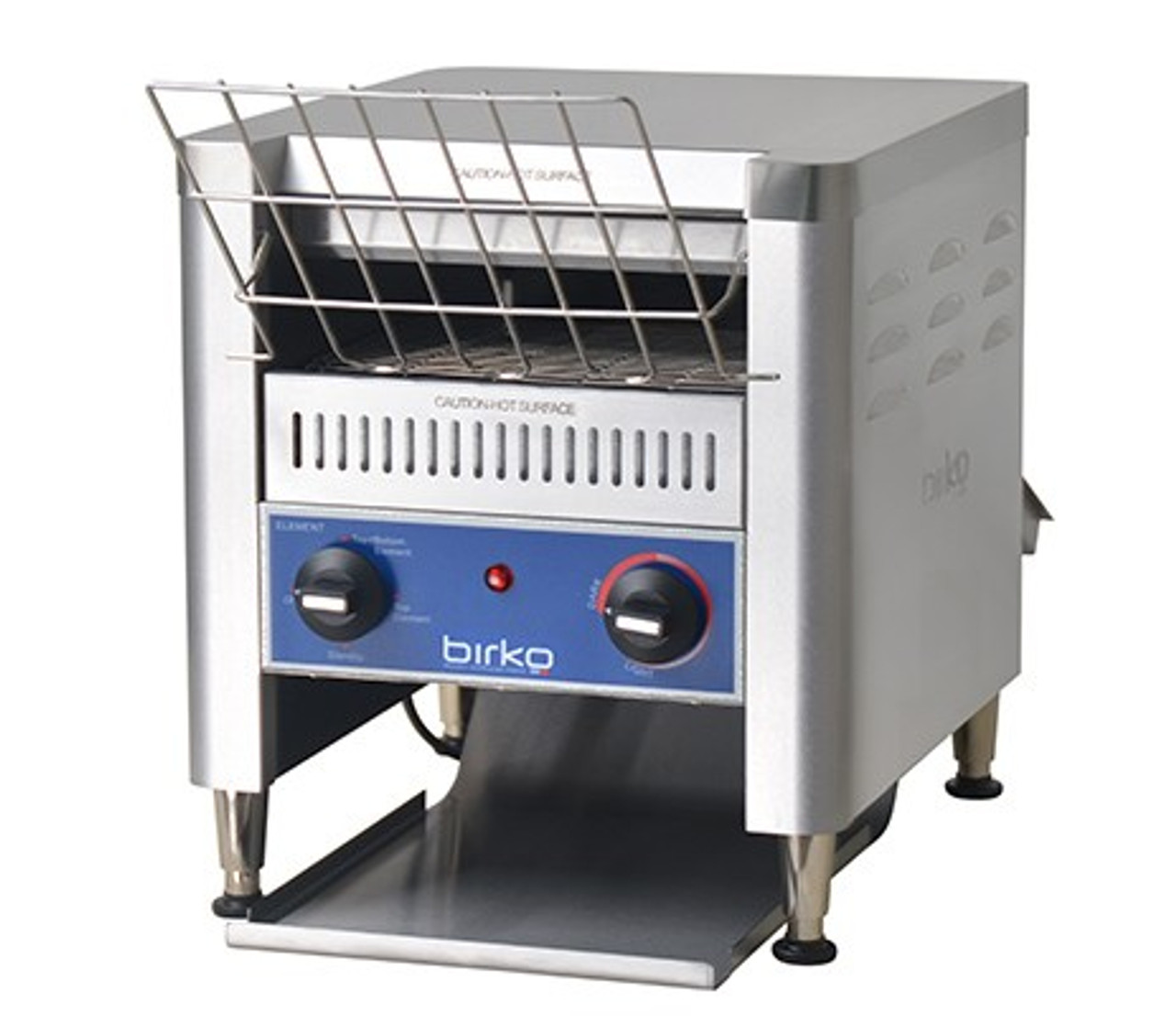
Birko Toaster Conveyor 600 Slices/hr 1003202
Perfect for busy breakfast services, the Birko Conveyor Toaster handles up to 600 slices per hour with ease. It’s built tough with a stainless-steel body and adjustable settings for varying toast preferences. Designed for high turnover environments like hotels, catering businesses, and bustling cafés, this model ensures speedy, consistent output without sacrificing quality.
Best Compact Conveyor Toaster for Small Spaces: Benchstar Conveyor Toaster 2 Slice TT-300E
Short on space but big on demand? The Benchstar TT-300E offers a compact design without compromising performance. With a two-slice conveyor system, it’s ideal for boutique cafés, food trucks, and small restaurants needing consistent, high-quality toasting at a more manageable volume. Plus, its easy-clean crumb tray makes maintenance a breeze.
Best Ribbed Contact Grill for Heavy-Duty Use: Woodson 8 Slice Ribbed Contact Grill Toaster W.CT8R
For businesses that want to deliver perfectly toasted sandwiches and melts, the Woodson W.CT8R is a powerhouse. Its ribbed plates provide excellent grill marks, while its eight-slice capacity ensures you keep up with peak service demands. Built for durability and even heat distribution, it’s a must-have for cafes offering artisan paninis and gourmet melts.
Best Mid-Sized Option: Woodson 6 Slice Ribbed Contact Grill Toaster W.CT6R
The Woodson W.CT6R balances space-saving design with ample production capacity. Perfect for mid-sized cafés or breakfast spots, it offers reliable ribbed grilling with a six-slice output—ideal for moderate traffic without taking up too much valuable counter space.
Top Value Smooth Plate Contact Grill: Roband Contact Grill/Toaster 6 Slice Smooth Plate GSA610S
Smooth plate grills deliver perfect browning without heavy grill marks. The Roband GSA610S is the top pick for businesses focusing on a clean, uniform toast finish for sandwiches and melts. It features six-slice capacity, independent top and bottom heating, and a durable build that withstands daily commercial use.
Best for Larger Sandwich Volume: Roband Contact Grill/Toaster 8 Slice S
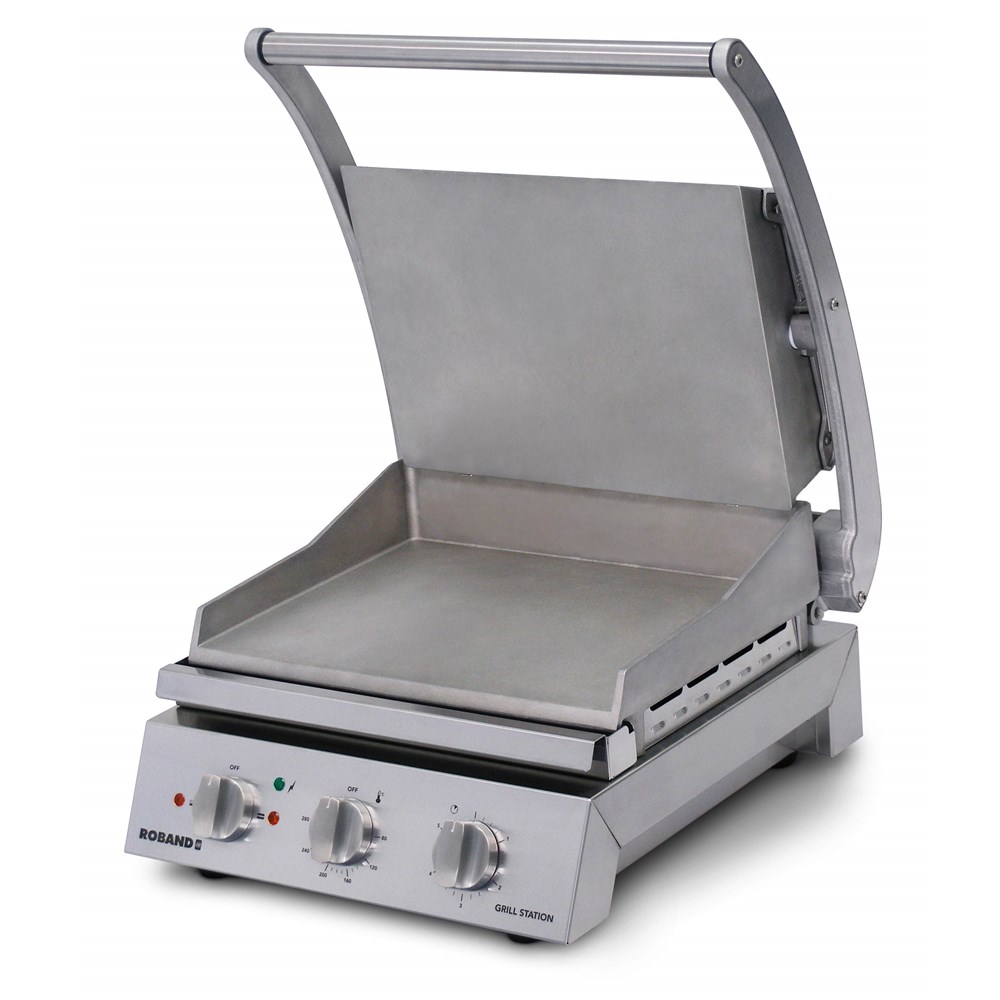
Roband Contact Grill/Toaster 8 Slice Smooth Plate GSA810S
mooth Plate GSA810S
Need to step up volume without stepping up space? The Roband GSA810S offers eight-slice capacity with smooth plates ideal for pressed sandwiches and wraps. Perfect for cafes offering a wide selection of hot sandwiches during busy lunch hours.
Best Value Grill Toaster: Roband Grill Max Toaster 8 Slice GMX810G
The GMX810G model is the workhorse of the Roband Grill Max series, providing robust performance at a budget-friendly price point. With eight-slice capacity, variable timer controls, and energy-efficient operation, it’s perfect for businesses balancing quality with cost-conscious buying.
Ultimate High-Capacity Choice: Roband Grill Max Toaster 15 Slice GMX1515
Serving large volumes daily? The Roband GMX1515 is built for it. Offering an impressive 15-slice capacity, this heavy-duty grill toaster is ideal for busy buffets, staff cafeterias, or large venue catering operations where speed and quantity are critical.
Most Versatile Mid-Size Option: Roband Grill Max Toaster 6 Slice GMX610
Small but mighty, the GMX610 packs serious performance into a compact footprint. With a six-slice output and a focus on consistent, efficient heating, it’s ideal for small-to-medium businesses that need dependable throughput without overloading their kitchen space.
The Complete Guide to Cleaning and Maintaining Your Equipment
When it comes to commercial toasters and sandwich presses, regular maintenance isn’t just recommended—it’s critical. Without proper care, even the best models like the Birko Conveyor Toaster 600 Slice or the Roband Grill Max GMX1515 can underperform or fail prematurely. Here’s your guide to keeping your equipment in peak condition and protecting your investment.
Daily Cleaning Routine: Keep It Simple, Keep It Consistent
Every night after service, make it a habit to clean your toaster or sandwich press. For conveyor toasters like the Benchstar TT-300E or the Birko 600 Slice, start by unplugging the machine and letting it cool down. Remove and empty the crumb trays, wiping down all accessible surfaces with a damp cloth. For models with exposed belts, like conveyor units, use a soft brush to gently remove crumbs and debris from hard-to-reach areas.
For contact grills such as the Woodson W.CT8R and the Roband GSA810S, while the plates are still slightly warm (but not hot), wipe them down with a damp cloth. Avoid abrasive materials that could damage the non-stick surface. Some models, like the Woodson W.CT6R, feature non-stick plates that make cleaning even easier—no heavy scrubbing needed.
Weekly Maintenance Checks: Preventative Care Pays Off
Once a week, give your equipment a more thorough inspection. Check the heating elements for buildup or discoloration, tighten any loose screws or handles, and test all control knobs and switches for responsiveness. Conveyor toasters like the Roband Grill Max GMX810G have moving parts that should be kept free of crumbs to ensure smooth operation. Sandwich presses should have their hinges checked to ensure even plate pressure.
Troubleshooting Common Problems
-
Uneven Toasting or Grilling: Clean the heating elements. Debris buildup can block heat distribution.
-
Slower Toasting Speed: Conveyor belts might need adjustment or lubrication, or heating elements may need inspection.
-
Plate Not Heating Evenly: On contact grills like the Roband GSA610S, this often means the heating element is partially obstructed or failing—catch it early to avoid expensive fixes.
How Proper Care Saves You Money
Replacing a high-quality unit like the Roband GMX1515 or Woodson W.CT8R can be costly. Regular maintenance extends their lifespan by years. Plus, well-maintained machines operate more efficiently, consuming less energy and reducing your utility bills.
Pro Tip:
Always consult the manufacturer’s manual for model-specific care instructions. Some brands, like Woodson and Roband, provide detailed maintenance guides tailored to their appliances—worth reading and following to the letter.
Maintaining your commercial toasters and sandwich presses doesn’t just protect your investment—it keeps your kitchen running smoothly, ensures food quality stays high, and saves you from unexpected downtime that could cost you sales.
How a Sandwich Press Can Explode Your Sales
Adding a commercial sandwich press to your kitchen isn’t just a convenience—it’s a profit-generating powerhouse. Whether you’re running a café, a bistro, or even a food truck, introducing hot, grilled sandwiches can open up new revenue streams and help you stand out in a crowded market. And with models like the Woodson 8 Slice Ribbed Contact Grill W.CT8R or the Roband GSA810S, delivering premium quality is easier than ever.
Versatility That Transforms Your Menu
Sandwich presses allow you to expand your menu far beyond cold sandwiches. Think gourmet paninis, cheesy melts, breakfast wraps, and even grilled desserts. The Woodson W.CT6R and Roband GSA610S offer ribbed or smooth grilling options that let you craft a variety of mouth-watering hot sandwiches. By simply switching ingredients and fillings, you can create seasonal specials and rotating menu items that encourage repeat visits.
Boosting Sales with High-Value, Low-Cost Items
Hot sandwiches often command a higher price point than their cold counterparts, and the food cost margins remain excellent. A simple ham and cheese melt can sell for triple the cost of its ingredients. Multiply that across dozens of sales per day, and the return on a small investment in a sandwich press like the Roband Grill Max GMX810G quickly becomes evident.
Customer Loyalty Through Quality
The texture, warmth, and crispness that a properly grilled sandwich delivers is unforgettable. Sandwich presses like the Roband GMX610 ensure even heating and perfect grill marks that elevate your presentation and taste. When customers know they can rely on you for a delicious, satisfying meal every time, loyalty naturally follows.
Menu Ideas to Drive Repeat Business
-
Classic Ham & Cheese Melt: Always a bestseller.
-
Chicken Pesto Panini: Fresh, light, and perfect for health-conscious diners.
-
Breakfast Wraps: Bacon, eggs, spinach, and cheese—grilled to perfection.
-
Vegetarian Grilled Cheese: Roasted vegetables with mozzarella and pesto.
-
Dessert Panini: Nutella and banana grilled sandwich—an unexpected treat!
Recommended Models for Fast, Even Cooking
-
Woodson W.CT8R: Best for high-volume, busy cafes.
-
Roband GSA810S: Ideal for those needing a mix of volume and precision.
-
Roband Grill Max GMX810G: A budget-friendly yet powerful performer.
Pro Tip:
Invest in a sandwich press with independent temperature controls for the top and bottom plates (like the Roband GSA610S). This feature ensures delicate breads don’t burn while fillings cook thoroughly—delivering consistently mouth-watering results.
With minimal ingredients, little additional staffing, and compact kitchen footprint requirements, a commercial sandwich press can quickly become one of the highest-ROI investments you make. Your customers—and your bottom line—will thank you.
Where Smart Businesses Buy Toasters and Presses in Australia
When you’re investing in essential kitchen equipment like commercial toasters and sandwich presses, choosing where to buy is just as important as what you buy. Smart businesses know that buying from a trusted supplier not only guarantees product quality but also ensures outstanding post-purchase support. For those in Australia, Caterware Australia stands out as the go-to destination.
Why Buy from a Trusted Supplier Like Caterware Australia?
Suppliers like Caterware don’t just sell you a toaster—they deliver peace of mind. All the models we’ve highlighted, including the Birko Conveyor Toaster 600 Slice, Roband Grill Max GMX810G, and Woodson 8 Slice Ribbed Contact Grill W.CT8R, are backed by robust warranties and customer support teams that understand commercial kitchen pressures.
When you purchase from Caterware, you benefit from:
-
Faster Delivery Times: Caterware’s Australian-based warehouses mean quicker dispatch and reduced waiting times compared to overseas suppliers.
-
Expert Advice: Their team understands commercial kitchen requirements. Whether you’re unsure if the Roband GSA810S suits your café’s output, or if the Benchstar TT-300E is right for your new food truck, they can guide you to the best fit.
-
Access to Deals and Specials: Caterware often runs promotions on high-demand models, helping businesses secure premium equipment at discounted prices.
Benefits of Buying Local
-
Better Warranties: Local suppliers offer warranties that are easier to claim and often include on-site servicing.
-
Local Service Technicians: Quick fixes and maintenance checks are just a call away.
-
Zero Hidden Costs: No international shipping fees, no currency conversion surprises—what you see is what you pay.
-
Support Australian Business: Buying local keeps your investment within the national economy, supporting jobs and innovation.
What to Look for in Warranties and Support
When you’re buying high-use equipment like the Roband GMX1515 or the Woodson W.CT6R, a strong warranty is non-negotiable. Look for suppliers that offer:
-
At least 12-month warranties (Caterware offers this and more on many products).
-
Clear service procedures if issues arise.
-
Access to replacement parts without overseas delays.
Pro Tip:
Always ask whether the supplier provides in-house servicing or partners with authorised local technicians. It can make a huge difference if your Birko Conveyor Toaster needs urgent repairs during peak trading.
Choosing a reputable Australian supplier like Caterware ensures you don’t just buy a toaster—you buy a reliable partnership that helps keep your kitchen running smoothly and profitably.
Why a Great Commercial Toaster Is the Best Investment You’ll Make
If you’re running a commercial kitchen, few investments pay off faster than a quality toaster or sandwich press. From the Birko Conveyor Toaster 600 Slice to the Roband Grill Max GMX1515, top-tier equipment drives operational efficiency, customer satisfaction, and ultimately, profitability.
Boosting Kitchen Productivity Without Adding Staff
High-quality toasters and presses dramatically streamline service. Models like the Benchstar TT-300E and the Woodson 8 Slice Ribbed Contact Grill W.CT8R are built to work quickly and consistently, allowing your team to focus on other tasks without babysitting appliances.
When equipment does its job reliably, it reduces bottlenecks during rush periods, cuts down food preparation times, and lets even a small kitchen team handle a big customer load. That means lower labour costs and a happier, more efficient team.
Delivering Consistent Quality to Win Customer Loyalty
Consistency is king in the food business. Customers expect their sandwich or toast to taste just as good on their third visit as it did the first time. Equipment like the Roband GSA810S ensures even heating and uniform browning every time, creating a reliable dining experience that builds trust and loyalty.
A slight upgrade in equipment quality can have an outsized impact on customer satisfaction—and satisfied customers mean glowing reviews, repeat visits, and word-of-mouth marketing.
Keeping Up with Dining Trends
Hot sandwiches, gourmet melts, and breakfast wraps are hotter than ever. Having a high-performance sandwich press like the Roband GSA610S or the Woodson W.CT6R allows your kitchen to ride the wave of these popular menu items.
Being able to quickly adapt your offerings to current food trends can drive new streams of revenue and attract a broader customer base. Your kitchen’s flexibility becomes a major asset in an ever-evolving dining landscape.
Avoiding Costly Breakdowns and Downtime
Commercial-grade models such as the Roband Grill Max GMX810G and Roband GMX610 are built for resilience. They offer longer lifespans, more comprehensive warranties, and easier access to service and replacement parts—especially when sourced locally through trusted suppliers like Caterware Australia.
The cost of downtime—lost sales, wasted food, and rushed repair bills—adds up fast. Investing upfront in quality reduces these risks significantly.
Pro Tip:
Treat your toaster and sandwich press like core members of your team. Regular maintenance, cleaning, and servicing extend their lifespan and maximise their performance.
In short, upgrading your kitchen with a reliable commercial toaster or sandwich press isn’t just about making toast or grilling sandwiches. It’s about building a kitchen operation that’s faster, more profitable, and ready to scale with your success.
FAQs: Everything You Need to Know About Commercial Toasters and Sandwich Presses
When it comes to investing in commercial kitchen equipment like the Birko Conveyor Toaster 600 Slice or the Roband GSA810S Sandwich Press, many business owners have common questions. Here’s a quick FAQ to clear up any confusion and help you make the right choice.
Q: Why shouldn’t I just use a domestic toaster in my café or restaurant?
A: Domestic toasters are not built for the heavy-duty demands of commercial kitchens. They wear out quickly under constant use, produce inconsistent results, and can become a fire hazard when pushed beyond their limits. Models like the Benchstar TT-300E and Roband GMX810G are designed for the durability, speed, and consistency your business demands.
Q: How do I choose the right commercial toaster for my business needs?
A: First, consider your volume. If you’re serving hundreds of customers daily, a high-capacity conveyor model like the Birko 600 Slice is ideal. For smaller cafes or mobile setups, a compact yet robust option like the Roband GMX610 could be perfect.
Also, think about menu diversity. If you plan to offer melts, paninis, and grilled items, a versatile sandwich press like the Woodson W.CT8R or Roband GSA610S might be a better investment.
Q: How energy efficient are commercial toasters and sandwich presses?
A: Modern commercial models are surprisingly energy-efficient given their power. Brands like Roband and Woodson design their equipment to heat up quickly, maintain steady temperatures, and reduce wastage. Regular maintenance, such as cleaning heating elements and inspecting wiring, also boosts energy efficiency over time.
Q: What’s involved in cleaning and maintaining these machines?
A: Maintenance is simple but crucial. Conveyor toasters like the Roband GMX1515 need daily crumb removal and regular belt inspections. Sandwich presses like the Woodson W.CT6R should have their plates wiped down daily and hinges checked weekly. Always unplug and cool equipment before cleaning, and avoid abrasive materials that could damage surfaces.
Q: What should I do if my toaster or press needs repairs?
A: First, check if your equipment is still under warranty. Trusted suppliers like Caterware Australia offer solid warranties and can often arrange quick repairs or replacements. Keeping spare parts on hand and working with authorised service agents will minimise downtime.
Pro Tip:
Always register your equipment with the manufacturer when you purchase it. This simplifies warranty claims and ensures you’re notified about service updates or safety recalls.
Investing in the right toaster or sandwich press is about more than just cooking—it’s about setting your kitchen up for seamless service, satisfied customers, and long-term success.