 Rent-Try-Buy
With SilverChef |
Apply Now
Rent-Try-Buy
With SilverChef |
Apply Now


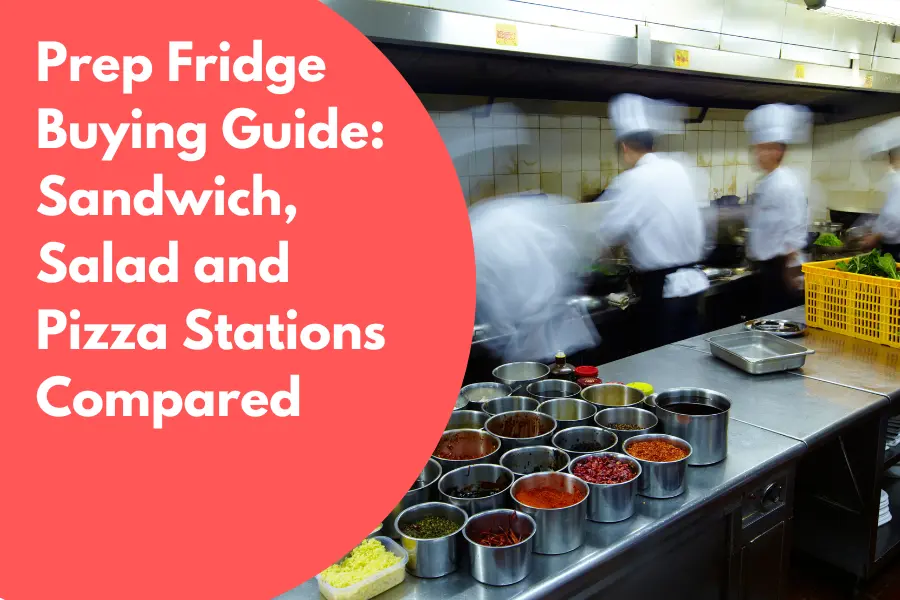
Prep Fridge Buying Guide: Sandwich, Salad and Pizza Stations Compared
06
Jul
A prep fridge does more than keep ingredients cold. It combines refrigerated storage with a practical food preparation area, helping staff assemble orders faster and with fewer unnecessary steps.
The wrong unit can create problems quickly. Staff may have to reach too far for ingredients, the worktop may feel cramped, or the fridge may not provide enough storage for peak service. A unit can fit the available space and still slow the kitchen down.
The right choice depends on what you prepare, how much space you need, how many ingredients must stay within reach and how quickly the station has to perform.
This guide compares sandwich, salad and pizza prep fridges so you can choose the best format for your menu and workflow.
Prep Fridge Comparison at a Glance
| Prep fridge type | Best for | Main advantage | Key consideration |
| Sandwich prep fridge | Cafés, takeaway shops, sandwich bars and delis | Fast access to fillings and ingredients | Pan layout and easy reach |
| Salad prep fridge | Salad bars, delis, cafés and fresh-food counters | Visibility and access to a wider range of ingredients | Number and arrangement of pans |
| Pizza prep fridge | Pizzerias, restaurants and takeaway kitchens | Larger preparation surface with chilled toppings below | Bench depth and uninterrupted workspace |
The main difference is not simply storage capacity. It is how each station supports the physical work of assembling food.
What a Prep Fridge Does
A prep fridge combines chilled storage, ingredient access and a work surface in one station.
Instead of moving between a separate fridge and preparation bench, staff can keep ingredients close to the point of use. This can reduce unnecessary movement, shorten preparation time and keep the line more organised.
A well-positioned prep fridge can help with:
- faster assembly
- easier ingredient access
- reduced movement between stations
- better use of limited floor space
- more consistent preparation
- cleaner workflow during busy periods
A prep fridge does not always replace bulk cold storage. Many venues use an upright or underbench fridge for larger stock quantities and a prep fridge for ingredients needed during service.
Sandwich Prep Fridges
A sandwich prep fridge is usually designed for fast, repeated assembly.
It works well for menus built around:
- sandwiches
- wraps
- rolls
- baguettes
- toasties
- cold lunch items
- simple takeaway meals
The top section typically holds ingredient pans, while the refrigerated cabinet below stores backup ingredients and prepared stock.
The most important factors are easy reach, practical pan placement and enough clear surface for assembly.
For a compact café or takeaway counter, a smaller sandwich prep fridge may provide all the storage and workspace needed. Higher-volume venues may benefit from a wider two-door or three-door unit that reduces restocking during service.
Avoid choosing a larger model simply for additional storage. A unit that is too deep or wide can interfere with staff movement and waste valuable kitchen space.
Salad Prep Fridges
Salad prep fridges often serve a similar purpose to sandwich units, but they may need to support a wider range of ingredients.
They are commonly used in:
- salad bars
- delis
- cafés
- health-food venues
- hotel kitchens
- buffet-style service
- fresh-food counters
A salad station may require more ingredient pans because staff are working with different vegetables, proteins, toppings, dressings and garnishes.
Visibility can be especially important. Glass canopies or buffet-style configurations may make it easier for staff to see ingredients and work efficiently.
When comparing salad prep fridges, check:
- how many pans the top section holds
- whether the pans are easy to reach
- how much clear preparation space remains
- whether lids or covers interrupt movement
- how easily the unit can be cleaned
- whether the cabinet below provides enough backup storage
Pan layout can matter more than total litres. A fridge with a large internal capacity may still perform poorly if the top section is awkward to work from.
Pizza Prep Fridges
Pizza prep fridges are designed for a different type of movement.
A pizza station needs chilled toppings, but it also needs enough uninterrupted bench space for dough, bases, trays and pizza assembly.
These units are well suited to:
- pizzerias
- Italian restaurants
- takeaway pizza shops
- food courts
- fast-paced restaurant kitchens
- venues with a dedicated topping line
Compared with sandwich or salad units, pizza prep fridges often provide a deeper or larger work surface.
When choosing one, pay close attention to:
- bench depth
- topping-pan configuration
- clear assembly space
- door count
- underbench storage
- lid or canopy clearance
- access for trays and pizza peels
- staff movement along the station
A standard sandwich prep fridge may hold the right ingredients but still feel cramped when staff need to stretch dough and build pizzas quickly.
Which Prep Fridge Suits Your Menu?
Start with the food being assembled at the station.
Sandwich prep fridge when:
- the menu focuses on wraps, rolls or sandwiches
- staff need quick access to common fillings
- the kitchen has limited floor space
- the preparation process is relatively compact
Salad prep fridge when:
- the menu uses a wide range of fresh ingredients
- staff need clear visibility across several pans
- toppings and garnishes change frequently
- the station supports customer-facing or high-volume fresh-food service
Pizza prep fridge when:
- dough and bases need more bench space
- toppings must remain close to the assembly area
- trays or pizza peels move across the station
- pizza preparation happens continuously during service
Do not choose by product name alone. Compare the actual dimensions, pan layout and work surface against the way your team prepares food.
Choosing the Right Size
Prep fridge sizing is not only about refrigerated capacity.
The unit also needs to provide enough:
- preparation surface
- ingredient access
- storage below
- door clearance
- ventilation space
- room for staff to move safely
Compact units may suit smaller cafés, food trucks and lower-volume counters. Two-door models often work well for mid-volume cafés, delis and takeaway venues. Larger three-door units may suit busier sandwich, salad or pizza operations.
Before buying, measure:
- the full external width and depth
- available floor space
- door swing
- lid or canopy clearance
- ventilation requirements
- nearby benches and appliances
- access for delivery and installation
- room for cleaning and servicing
A unit that fits on paper may still create a bottleneck if staff cannot open doors or move behind it comfortably.
Door Count and Storage Capacity
Door count affects both storage and service efficiency.
A one-door unit may be sufficient for a low-volume menu with a small ingredient range. Two-door and three-door units provide more storage, but they also require more space.
Consider how frequently the team will need to restock the top pans.
If staff have to leave the station repeatedly to collect backup ingredients from another fridge, the unit may be too small for peak demand.
However, oversizing also creates problems. A larger fridge costs more, uses more space and may increase energy consumption without improving workflow.
Choose enough storage to support the busiest realistic service period rather than the maximum amount of stock the kitchen could possibly hold.
Pan Layout and Ingredient Access
A prep fridge can have enough capacity and still feel inefficient.
The top section should match the way staff use ingredients during service.
Ask:
- Are the most-used ingredients within easy reach?
- Can staff see what is available without opening multiple lids?
- Does the layout reduce cross-reaching?
- Is there enough room for containers and utensils?
- Can pans be removed and cleaned easily?
- Does the lid interrupt normal movement?
For sandwiches and salads, quick hand movement across the pan line is often the priority.
For pizza, topping access must work alongside a larger preparation area.
The best layout is the one that supports repeated movement without forcing staff to stretch, turn or step away from the station unnecessarily.
Bench Space and Worktop Depth
Buyers often focus on the refrigerated cabinet and overlook the work surface.
The worktop must support the actual preparation process.
For sandwich or salad service, the team may need enough space for:
- bread or wraps
- chopping boards
- packaging
- knives and utensils
- completed orders
- containers waiting for service
For pizza preparation, the surface may also need to hold:
- dough
- pizza bases
- flour
- trays
- peels
- sauce containers
A deeper bench is not automatically better. It should be deep enough for the task without forcing staff to reach too far.
Cold Storage and Temperature Control
A prep fridge must keep ingredients cold while staff access them repeatedly.
Food Standards Australia New Zealand advises that potentially hazardous food generally must be kept at 5°C or colder, or 60°C or hotter. The range between 5°C and 60°C is known as the temperature danger zone because food-poisoning bacteria can multiply within it.
This makes temperature recovery, airflow around ingredient pans and ongoing monitoring important considerations when comparing prep fridges used throughout busy service periods.
Check:
- operating temperature range
- recovery after frequent door opening
- airflow around pans
- lid or cover design
- cabinet insulation
- digital temperature display
- defrost system
- drainage requirements
- recommended ambient operating conditions
The unit should suit the environment in which it will operate. A fridge placed near ovens, grills or direct sunlight may work harder to maintain temperature.
Prep fridges should also be positioned so staff can monitor, clean and restock them easily.
Follow applicable food-safety requirements and the manufacturer’s instructions for storage, operation and cleaning.
Ventilation and Installation Requirements
Commercial refrigeration needs room to release heat.
Before ordering, confirm:
- whether the unit is front-, side- or rear-ventilated
- the required clearance around the cabinet
- electrical requirements
- plug type and circuit capacity
- drainage requirements
- floor level and stability
- access through doors and corridors
Poor ventilation can reduce efficiency and increase strain on the refrigeration system.
Installation planning is especially important in small kitchens, where a few centimetres can affect door access, airflow and staff movement.
Cleaning and Maintenance
A prep fridge is used heavily and should be easy to clean.
Look for:
- removable ingredient pans
- accessible gaskets
- smooth internal surfaces
- removable cutting boards
- rounded internal corners
- easy access to condensers or filters
- removable shelves
- practical drainage
Cleaning should be considered before the unit is installed.
Leave enough room to clean around and behind it. Check how easily staff can remove pans, shelves and cutting surfaces during daily cleaning.
Regular maintenance can also help the fridge operate efficiently and reduce the risk of unexpected breakdowns.
Common Buying Mistakes
Choosing the format before reviewing the menu
A sandwich, salad and pizza prep fridge may look similar, but they support different types of work.
Start with the menu and preparation process.
Focusing only on total capacity
Internal litres do not tell you whether the top pans are practical or the worktop is large enough.
Compare usable storage, pan access and clear bench space.
Buying too little storage
A small unit may appear economical until staff are restocking it constantly during peak service.
Estimate how much backup stock the station needs to hold.
Buying too much fridge
A large unit can waste floor space and make the kitchen harder to move through.
Choose the smallest format that can support your busiest realistic period.
Ignoring ventilation
Insufficient clearance can affect performance and make servicing difficult.
Check the manufacturer’s installation requirements before ordering.
Treating a standard fridge as a prep station
A standard commercial fridge may store ingredients, but it does not provide the same direct access or integrated work surface.
Choose a dedicated prep fridge when assembly speed and ingredient access are central to service.
Questions to Ask Before You Buy
Before ordering a prep fridge, ask:
- What food will staff assemble at this station?
- How many ingredient pans are needed?
- How much clear worktop space is required?
- How much backup storage is needed below?
- How often will the station be restocked?
- Will doors and lids open without blocking movement?
- Is there enough ventilation space?
- Can the unit be cleaned and serviced easily?
- Does it fit through the delivery route?
- Are the power requirements suitable?
- Will the station still work during peak service?
These questions help prevent a purchase that looks suitable in a product listing but performs poorly in the kitchen.
Frequently Asked Questions
What is the difference between a sandwich prep fridge and a salad prep fridge?
The two formats often overlap.
Sandwich prep fridges are usually chosen for fast assembly and repeated access to fillings. Salad prep fridges may support a wider range of fresh ingredients and can include larger or more visible pan configurations.
The best option depends on the menu and how staff use the station.
Do I need a pizza prep fridge or a standard prep bench?
A pizza prep fridge is usually the better choice when you need more uninterrupted worktop space for dough, bases, trays and pizza assembly.
A standard prep bench may work for lighter production, but it can feel restrictive during continuous pizza service.
What size prep fridge should I buy?
Choose a size based on service volume, ingredient range, storage requirements and available space.
Compact units may suit lower-volume cafés and takeaway counters. Larger two-door and three-door units may suit busier kitchens that need more storage and workspace.
Are prep fridges suitable for cafés?
Yes. They can be useful in cafés serving sandwiches, wraps, salads, cabinet food and other items that require chilled ingredients close to the preparation area.
Can a prep fridge replace an upright fridge?
Not always.
A prep fridge is designed for service access and workstation efficiency. An upright fridge is usually better for bulk storage.
Many venues use both.
How much bench space do I need?
The worktop should be large enough for the food, utensils, packaging and containers used during preparation.
Measure the task rather than guessing from the overall width of the unit.
Can I get help choosing the right model?
Yes. Product advice can help you compare dimensions, storage, pan layouts, ventilation and installation requirements before ordering.
Choose the Prep Fridge That Fits the Way You Work
The best prep fridge is not necessarily the largest or most expensive model.
It is the unit that supports the menu, fits the available space and keeps ingredients within easy reach during the busiest part of service.
Choose a sandwich prep fridge for fast assembly, a salad prep fridge for greater ingredient variety, or a pizza prep fridge when the work surface needs to support dough and topping preparation.
Compare Caterware’s prep fridge and pizza prep fridge ranges, or contact the team for help matching storage, dimensions and workstation layout to your kitchen.