 Rent-Try-Buy
With SilverChef |
Apply Now
Rent-Try-Buy
With SilverChef |
Apply Now


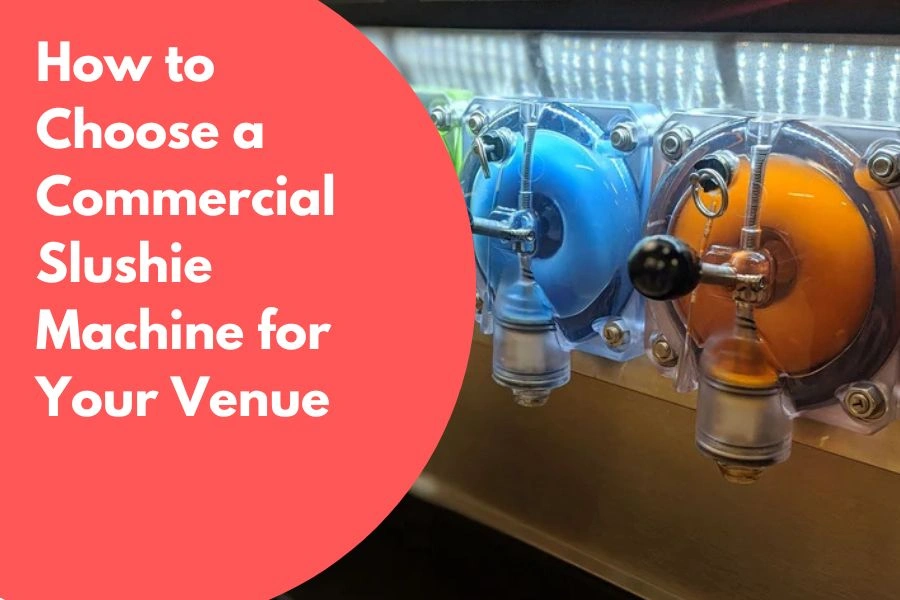
How to Choose a Commercial Slushie Machine for Your Venue
24
Jul
A commercial slushie machine can attract attention, encourage impulse purchases and add a profitable drinks category to your business. Choosing the right model, however, takes more than comparing prices or picking the machine with the most bowls.
Your venue type, peak demand, available space and planned drinks menu should guide the decision. A machine designed for a busy convenience store may be excessive for a small café. Equally, a compact single bowl model can become restrictive when warm weather, school traffic or event demand increases.
This guide explains how to compare commercial slushie machines by capacity, bowl count, output, installation requirements, cleaning and long term operating costs.
Match the Machine to Your Venue
Start with the way customers buy drinks at your venue.
Different businesses face different demand patterns. Identifying yours will help you avoid a machine that is too small, unnecessarily large or difficult for staff to manage.
Cafés, kiosks and takeaway venues
Frozen drinks are often an additional revenue stream for cafés and takeaway businesses rather than the main attraction.
A compact single bowl machine may be suitable when you want to:
- offer one popular or seasonal flavour
- test demand before expanding the range
- preserve valuable counter space
- simplify cleaning and close down
- add granita or frozen specials to an existing menu
A double bowl machine offers more flexibility when customers are likely to value a choice of flavours or drink styles.
Convenience stores and grab and go retailers
Convenience stores often depend on visibility, variety and impulse purchases. Customers may choose their drink after seeing the machine rather than arriving with a particular flavour in mind.
A double or triple bowl machine can help these venues:
- offer several flavours at once
- appeal to different customer groups
- reduce lost sales when one flavour runs low
- create a stronger visual display
- manage concentrated lunchtime, after school or weekend demand
Recovery performance is particularly important. The machine must maintain the right consistency as drinks are served and fresh mixture is added.
Events and seasonal sites
Event operators often face short periods of intense demand. A machine that performs well during steady café service may struggle when dozens of customers arrive at once.
Consider:
- expected serves per hour
- how frequently bowls will need refilling
- access to a suitable electrical supply
- transport and setup requirements
- alcoholic and non alcoholic menu options
- access to cleaning facilities
- heat and ventilation around the machine
Multi bowl machines provide more menu flexibility, but they also require more space, power, preparation and cleaning.
How Many Bowls Do You Need?
Bowl count affects flavour choice, total capacity, machine width, cleaning time and service flexibility.
| Configuration | Best suited to | Main advantages | Points to consider |
| Single bowl | Small cafés, kiosks and venues testing demand | Compact, straightforward to operate and easier to clean | Only one product can be served at a time |
| Double bowl | Cafés, takeaway shops and smaller retail sites | Good balance of choice, capacity and footprint | Requires more counter space and cleaning |
| Triple bowl | Busy stores, entertainment venues and events | Greater flavour variety and stronger visual impact | Larger footprint and higher operating demands |
Single bowl machines
A single bowl commercial slushie machine suits venues where frozen drinks support the wider menu rather than drive it.
It can also provide a lower risk way to test a new product. The main limitation is the lack of an alternative when the only flavour runs low or does not appeal to a customer.
View single bowl commercial slushie machines.
Double bowl machines
A double bowl model is often the most practical middle ground.
It allows you to offer two flavours, separate alcoholic and non alcoholic options, or change one product while keeping another available. It also provides more capacity without requiring the footprint or maintenance of a triple bowl machine.
Compare double bowl commercial slushie machines.
Triple bowl machines
A triple bowl machine is better suited to venues where choice contributes directly to sales.
It may be appropriate for busy convenience stores, cinemas, entertainment sites and event operators. However, additional bowls only create value when demand supports them. Three partly used bowls can increase waste and cleaning without generating enough additional revenue.
Explore triple bowl commercial slushie machines.
Compare Your Options
Use this as an initial guide before checking the specifications of individual products.
| Buying factor | Single bowl | Double bowl | Triple bowl |
| Flavours available at once | 1 | 2 | 3 |
| Typical footprint | Smallest | Medium | Largest |
| Cleaning time | Lowest | Moderate | Highest |
| Menu flexibility | Limited | Good | High |
| Best demand pattern | Low or steady | Moderate or varied | High volume or event demand |
| Best use | Seasonal add on or one core drink | Two flavour menus and growing demand | Variety led sales and busy service |
Capacity alone does not determine performance. Compare freeze down time, recovery speed, electrical requirements, controls and operating temperature before selecting a model.
Calculate Demand Around Your Busiest Period
Average daily sales do not tell the whole story.
The Australian Bureau of Statistics recorded approximately $5.44 billion in seasonally adjusted spending at cafés, restaurants and takeaway food services in January 2025, including around $2.99 billion spent through takeaway food services. This highlights the scale of Australia’s food-service market, but individual venue demand can still vary significantly by location, customer profile and trading period.
A venue may trade steadily for most of the day but experience a sharp rush after school, during lunch, at an interval or when an event finishes. The machine must cope with that period without repeatedly running empty or serving an under frozen product.
Ask:
How many drinks could we sell during our busiest hour?
- How many drinks could we sell during our busiest hour?
- What serving size will we use?
- How often can staff refill the bowls?
- How long will fresh mixture take to reach serving consistency?
- Will demand be steady or concentrated into short bursts?
- What happens if one flavour sells faster than the others?
Base capacity decisions on your busiest realistic trading window, not an average day.
Check Capacity, Freeze Time and Recovery Speed
Bowl capacity is a useful starting point, but it should not be considered in isolation.
Machines with similar bowl sizes may perform differently depending on their refrigeration systems, controls, ambient conditions and product mixture.
Before buying, confirm:
- usable capacity per bowl
- expected freeze down time
- recovery time after refilling
- recommended ambient operating temperature
- whether bowls operate independently
- whether the machine has a night or standby mode
- which mixtures the manufacturer approves
Recovery speed is particularly important for high volume venues. Adding warm mixture during service can temporarily affect consistency, so staff may need a planned refilling routine.
Measure the Available Space
Commercial slushie machines can occupy more space than expected once drip trays, ventilation clearance and access for cleaning are considered.
Measure:
- available bench width and depth
- clearance above the machine
- clearance around ventilation points
- distance from the power outlet
- space required for refilling
- access for removing bowls and components
- the weight capacity of the bench
The machine should be visible to customers but practical for staff to refill, clean and operate. Poor ventilation or limited access can affect performance and make daily maintenance unnecessarily difficult.
Confirm the Electrical Requirements
Check the electrical requirements before ordering.
Do not assume every commercial machine will suit an ordinary outlet or your existing counter setup. Confirm the voltage, wattage, plug type and circuit requirements with the supplier and a qualified electrician where necessary.
This is especially important when:
- replacing a smaller unit with a larger model
- installing several pieces of beverage equipment together
- operating from a temporary event site
- using a mobile service counter
- installing equipment in an older premises
Arrange any necessary electrical work before delivery.
Match the Machine to Your Drinks Menu
A commercial slushie machine can support more than traditional flavoured slushies.
Depending on the model and approved mixture, possible options may include:
- fruit slushies
- granita
- frozen mocktails
- frozen cocktails
- iced coffee drinks
- seasonal flavours
- limited time promotions
Define your menu before choosing the machine.
A venue selling one high volume hero product may benefit from a large single bowl. Another business may generate more sales by offering several flavours. A bar may need separate bowls for alcoholic and non alcoholic drinks, while a café may rotate products according to the season.
Always confirm that the intended mixture is suitable for the machine. Sugar, alcohol and other ingredients can affect freezing performance. Follow the manufacturer’s instructions rather than using unapproved recipes.
Consider Cleaning and Daily Maintenance
Cleaning requirements can determine whether a machine becomes a reliable part of daily service or a burden for staff.
More bowls usually mean:
- more parts to dismantle
- more taps and seals to clean
- longer close down procedures
- greater potential for waste
- more staff training
- more time required for flavour changes
Before buying, review the operating manual or ask for a demonstration of the cleaning process.
Confirm:
- which parts must be removed
- how often components need cleaning
- whether parts are dishwasher safe
- how seals and gaskets should be maintained
- whether food safe lubricant is required
- how easily replacement parts can be obtained
- how the machine should be sanitised between products
The best machine is not necessarily the largest one you can afford. It is the model your team can clean, refill and operate correctly every day.
Compare Warranty, Servicing and Spare Parts
A commercial slushie machine is a working business asset. Its value depends on more than the purchase price.
Before ordering, confirm:
- warranty length and coverage
- whether labour or call outs are included
- access to local servicing
- expected lead times for replacement parts
- availability of taps, seals, bowls and mixing components
- how warranty claims are handled
- whether preventative maintenance is recommended
Downtime during a busy period can cost more than the difference between two machines. Reliable support and accessible parts should therefore form part of the buying decision.
Consider the Total Cost of Ownership
The cheapest machine may not deliver the lowest long term cost.
Allow for:
- purchase price
- delivery and installation
- electrical work
- drink mixture
- cups, lids and straws
- cleaning supplies
- staff time
- electricity
- maintenance
- replacement parts
- product waste
Compare these costs with a realistic selling price and expected demand. Do not base forecasts only on ideal summer trading conditions.
A smaller machine that remains productive throughout the year may provide a better return than a larger unit that is underused outside peak season.
Plan for Seasonal Demand
Frozen drink sales often rise during warm weather, holidays and events. A broader menu may help the machine continue earning during quieter periods.
Depending on the model and approved mixtures, you may be able to rotate between fruit drinks, granita, mocktails, cocktails and limited time flavours.
Your seasonal plan should cover:
- product launch dates
- ingredient and packaging stock
- staff training
- promotional signage
- flavour rotation
- wet weather or cooler season alternatives
- cleaning and storage when the machine is not in use
Order early enough to allow for delivery, installation, testing and staff training before the busiest part of the season.
Commercial Slushie Machine Buying Checklist
Before selecting a model, record the following information.
Venue and demand
- Venue type
- Expected daily sales
- Peak serves per hour
- Seasonal demand changes
- Planned serving size
Drinks menu
- Number of flavours
- Types of drinks
- Alcoholic or non alcoholic service
- Frequency of flavour changes
- Approved mixture requirements
Installation
- Available width, depth and height
- Ventilation clearance
- Bench load capacity
- Electrical supply
- Delivery and installation access
Daily operation
- Freeze down time
- Recovery performance
- Refilling process
- Cleaning time
- Staff training requirements
- Noise and heat output
Ownership
- Purchase budget
- Estimated operating costs
- Warranty
- Service availability
- Replacement parts
- Expected payback period
Find the Right Commercial Slushie Machine
Choosing a commercial slushie machine becomes easier once you define four things: your venue, peak demand, required number of flavours and intended drinks menu.
You can then compare models that fit your available space, electrical supply and cleaning routine. Check the technical specifications carefully and consider servicing, replacement parts and operating costs alongside the purchase price.
Browse Caterware’s commercial slushie machine range to compare available single , double and triple bowl options.
For tailored product advice, contact the Caterware equipment team with:
- your venue type
- available bench dimensions
- estimated peak demand
- required number of flavours
- intended drinks
- electrical setup
- approximate budget
Gold Coast buyers can also visit Caterware’s Molendinar showroom to inspect commercial equipment before making a decision.