 Rent-Try-Buy
With SilverChef |
Apply Now
Rent-Try-Buy
With SilverChef |
Apply Now


Commercial Bug Zapper Buying Guide for Food Service and Outdoor Hospitality Areas
11
May
A commercial bug zapper is not just there to deal with nuisance insects. In hospitality, it supports hygiene, protects the customer experience and helps reduce the kind of visible pest activity that leads to complaints near food service zones. Buy the wrong unit and the result is predictable. Coverage falls short, placement works against you, and staff still end up dealing with insects where customers can see them.
Caterware’s current commercial fly zapper range is positioned specifically for cafés, restaurants, commercial kitchens and food preparation areas that need consistent insect control. The live category highlights high-output UV lamp units designed to reduce contamination risks and support food-safety expectations in hospitality settings.
Start With the Insect Problem You Actually Need to Control
Most operators are not looking for “general pest control” in a broad sense. They need to reduce flying insect activity in the specific areas where food is prepared, displayed, served, or exposed. This may include a bakery display zone, a café service counter, a food-court tenancy, or a venue with doors that regularly open toward outdoor dining areas.
That distinction matters because insect control works best when the unit matches the exposure pattern. A prep-heavy back-of-house area will have different needs from a customer-facing servery. A covered counter near an outdoor area will face different pressure points from a sealed indoor kitchen. A better buying decision starts by identifying where insects enter, where food remains exposed, and where visible pest activity could create the greatest hygiene or presentation concern.
Caterware’s current product messaging reflects this practical approach. Its commercial fly zapper range speaks directly to food businesses that need to manage cleanliness, safety, and compliance as part of everyday operations, rather than venues looking for a generic household pest solution.
Coverage Area Comes Before Price
One of the most common buying mistakes is choosing by price before checking coverage. Insect control that is undersized for the room or service area usually leads to disappointment, even when the unit itself is sound.
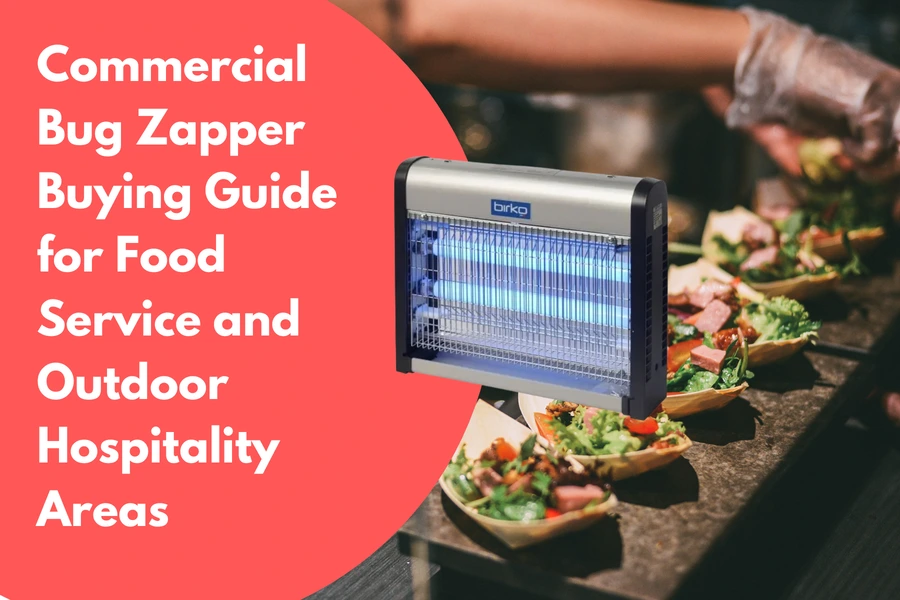
Caterware’s live range currently includes Birko commercial fly zappers with stated coverage examples of 50m2 and 100m2, which gives buyers a straightforward way to think about room size and exposure before they compare other features.
What 50m2 coverage suits
A smaller-coverage unit often makes sense for compact cafés, enclosed counters, smaller prep spaces or tighter bakery service areas where the insect pressure is localised rather than spread across a large floorplate.
In those environments, the aim is usually to control activity around a specific operational zone without overcommitting space or budget. That can be enough if the room is enclosed, customer flow is predictable and the exposed-food footprint is limited.
When 100m2 coverage makes more sense
A larger-coverage unit is usually the better choice for venues with broader exposure, larger preparation areas, multiple access points, or wider hospitality floors where insect activity is not limited to one small corner. This can include food courts, larger bakeries, open service counters, takeaway areas, and venues with frequent door movement between indoor and outdoor dining spaces.
In these environments, flying insects may enter from several directions or move across different service zones during busy periods. A unit with stronger coverage can help manage that activity more consistently, especially in areas where food is prepared, displayed, served, or temporarily exposed. Instead of relying on a unit designed for a small, contained space, operators can choose a solution that better reflects the size, layout, and daily movement patterns of the venue.
Caterware’s large Birko commercial fly zapper product page explicitly describes the unit as suitable for wide-area coverage in commercial kitchens and hospitality venues, which makes it a more natural candidate when operators need more than a compact localised solution.
Placement Has More Impact Than Most Buyers Expect

Even a well-sized unit can underperform if it is placed badly. This is where many hospitality buyers lose effectiveness. They choose a good product, then mount or position it where it does not intercept the insect activity properly or where it sits too close to the wrong operational area.
A practical placement strategy starts with the traffic pattern of insects, not the convenience of the nearest wall. Operators should think about entry points, food exposure zones, service counters, waste areas and any parts of the venue that attract flying insects during warmer periods or heavier service windows. The goal is to draw insect activity away from food-facing spaces without creating an awkward or highly visible setup for customers.
Food Standards Australia New Zealand states that food businesses must do everything they reasonably can to prevent pest problems under Standard 3.2.2 Food Safety Practices and General Requirements. This includes stopping pests from entering or living in food premises and eradicating pests from the premises. For cafés, bakeries, commercial kitchens and open service areas, this makes correct bug zapper placement part of a wider food-safety control approach, not just a convenience measure.
That is also where supplier guidance matters. Look at our Contact page to get in touch for product advice and planning support, if you need insect control but are still comparing placement and venue fit options.
Which Venues Need Commercial Insect Control Most?
Cafés and bakeries
Cafés and bakeries often have a mix of exposed product, regular door movement and customer-facing service areas that make visible insect activity especially damaging. In these venues, the issue is not just hygiene. It is also presentation. A single insect near cakes, slices or front-counter food can undo the work of the display itself.
Food courts and open service counters
Food-court sites and open counters typically deal with constant foot traffic and less separation between public space and service space. That creates more exposure and less control over the surrounding environment, which usually pushes buyers toward stronger coverage planning and more deliberate placement.
Outdoor-adjacent hospitality areas
Venues with open windows, pass-through counters, semi-covered dining zones or regular access to outdoor service areas tend to face more variable insect pressure. In these settings, the right unit is usually the one that matches both the size of the exposed zone and the way the venue actually operates during peak periods, not just the square metre number on paper.
Caterware’s category language directly supports these venue types by positioning commercial fly zappers for commercial kitchens, cafés, restaurants, and other food-service settings that need to maintain hygiene standards consistently.
How to Avoid the Wrong Commercial Fly Zapper
The wrong choice usually comes down to one of four problems.
First, the coverage is too small for the space. Second, the unit may be placed in a location where it cannot work properly. Third, the buyer chooses a general-purpose mindset instead of thinking about the venue’s specific insect exposure points. Fourth, the operator treats the product as a box-ticking compliance purchase instead of a practical food-service control tool.
A better buying process is more deliberate. Match the unit to the problem area, check its coverage against your actual service environment, choose a practical mounting or placement spot, and make sure the product suits a hospitality setting rather than a domestic use case.
Caterware’s live range supports that comparison because it already separates smaller and larger commercial units by coverage area, instead of leaving buyers to guess from model names alone.
What to Check Before You Buy
Before choosing a commercial bug zapper, buyers should check:
- the size of the service or prep area they are trying to protect
- how open or enclosed the venue is
- where food is exposed to customers or service staff
- whether insect pressure is localised or spread across a larger zone
- whether the unit needs to support a compact indoor kitchen, a customer-facing front counter or a larger hospitality floor
It also helps to confirm stock and delivery expectations before ordering. Stock availability can fluctuate, that listed availability is intended as a guide, and that the team can advise on stock as part of the quoting process.
Bug Zapper from Caterware
If your venue needs cleaner, more reliable insect control around food service areas, the next step is to choose a unit based on practical performance, not price alone. Look closely at the coverage area, installation position, access to power, maintenance requirements, and how suitable the unit is for customer-facing or food preparation spaces. The right insect control system should help protect hygiene standards, reduce disruption during service, and fit naturally into the way your venue operates day to day.
Caterware currently offers a commercial fly zapper category with Birko models for 50m2 and 100m2 coverage, plus a Contact path for product advice, fitout support and help planning the next purchase. For cafés, bakeries, food courts and hospitality venues with open service exposure, that makes the buying path straightforward: shortlist the right coverage, confirm the venue fit, and speak with the team if placement or application needs a closer look. Contact us for help choosing the right commercial bug zapper for your venue.
The questions hospitality buyers usually ask before choosing insect control
What size commercial bug zapper do I need?
Start with the actual area you need to protect, not the biggest number you can afford. Caterware’s current range includes examples at 50m2 and 100m2 coverage, which gives buyers a practical way to size the unit to the service area.
Can I use the same insect killer in a café and an open service area?
Sometimes, but not always. A more open venue usually needs more deliberate coverage planning because insect pressure is less contained and entry points are harder to control.
Does placement really make that much difference?
Yes. A well-sized unit can still disappoint if it is positioned without regard to entry points, exposed food zones and the way insects move through the venue. Placement affects results as much as the model choice.
What should a bakery or food court prioritise?
Bakeries should think about customer-facing food exposure and presentation risk. Food courts should think about broader public exposure, open access and the need for stronger area coverage.
Can Caterware help with product advice before I buy?
Yes. Caterware’s Contact page specifically invites buyers to contact the team for product advice and help planning the next purchase.