 Rent-Try-Buy
With SilverChef |
Apply Now
Rent-Try-Buy
With SilverChef |
Apply Now


Choosing Between Convection and Deck Ovens for Commercial Use
02
Jun
Choosing the right oven is crucial in a commercial kitchen. The decision between convection and deck ovens can impact your cooking efficiency, quality, and even your menu offerings. This comprehensive guide provides an in-depth look at both oven types, covering their operation, ideal applications, advantages, and key considerations for purchase. Whether you’re an aspiring restaurateur, equipment buyer, or culinary student, this step-by-step breakdown will equip you to make an informed choice tailored to your commercial baking and cooking needs.
1. Understanding Commercial Oven Types: A Comprehensive Overview
In the realm of commercial kitchens, ovens are more than just heating appliances; they are essential tools aligned with both culinary technique and business demands. The main categories you’re likely to encounter include convection ovens, deck ovens, and combi ovens , each with distinct features designed to meet specific cooking requirements.
Discover the Main Categories of Commercial Ovens and Their Defining Features
- Convection Ovens: These ovens circulate hot air via fans to cook food evenly and efficiently. The fan-driven airflow reduces cooking time and promotes uniform heat distribution.
- Deck Ovens: Characterised by their horizontal, stone or steel slabs (decks), these ovens provide radiant heat from above and below, delivering a distinct baking environment ideal for artisan breads and robust items.
- Combi Ovens: These hybrid ovens combine convection, steam, and sometimes boiler functions. They offer unparalleled versatility for baking, steaming, roasting, and more.
Why Knowing Different Oven Types Matters for Your Culinary Success
Imagine a character, an equipment buyer for a busy bakery. If they select a convection oven expecting perfect pizza crust like a wood-fired deck oven, the results will fall short. Understanding oven types ensures alignment between your cooking goals and oven capabilities, maximising product quality and kitchen productivity.
Moreover, knowing the right oven affects operational costs, maintenance needs, and energy consumption. These factors directly influence your profit margins and ability to scale production.
2. Exploring Convection Ovens: Benefits and Best Uses
How Convection Ovens Work to Deliver Consistent Baking Results

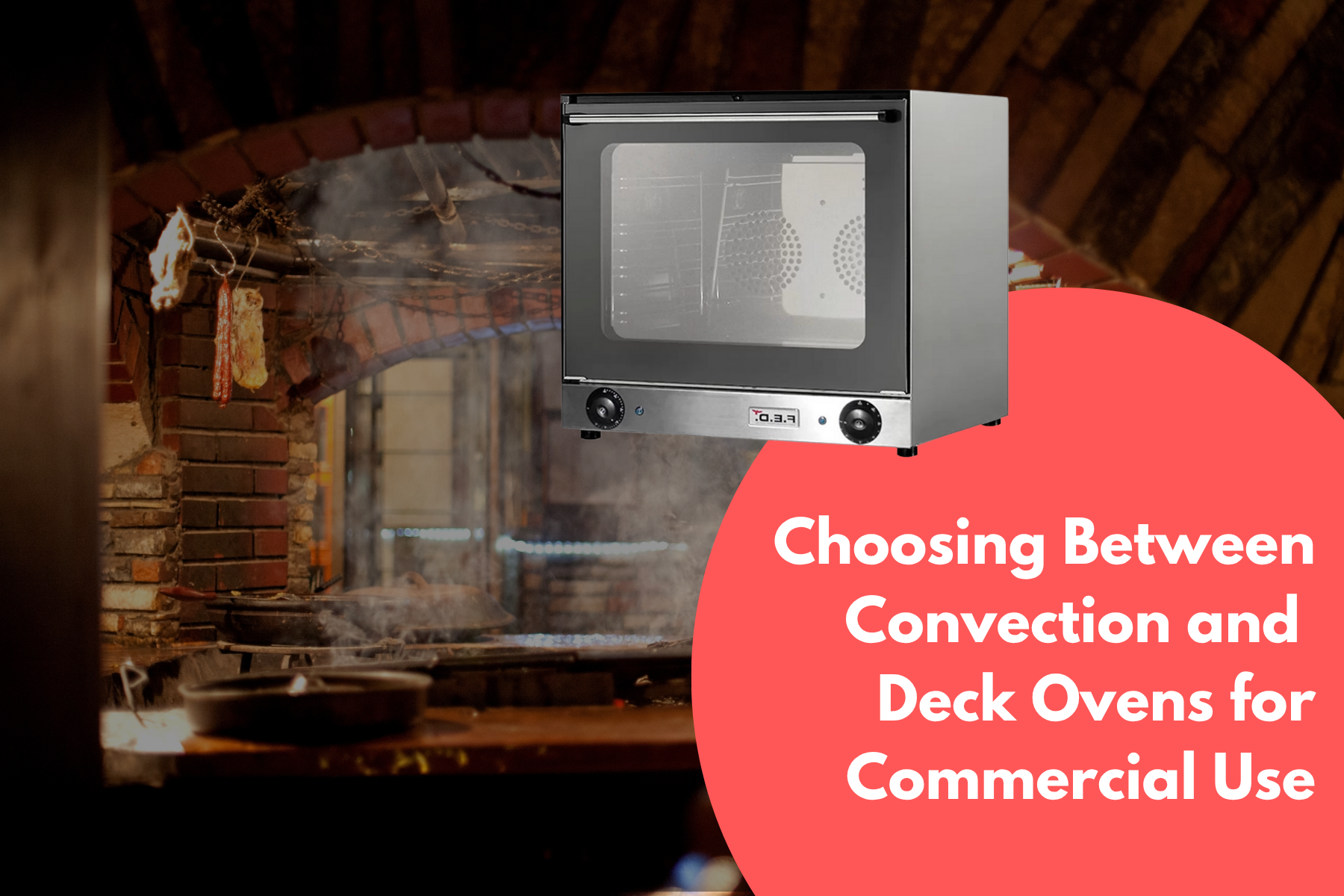
Convect Max Digital Convection Oven with Grill (YXD-3DI)
Convection ovens rely on a fan to circulate hot air evenly throughout the cooking chamber. This airflow promotes uniform temperature distribution compared to static heat ovens. The continuous movement of hot air helps cook food faster, often reducing baking times by up to 25%.
The forced air also removes moisture from the cooking chamber, which provides a crispy exterior to baked goods or roasted items.
Top Advantages of Convection Ovens in Commercial Kitchens
- Even Cooking and Browning: The fan ensures no cold spots, meaning batches of cookies or pastries bake evenly every time.
- Improved Efficiency: Faster cooking times can increase kitchen throughput during peak hours.
- Energy Savings: Shorter bake times translate into reduced energy consumption.
- Versatility: Ideal for a variety of items including baked goods, roasted vegetables, meats, and reheating.
- Ease of Use: Often designed with digital controls and preset cooking programs, reducing training time for staff.
Ideal Baking Needs Fit for Convection Ovens
Convection ovens excel in businesses that require consistent, fast, and uniform baking. Think bakeries producing crisp cookies, commercial kitchens roasting meats, or pizzerias baking thin crust pizzas quickly. They are also suitable when multiple trays of different products need cooking simultaneously.
Imagine a new café launching a range of madeleines, croissants, and focaccia. A convection oven’s airflow ensures these delicate pastries bake evenly without undercooked centres or burnt edges, making it an excellent choice.
3. Deck Ovens Explained: Uses and Functionalities
What Makes Deck Ovens Unique Compared to Other Commercial Ovens
Deck ovens differ primarily in their heating method. They use stone or steel decks that radiate heat directly to the food, combined with heat from the oven chamber. This radiant heat slowly penetrates the dough or food item, producing a distinctive texture and crust.
Unlike convection ovens, deck ovens typically lack a fan, which means the environment inside the oven is more humid and temperature changes are slower but steadier.
Key Applications of Deck Ovens in Baking and Roasting
Deck ovens are favoured in artisanal baking where the quality of crust, crumb texture, and moisture retention are priorities:
- Bread Baking: The radiant heat produces a thick, crispy crust with an open crumb, characteristic of artisan and sourdough breads.
- Pizza Production: Especially for thick, Neapolitan-style pizzas that require blistered crust and char.
- Roasting: Ideal for slow-roasted meats where gentle and steady heat is preferred.
- Pastries and Pies: Deck ovens help achieve flaky, evenly browned exteriors without drying interiors.
Advantages of Using Deck Ovens for Artisanal and Traditional Baking
- Superior Crust Development: The stone or steel decks absorb and radiate heat evenly, allowing crusts to form naturally.
- Moisture Retention: The lack of forced airflow keeps the oven environment humid, preventing premature drying.
- Temperature Stability: Thermal mass maintains consistent temperatures ideal for long baking cycles.
- Capacity for High-Volume Baking: Multiple decks allow simultaneous cooking of various products without flavour transfer.
Imagine a boutique bakery producing rustic loaves and delicate fruit tarts. A deck oven maintains ideal moisture and heat, resulting in bread with a perfect crust and tarts with evenly baked pastry shells, yielding a product quality unattainable in convection ovens.
By understanding these foundational aspects of convection and deck ovens, you can make a strategic choice tailored to your commercial kitchen’s unique demands , balancing efficiency, product quality, and operational goals. In the next sections, we will explore the increasingly popular combi ovens and provide actionable guidance for selecting the best oven for your kitchen.
The Rise of Combi Ovens: Versatility Meets Innovation
When choosing commercial oven types, combi ovens have increasingly become a popular option due to their versatility and advanced technology. Understanding what sets combi ovens apart can help restaurateurs, culinary students, and equipment buyers determine if this investment suits their kitchen’s needs.
Understanding the Technology Behind Combi Ovens
At their core, combi ovens combine three cooking methods into a single appliance: convection, steam, and a combination of both. Unlike traditional ovens, combi ovens regulate temperature and humidity precisely, giving the operator control over moisture levels and heat distribution.
- Convection Mode: Hot air circulates evenly, similar to traditional convection ovens, ideal for roasting and baking.
- Steam Mode: Pure steam cooks food gently while retaining moisture, perfect for vegetables, fish, and pre-steamed dishes.
- Combination Mode: Uses both steamed moisture and dry heat simultaneously, reducing cooking times and enhancing texture.
This flexibility is made possible through sophisticated control panels and sensors that maintain optimal conditions for a variety of cooking styles. The technology allows for programmable recipes, consistent batch cooking, and efficient energy use.
How Combi Ovens Combine Functions for Diverse Cooking Methods
Combi ovens let you switch seamlessly between cooking modes or use them concurrently. This adaptability supports multiple culinary techniques:
- Baking: Convection heat in a dry environment for crusty breads and pastries.
- Steaming: Gentle cooking that preserves colour, vitamins, and texture.
- Roasting: Even heat distribution ensures meats are seared on the outside and tender inside.
- Reheating and Hold: Moist heat prevents dishes from drying out.
- Sous-Vide Style Cooking: Combination of precise temperature and humidity meets the exacting demands of this method.
Imagine a catering kitchen needing to roast a joint of meat while steam-cooking vegetables and baking bread simultaneously. A combi oven can handle all these tasks in one unit without flavour crossover, maximising efficiency and reducing equipment footprint.
Practical Uses of Combi Ovens in Modern Commercial Kitchens
In fast-paced or diverse commercial kitchens, the combi oven serves as a multipurpose workhorse:
- Multi-menu Restaurants: Ideal for establishments offering a range of dishes requiring distinct cooking techniques.
- Hotels and Institutions: Simplifies operations by enabling batch cooking with minimal manual intervention.
- Bakeries with Steam Needs: Allows artisan breads to develop a perfect crust while maintaining moisture.
- Catering Services: Programmable cycles streamline event preparation, ensuring consistent results.
However, combi ovens come with a higher initial cost and require trained operators to fully utilise their capabilities. For kitchens where space and operational versatility are paramount, combi ovens can deliver significant returns.
Comparing Oven Types: Which Commercial Oven Should You Choose?
Selecting the right commercial oven involves much more than picking the most popular model. This section distils key factors to help you decide between convection, deck, and combi ovens depending on your specific commercial needs.
Key Factors to Consider When Selecting Between Convection, Deck, and Combi Ovens
- Cooking Style and Menu Requirements
- If your focus is on consistent baking of pastries, cookies, or batch cooking, convection ovens are efficient and reliable.
- For artisan breads, pizzas, or roasting with a traditional approach, deck ovens offer the radiant heat and stone-like surface that promote excellent crust formation.
- For diverse cooking tasks requiring variable steaming, roasting, and baking, combi ovens provide unmatched flexibility.
- Kitchen Space and Equipment Footprint
- Convection ovens tend to be more compact and suitable for tight kitchens.
- Deck ovens are usually larger, designed for high-volume or specialised baking stations.
- Combi ovens combine multiple functions into one unit, potentially reducing total equipment requirements.
- Budget and Running Costs
- Convection ovens often have lower upfront and maintenance costs.
- Deck ovens can be more energy-intensive but excel in quality for specific products.
- Combi ovens carry a premium price and may require more frequent servicing, but their operational efficiency can offset costs over time.
- Operator Skill Level
- Convection ovens are relatively straightforward to operate.
- Deck ovens benefit from experienced bakers who can adjust baking times and temperatures manually.
- Combi ovens require trained staff to use digital controls and manage humidity settings for different recipes.
Matching Oven Types to Specific Baking and Cooking Requirements
Consider these hypothetical scenarios:
- Scenario A: A bakery focusing primarily on artisan sourdough loaves would benefit most from deck ovens, as they provide the radiant heat necessary for a deep, crackly crust.
- Scenario B: A café that needs to bake various pastries alongside roasting meats and steaming vegetables would find a combi oven’s multifunctionality valuable.
- Scenario C: A quick-service restaurant with high-volume baking needs for cookies and muffins would likely prefer convection ovens due to their rapid and uniform heat circulation.
Common Pitfalls to Avoid in Oven Selection
- Overestimating Needs: Purchasing a combi oven “just in case” can lead to underutilisation and wasted budget if your menu doesn’t require such versatility.
- Ignoring Maintenance Requirements: Each oven type has unique upkeep demands; neglecting these can shorten lifespan and increase downtime.
- Disregarding Kitchen Workflow: An oven that doesn’t fit the operational flow or space will create bottlenecks regardless of its features.
By evaluating these factors thoughtfully, you ensure that your investment in commercial oven types supports productivity, quality, and long-term value.
Frequently Asked Questions About Commercial Oven Types
This section answers common questions to clarify issues around maintenance, energy efficiency, multifunctionality, and performance optimisation.
What Are the Maintenance Needs for Different Oven Types?
- Convection Ovens: Require regular cleaning of fans and vents to maintain airflow. Filters and seal checks prevent heat loss.
- Deck Ovens: Demand cleaning of stone decks and internal chambers. Look for wear on door seals and temperature sensors.
- Combi Ovens: Have more complex routines including descaling for steam systems, cleaning probes, calibrating humidity controls, and software updates.
Consistent maintenance reduces the risk of failure, ensures cooking accuracy, and enhances lifespan.
How Do Energy Efficiencies Compare Among Convection, Deck, and Combi Ovens?
- Convection Ovens typically consume less energy due to efficient heat distribution and quicker cooking times.
- Deck Ovens can be less efficient because they maintain high radiant heat without active heat recirculation.
- Combi Ovens balance energy use by integrating steam and convection, often including energy-saving modes and insulation features.
Energy efficiency depends heavily on usage patterns and operational discipline.
Can a Single Oven Type Serve Multiple Cooking Purposes Effectively?
Combi ovens are engineered specifically for multifunctionality, making them effective all-rounders. Convection ovens excel in consistent baking, while deck ovens specialise in specific tasks such as artisanal bread. Trying to use one oven type for all culinary demands may compromise results and efficiency.
Expert Tips for Maximising Oven Performance and Longevity
- Follow manufacturer guidelines for preheating and load capacities.
- Regularly calibrate temperature controls to ensure accuracy.
- Schedule routine cleaning and inspections based on usage intensity.
- Train staff thoroughly to avoid misuse and optimise settings for different dishes.
Proper care and operation unlock the full potential of your commercial oven types, safeguarding your kitchen’s productivity.
For practical guidance on choosing the right commercial oven types for your business, contact Caterware today at 1802 22837 1.
Our experts provide tailored advice and support to help you make decisions that align with your culinary goals and budget.