 Rent-Try-Buy
With SilverChef |
Apply Now


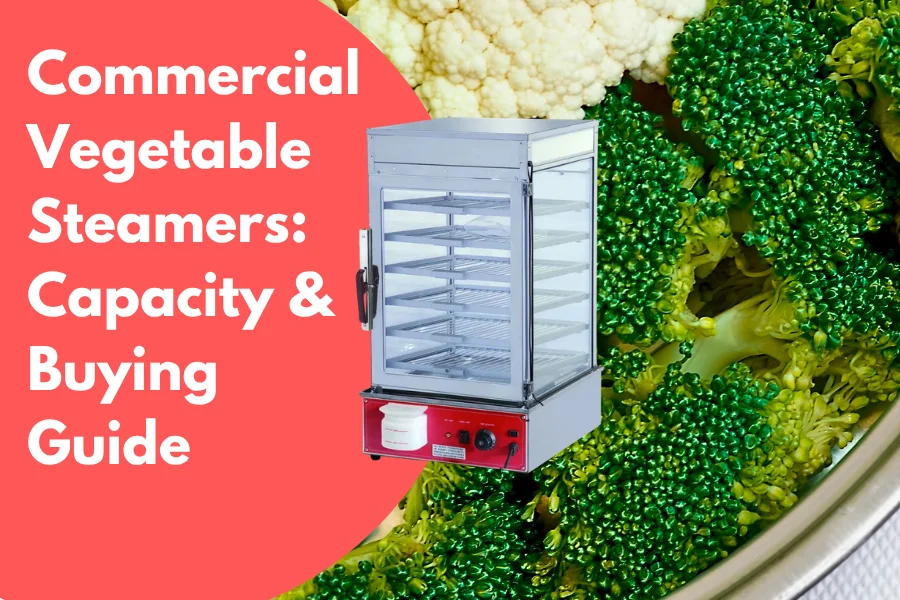
Commercial Vegetable Steamers: Capacity & Buying Guide
09
Oct
A commercial vegetable steamer needs to handle your kitchen’s busiest service period, not just routine preparation.
Choosing the wrong capacity can leave orders waiting for chamber space. An oversized machine, meanwhile, may occupy valuable workspace or require electrical infrastructure your kitchen cannot support.
The right commercial vegetable steamer should match your menu, peak production demand, available space and site requirements.
This guide explains how to assess chamber capacity, calculate batch requirements, compare commercial steamers and choose equipment that supports your kitchen’s workflow without creating unnecessary delays.
Match Steamer Capacity to Your Menu
Your menu is the starting point when choosing a commercial vegetable steamer.
A restaurant preparing steamed vegetables as a side dish has different requirements from an Asian kitchen producing dumplings, buns and vegetables throughout service.
A café may need modest steaming capacity, while a takeaway operation may depend on repeated batches during shorter, busier trading periods.
Start by listing every menu item likely to use the steamer.
Vegetables may be the main requirement, but depending on the model and manufacturer guidance, commercial steaming equipment may also suit dumplings, buns, seafood and other steam-cooked dishes.
Next, identify where production overlaps.
Several menu items may require steaming at the same time. A machine that comfortably handles one batch could become a bottleneck when multiple orders compete for chamber space.
Consider:
- Which menu items require steaming?
- How much food needs to be prepared for each order?
- Which products may need steaming at the same time?
- How frequently will the chamber need reloading?
- Are different steaming requirements likely to affect batch scheduling?
The more your menu depends on steaming, the more important practical chamber capacity and repeat-batch performance become.
Calculate Peak Steaming Demand
Average daily customer numbers do not always reflect the pressure placed on a commercial steamer.
A restaurant may serve customers steadily over several hours, but a significant share of orders could arrive during a much shorter period.
Your steamer must cope with that concentrated workload.
Start by estimating how many steamed portions are required during your busiest 15 to 30 minutes.
Then calculate how many batches the equipment would need to complete.
Use Peak Service as Your Main Comparison Point
When assessing different steamers, compare them against the same busy-service requirements.
The following table provides a practical starting point.
| Factor | What to check |
| Peak demand | Number of steamed portions needed during the busiest service period |
| Batch capacity | Usable food capacity per steaming cycle |
| Throughput | Number of complete batches possible during peak trade |
| Electrical supply | Whether the kitchen can support the model’s power requirements |
| Available space | Equipment footprint, access and surrounding working area |
| Workflow | Time and space required for loading, unloading and cleaning |
This helps you compare equipment based on actual operating requirements rather than chamber size or price alone.
Calculate How Many Batches Your Kitchen Needs
A simple capacity calculation can help you assess whether a commercial steamer can keep up.
Required batches = Peak portions needed ÷ Usable portions per batch
Round the result up to the next whole batch.
For example, use the number of steamed portions your kitchen needs during its busiest service window and divide that by the realistic number of portions you can prepare in one batch.
Then compare the result with the number of complete steaming cycles available during that period.
Remember to include loading, unloading and preparation for the next batch.
This calculation provides a practical starting point, but actual output will depend on the food being prepared, the equipment and operating conditions.
Check Usable Chamber and Pan Capacity
A larger steaming chamber does not automatically provide better production performance.
The important consideration is how much usable food capacity the equipment offers for your menu.
Start with the quantity of food you need to steam during one cycle.
Consider:
- Portion sizes
- Product arrangement within the chamber
- Pan sizes and compatible containers
- Available chamber space
- Whether different foods need to be prepared together
- How many batches are required during peak demand
A steamer with insufficient capacity may force staff to divide orders across additional batches.
That can create delays when several dishes are waiting for the same equipment.
Excess capacity introduces a different problem. A larger machine may occupy valuable kitchen space while providing output your operation rarely needs.
Choose enough capacity to manage peak production with a reasonable allowance for busier periods and expected growth.
The goal is usable output, not simply the largest available chamber.
Calculate Steamer Throughput During Service
Cooking time is only one part of a commercial steamer’s production cycle.
To assess throughput accurately, consider the complete process:
- Load the chamber with prepared food.
- Steam the batch.
- Unload the finished food.
- Prepare and load the next batch.
- Begin the following steaming cycle.
Each stage contributes to the time required to complete consecutive batches.
According to Food Standards Australia New Zealand, potentially hazardous food generally needs to be kept at 5°C or colder, or 60°C or hotter to maintain food safety, unless a safe alternative system can be demonstrated. For kitchens preparing steamed foods in successive batches, this makes it important to consider how finished products will be served, held or transferred after leaving the steamer, particularly when orders are waiting during peak service.
When comparing models, consider whether staff can complete the required number of cycles during peak service without leaving orders waiting.
For practical planning, use:
Complete cycle time = Loading time + Steaming time + Unloading and changeover time
You can then compare the available service window with the total time required for your planned batches.
Actual cycle times must be based on your products and the specific steamer’s performance.
Why Equipment Position Matters
Even a suitably sized steamer can slow production if its position makes loading or unloading difficult.
Restricted access, awkward door clearance or poorly positioned work surfaces may increase handling time between batches.
Before choosing a model, consider how ingredients reach the steamer and where finished food moves afterwards.
The best equipment position should allow staff to complete the full production cycle without unnecessary movement or interference with neighbouring stations.
Commercial Steamer Installation Requirements
A commercial vegetable steamer must suit your kitchen’s available utilities and physical layout.
Commercial steamers can have different electrical and installation requirements, so checking the site early helps eliminate models that are unsuitable before purchase.
Caterware’s commercial steamer range includes equipment with different electrical supply requirements, including single-phase and three-phase models.
Always assess the requirements of the individual product rather than assuming that all commercial steamers use the same connections.
Confirm Electrical Requirements Before Ordering
An available electrical outlet does not automatically mean your kitchen can support a particular commercial steamer.
Check the model’s rated electrical requirements and compare them with the supply available at your premises.
Some commercial equipment may require a dedicated connection or different electrical infrastructure.
These requirements can affect installation planning and purchasing costs.
Review the manufacturer’s specifications and seek advice from an appropriately qualified tradesperson where electrical work is required.
Confirming compatibility before ordering can help prevent delays or additional installation work after delivery.
Check Water, Drainage and Other Utility Requirements
Electrical supply is not the only installation consideration.
Depending on the model, commercial steaming equipment may have additional requirements relating to water supply, drainage or ventilation.
These requirements should be checked against the manufacturer’s installation documentation.
Before ordering, confirm:
- The model’s specified utility connections
- Whether the site can accommodate those connections
- Any applicable installation and ventilation requirements
- Whether additional work is needed before commissioning
Do not assume every commercial steamer has identical utility requirements.
If any specification is unclear, confirm it with the supplier or an appropriately qualified tradesperson before purchasing.
Allow Enough Space to Work Around the Steamer
External dimensions tell you whether equipment can physically fit within the available space.
They do not show how easily staff can operate it.
Consider the room needed for loading, unloading and cleaning.
Check whether doors or access areas could interfere with neighbouring equipment or workstations.
You may also need nearby space for prepared ingredients, pans and finished batches.
A compact commercial steamer may be more practical for kitchens with limited bench space, even when a larger model would technically fit.
Assess both the equipment footprint and the surrounding working area before making your decision.
Bigger Is Not Always Better
Buying equipment with future growth in mind can make sense, but additional capacity should have a practical purpose.
A larger commercial vegetable steamer may provide more output while requiring additional space or different installation arrangements.
Start with the capacity needed for your busiest realistic service period.
Then allow a sensible margin for higher demand, modest menu changes or expected growth.
Beyond that margin, additional chamber capacity should be justified by a genuine production requirement.
A steamer that comfortably handles your workload without taking up unnecessary space may be a better choice than a larger unit that remains underused.
Commercial Vegetable Steamer Buying Checklist
Once you understand your kitchen’s production requirements, use them to compare available models.
Define your essential requirements before narrowing the options by brand or price.
Your checklist should cover:
- Menu items requiring steaming
- Estimated peak production volume
- Practical chamber and pan capacity
- Required batch frequency
- Complete steaming cycle times
- Electrical supply requirements
- Water, drainage and other applicable utilities
- Maximum available footprint
- Loading, unloading and cleaning access
- Expected operating hours
- Reasonable capacity for future demand
These requirements should help eliminate unsuitable machines early.
A model that cannot meet your production, installation or space requirements should not remain on the shortlist simply because its price or advertised capacity looks attractive.
Put Each Model Through a Busy-Service Scenario
Picture your busiest normal trading period.
Orders are arriving quickly. Multiple dishes require steaming. One batch is cooking while another is waiting to be loaded.
Now assess each shortlisted steamer against that situation.
Ask:
- Can the chamber accommodate the required amount of food?
- How many batches must be completed?
- Can those batches move through the machine within the available time?
- Will staff have enough room to load and unload safely?
- Does the kitchen have the required utilities?
- Can the steamer operate without obstructing nearby workstations?
Use the same questions for every model.
This makes it easier to compare practical suitability rather than relying on isolated specifications.
Make Your Steamer Work With Your Kitchen Workflow
A commercial vegetable steamer needs to fit into the wider kitchen operation, not just the available floor or bench space.
Consider where ingredients are prepared, how staff load the chamber and where finished food moves after steaming.
Positioning can make a noticeable difference during busy service.
If staff must cross another workstation to collect ingredients or unload finished batches, the layout may create avoidable delays.
Similarly, limited working space around the machine can slow changeovers even when the steamer has enough cooking capacity.
Before selecting a model, confirm that its position, access requirements and production capacity support the way your team works.
Narrow the Specification Before You Narrow the Brand
Set practical limits before comparing individual products.
These may include:
- Maximum available footprint
- Required peak output
- Minimum usable chamber capacity
- Available electrical supply
- Expected batch frequency
- Installation restrictions
With these requirements established, you can focus on equipment suited to your kitchen rather than spending time comparing unsuitable models.
Browse Caterware’s commercial steamer range to explore available options.
If you are planning several areas of a kitchen, you can also view the broader commercial cooking equipment range.
Commercial Vegetable Steamer FAQs
How big should a commercial vegetable steamer be for my restaurant?
Choose a steamer based on your busiest realistic service period rather than average daily demand.
Estimate the number of steamed portions required, the usable capacity per batch and how many cycles must be completed during peak trade.
Allow a reasonable capacity margin for busier periods and expected growth.
Should I choose the largest steamer my kitchen can accommodate?
Not necessarily.
A larger steamer may offer additional capacity, but it can also occupy valuable working space or introduce different installation requirements.
Choose a machine that meets peak production demand while fitting comfortably into your available kitchen layout.
What should I check before buying an electric commercial food steamer?
Check the model’s electrical rating, supply requirements, dimensions and installation documentation.
Also confirm whether the equipment has any applicable water, drainage or ventilation requirements.
Compare these specifications with your premises before ordering and obtain qualified advice where installation work is required.
How do I know whether a steamer will keep up during busy service?
Calculate how many batches your kitchen needs during its busiest trading period.
Include loading, steaming, unloading and changeover time when assessing each cycle.
Then determine whether the required batches can be completed within the available service window.
Is a countertop commercial steamer suitable for a high-volume kitchen?
A countertop commercial steamer may be suitable if its usable capacity and throughput meet the kitchen’s production requirements.
Some operators benefit from a compact footprint, while others need larger chambers or greater batch output.
Assess the equipment against your actual workload rather than its size alone.
What foods can I prepare in a commercial vegetable steamer?
Suitable foods depend on the individual model and manufacturer guidance.
Commercial steamers are commonly used for vegetables and may also be suitable for dumplings, buns, seafood and other steam-cooked dishes.
Check the equipment’s intended applications and plan capacity around the foods your kitchen needs to prepare.
What information should I have ready before asking Caterware for help?
It helps to have:
- Your main steamed menu items
- Estimated peak production volume
- Expected batch frequency
- Available equipment dimensions
- Known electrical and utility requirements
- Any installation or access restrictions
Measurements or photos of the intended equipment location may also help identify practical space and installation considerations.
Choose a Commercial Vegetable Steamer That Keeps Up With Service
The right commercial vegetable steamer should meet your busiest production requirements without creating unnecessary pressure on kitchen space, utilities or staff workflow.
Start with your menu and peak demand.
Calculate the number of batches required, assess usable chamber capacity and compare complete steaming cycles rather than cooking time alone.
Then confirm that the equipment suits your electrical supply, installation requirements and available working space.
Ready to compare your options?
Browse Caterware’s commercial steamer range to explore available equipment.
If you need help narrowing your shortlist, contact the Caterware team with your menu requirements, expected production volume, available space and known electrical requirements.
We can help you assess commercial steamers against the way your kitchen operates.