 Rent-Try-Buy
With SilverChef |
Apply Now
Rent-Try-Buy
With SilverChef |
Apply Now


Walk-In vs Reach-In: What’s Best for Your Kitchen?

16
Mar
When planning or upgrading a commercial kitchen in Australia, one of the most important refrigeration decisions involves choosing between a walk-in system and reach-in refrigeration. This choice is not just about equipment. It directly affects kitchen workflow, food safety compliance, staffing efficiency, energy consumption, and long-term operational growth.
For restaurant owners and catering operators, selecting the right refrigeration solution is a significant investment. Commercial refrigeration runs continuously, so the system you choose will influence daily operations and operating costs for years to come.
This practical guide compares walk-in and reach-in refrigeration across key factors such as storage capacity, kitchen layout, workflow efficiency, installation cost, energy use, maintenance considerations, and future scalability. By understanding how each system works, you can make a more informed decision about what suits your kitchen best.
Understanding the Core Difference
The primary distinction between these refrigeration options comes down to scale and accessibility.
Walk-In Refrigeration
A walk-in cool room or freezer is a refrigerated storage space large enough for staff to physically enter. These systems are designed for bulk food storage and are commonly used in large restaurants, hotels, hospitals, catering production kitchens, and institutional food service operations.
Walk-in systems allow businesses to store large deliveries of produce, meat, frozen goods, and prepared ingredients in an organised environment.
Reach-In Refrigeration
Reach-in refrigeration refers to upright or underbench refrigerators and freezers that staff access through standard doors. These units are typically located close to prep stations so that ingredients can be retrieved quickly during service.
Reach-in units are widely used in cafés, smaller restaurants, and kitchens where immediate access to ingredients is essential.
Storage Capacity: Bulk Storage vs Convenience
Storage volume is often the most obvious difference between the two systems.
Walk-In Storage
Walk-in refrigeration provides substantial storage space and is ideal for operations that handle large deliveries or maintain extensive food inventories.
Benefits include:
• Storage for bulk ingredient deliveries
• Capacity for large volumes of meat, dairy, and frozen goods
• Organised shelving for inventory management
• Reduced reliance on frequent supplier deliveries
For high-volume kitchens or catering operations, this level of storage can be essential for maintaining smooth operations.
Reach-In Storage
Reach-in refrigerators provide smaller storage capacity but offer faster and more convenient access.
They are commonly used for: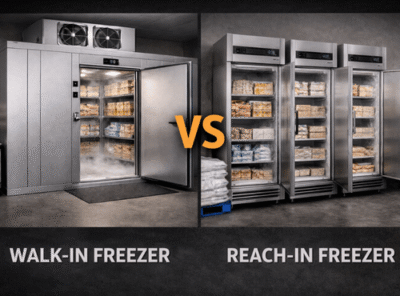
• Daily preparation ingredients
• Short-term ingredient storage
• High-turnover menu items
• Kitchens with limited floor space
Smaller restaurants and cafés often rely heavily on reach-in units because their storage needs are more modest.
Space and Kitchen Layout Considerations
In Australian metropolitan areas where commercial rent is high, kitchen space must be used efficiently.
Walk-In Space Requirements
Walk-in refrigeration typically requires:
• Dedicated floor space
• Structural installation
• Ventilation clearance
• Accessibility for servicing
In some cases, walk-in cool rooms are installed outside the main kitchen area to preserve valuable internal workspace.
Reach-In Flexibility
Reach-in units are far more flexible in terms of placement. They can:
• Fit beneath work benches
• Stand against walls
• Integrate directly into prep stations
• Be relocated when kitchen layouts change
For compact kitchens and inner-city venues, reach-in refrigeration often provides a practical space-saving solution.
Workflow and Service Efficiency
Kitchen efficiency depends heavily on movement patterns. Every unnecessary step can slow service during busy periods.
Walk-In Workflow Impact
Walk-in cool rooms centralise bulk storage but require staff to leave prep areas to retrieve ingredients.
They work best for:
• Storing incoming deliveries
• Organising inventory
• Supporting large-scale preparation
However, frequent trips to a cool room during peak service can slow operations if ingredients are not positioned strategically.
Reach-In Workflow Benefits
Reach-in units are designed for speed and accessibility. Storing frequently used ingredients close to preparation stations allows staff to retrieve items quickly.
Advantages include:
• Faster ingredient access
• Reduced staff movement
• Improved service speed during busy periods
For fast-paced restaurant environments, reach-in refrigeration helps maintain workflow efficiency.
Installation and Upfront Cost
Budget is often a key factor when choosing commercial refrigeration equipment.
Walk-In Installation
Walk-in systems typically involve:
• Structural construction
• Refrigeration system installation
• Insulated panel assembly
• Electrical work
The upfront cost is higher compared with individual refrigeration units. However, the cost per cubic metre of storage can be more efficient for large-scale operations.
Reach-In Installation
Reach-in refrigeration units are generally plug-and-play appliances.
Advantages include:
• Lower initial purchase cost
• Minimal installation requirements
• Easy replacement when necessary
However, multiple reach-in units may be required to match the storage capacity of a walk-in system.
Energy Consumption and Running Costs
Because refrigeration operates continuously, energy consumption has a direct impact on long-term operating expenses.
According to the Australian Government’s energy efficiency guidance, refrigeration can account for between 25% and 85% of total energy consumption in some businesses, making it one of the most energy-intensive systems in commercial operations.
Walk-In Energy Use
Walk-in systems consume more energy overall due to their size, but they often benefit from:
• Strong insulation panels
• Efficient large-scale compressors
• Reduced need for multiple refrigeration units
When managed properly, a walk-in system can be energy-efficient relative to its storage capacity.
Reach-In Energy Use
Each reach-in refrigerator or freezer contains its own compressor. When several units operate simultaneously, total energy use can increase.
Energy efficiency therefore depends on equipment quality and how frequently doors are opened during service.
In Australia’s warm climate, refrigeration equipment must also be rated for high ambient temperatures.
Food Safety and Compliance
Australian food safety standards require strict temperature control and proper storage practices.
Both refrigeration systems must:
• Maintain consistent temperatures
• Allow for easy cleaning
• Provide adequate shelving separation
Walk-in systems provide more space to separate raw and cooked ingredients. Reach-in units offer better visibility but can become overcrowded if not managed carefully.
Ultimately, food safety depends on proper organisation and staff training rather than equipment type alone.
Maintenance and Operational Risk
All commercial refrigeration equipment requires routine servicing to maintain performance.
Walk-In Maintenance
Walk-in systems involve larger compressors and more complex refrigeration components. If a major failure occurs, a significant quantity of stored stock may be at risk.
Regular preventative maintenance is therefore essential.
Reach-In Maintenance
Reach-in units are typically simpler systems.
Advantages include:
• Lower repair costs
• Faster replacement if failure occurs
• Reduced risk to stored stock because inventory is distributed across multiple units
Catering Operations and Refrigeration Needs
For catering businesses, refrigeration requirements often depend on production scale.
Walk-in refrigeration works well for:
• Large-scale food preparation
• Central production kitchens
• Bulk tray and ingredient storage
Reach-in refrigeration is more suited for:
• On-site catering operations
• Smaller production environments
• Mobile catering setups
Many catering companies rely on both systems to balance storage capacity with flexibility.
Planning for Future Growth
Long-term planning is important when investing in commercial kitchen infrastructure.
Walk-in refrigeration systems allow businesses to:
• Increase menu production
• Store larger quantities of ingredients
• Expand catering operations
Reach-in units can be added incrementally as demand grows, but this may require additional floor space over time.
If expansion is part of your long-term strategy, a walk-in cool room may provide greater scalability.
Climate Considerations in Australia
Commercial kitchens in Australia operate in high-temperature environments, particularly during summer.
When selecting refrigeration equipment, ensure that:
• Units are rated for high ambient temperatures
• Adequate ventilation is available
• Refrigeration equipment is not positioned near heat sources
Extreme heat can place additional stress on compressors, making equipment quality especially important.
A Hybrid Refrigeration Strategy
Many successful commercial kitchens combine both refrigeration systems rather than relying on a single solution.
A practical setup often includes:
• A walk-in cool room for bulk ingredient storage
• Reach-in units located near preparation stations
• Underbench refrigeration integrated into service areas
This approach maximises storage capacity while maintaining operational efficiency.
When a Walk-In System Makes More Sense
A walk-in refrigeration system may be the better choice if:
• Your kitchen operates at high service volume
• Bulk ingredient deliveries are common
• You run a hotel, hospital, or institutional kitchen
• Large freezer storage is required
• Your business plans to expand production
When Reach-In Refrigeration Is More Practical
Reach-in units are often the better option if:
• Kitchen space is limited
• Deliveries are smaller and more frequent
• Speed of access during service is critical
• Budget constraints limit major installation projects
• You operate a café or small restaurant
Find the Right Refrigeration Setup for Your Business
Choosing between walk-in refrigeration and reach-in units is not about which system is universally better. The right solution depends on your kitchen’s size, production demands, available space, and long-term business plans.
Walk-in systems provide bulk storage, scalability, and organised inventory management. Reach-in refrigeration offers convenience, accessibility, and flexibility for busy service environments.
For many Australian hospitality businesses, the most effective solution is a combination of both systems working together. When refrigeration equipment supports workflow and storage requirements, kitchens operate more efficiently, waste is reduced, and service quality improves.
If you are planning to upgrade your commercial refrigeration equipment, Caterware offers a range of walk-in cool rooms, reach-in refrigerators, and commercial kitchen refrigeration solutions designed for reliability and performance.
Contact us today to discuss the right refrigeration setup for your kitchen and find equipment that supports your business operations.
Frequently Asked Questions
1. What is the difference between walk-in and reach-in refrigeration?
Walk-in refrigeration refers to large refrigerated rooms that staff can physically enter to store bulk ingredients and stock. Reach-in refrigeration includes upright or underbench refrigerators that allow quick access to smaller quantities of food stored near preparation areas.
2. Which is better for restaurants: walk-in or reach-in refrigeration?
The best choice depends on kitchen size and production volume. High-volume restaurants often benefit from walk-in cool rooms for bulk storage, while smaller kitchens rely on reach-in refrigerators for quick ingredient access during service.
3. Are walk-in coolers more energy efficient than reach-in refrigerators?
Walk-in coolers consume more energy overall due to their size, but they can be efficient for large-scale storage because a single system cools a larger space. Multiple reach-in units may collectively use more energy if several compressors operate simultaneously.
4. Do commercial kitchens use both walk-in and reach-in refrigeration?
Yes. Many commercial kitchens combine both systems. Walk-in cool rooms are used for bulk ingredient storage, while reach-in units are positioned near prep stations for fast access to frequently used items.
5. How much space is required for a walk-in cooler?
Walk-in cool rooms require dedicated floor space and proper ventilation clearance. They are often installed in storage areas, outside the main kitchen, or in dedicated refrigeration rooms depending on the facility layout.
6. Are reach-in refrigerators easier to install than walk-in coolers?
Yes. Reach-in refrigeration units are typically plug-and-play appliances that require minimal installation, while walk-in coolers involve structural assembly, insulated panels, and refrigeration system installation.
7. What type of refrigeration is best for small cafés?
Reach-in refrigerators are usually the most practical choice for cafés and smaller restaurants because they require less space, cost less to install, and provide quick access to ingredients during service.